Protecting Your Travel Plans
 With spring break around the corner, many families are eagerly planning getaways to tropical beaches, scenic mountain resorts, or thrilling theme parks. In the midst of this excitement, protecting your travel plans becomes paramount, as scammers are ramping up their efforts to exploit unwary travelers. A recent Fox23 news story shines a light on the growing concern over fraudulent vacation deals and underscores how the Better Business Bureau (BBB) is intensifying its education and protection efforts for consumers. As more travelers turn to online sources for the best vacation deals, the need for informed decision-making has never been greater.
How Vacation Scams Happen
Amie Mitchell, CEO of the Better Business Bureau of Eastern Oklahoma told Fox news that: “there are plenty of scammers out there for every place you’d want to travel, so doing your research on the hotel and on the places that you want to visit ahead of time are really important.”
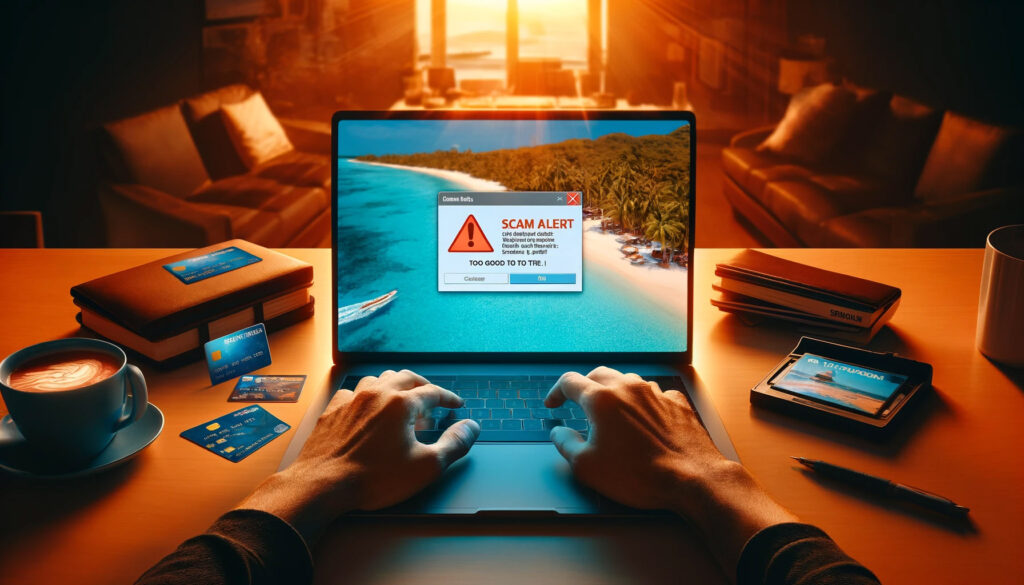
Scammers are constantly devising new methods to take advantage of travelers who are eager to secure affordable accommodations and airfare. They create polished, professional-looking websites that mimic legitimate travel providers, post fake rental listings that appear enticingly real, and offer travel packages that seem too good to be true. Once victims are lured in by these deceptive tactics, they often end up paying for services that never materialize, leaving them with both financial loss and major stress.
Avoid Broad Vacation Search Terms
 Scammers often target broad vacation search queries, knowing that travelers using these keywords may inadvertently stumble upon fraudulent sites. By honing in on specific, trusted websites—either the official sites of airlines or reputable booking platforms—consumers can significantly reduce the risk of falling victim to a scam.
Always take a moment to verify the legitimacy of any site through trusted sources like bbb.org before clicking on links from social media or other less secure channels.
“We want to avoid broad search terms like ‘Best Deal,’ ‘Best Vacation,’ ‘Cheapest Vacation’ you really want to go directly to the site that you trust, whether you go directly to the airline, or a site that does multiple bookings at once. Just make sure you check them out with bbb.org to make sure you’re going to the legitimate website, don’t just click on anything from social,” said Mitchell.
More Tips from the BBB
According to the news report, the Better Business Bureau advises consumers to take the following steps:
- Research Thoroughly: Always check reviews on trusted sites like BBB.org. Make sure that the company you’re dealing with has a verified physical address and dependable contact information.
- Evaluate the Deal: Be cautious of travel packages with unusually steep discounts. If the price seems too low to be true, it could be a scam.
- Verify Reservations: Before making any payments, call or video chat with rental owners or property managers. Ask for additional photos and confirm all details about your reservation.
- Use Secure Payment Methods: Whenever possible, use credit cards for your transactions. Credit cards offer stronger fraud protection compared to debit cards or peer-to-peer payment apps.
- Scrutinize Communications: Pay attention to emails or websites that display poor spelling, grammar, or incomplete information. Such signs often indicate that the sender may not be a reputable source.
A Costly and Emotional Experience
 While exact losses vary, the BBB has found that travelers collectively lose thousands of dollars each year to vacation booking scams—money that is often impossible to recover. Beyond the financial loss, there is also significant emotion and disappointment when families arrive at their destination only to learn their reservation is nonexistent.
The BBB’s Educational Efforts
The Better Business Bureau is committed to educating both consumers and businesses to reduce the risk of fraud. Through initiatives such as the ScamTracker tool, informative webinars, and engaging social media awareness campaigns, the BBB empowers travelers with the knowledge to spot suspicious deals and encourages them to report deceptive practices or share their experiences.
Recourse for Consumers
 If you believe you’ve been targeted or defrauded by a vacation scam, consider these steps for potential recourse:
1. Financial Protections
- Credit Card Dispute:
Report any fraudulent charges immediately to your credit card company or bank. Many financial institutions offer dispute mechanisms and chargeback protections to help recover lost funds. - Freeze or Close Accounts:
If you’ve shared sensitive financial information, such as bank account details, consider temporarily freezing or closing the affected account to prevent further unauthorized transactions.
2. Report to Law Enforcement and Regulatory Agencies
- Local Law Enforcement:
File a police report to create an official record. Although the scammer might be operating from a different location, this step can support any future civil or criminal proceedings. - State Attorney General’s Office:
Many states actively investigate consumer fraud. Submitting a complaint to your state Attorney General’s office can prompt further action against the scammer. - Federal Trade Commission (FTC):
In the U.S., the FTC accepts consumer complaints regarding scams and uses these reports to build cases against fraudulent operators.
3. Consult with an Attorney
- Assess Your Legal Options:
Depending on your situation, you may have the option to pursue a civil lawsuit to recover your lost funds. - Evaluate Contractual Disputes:
If the scam involved a seemingly legitimate contract or terms-of-service agreement, an attorney can help determine if the language in these documents might support your legal claim.
4. File a Complaint with the BBB
- Online Reporting:
Use the BBB’s ScamTracker on BBB.org to alert others about your experience. Even if you don’t recover your money, your report can help prevent others from falling victim to similar scams. - Seek Mediation:
In some cases, the BBB can facilitate mediation between businesses and consumers. However, this option is generally more effective when dealing with reputable companies rather than outright scammers.
By following these steps, consumers can take proactive measures to protect their finances and assist in the broader fight against travel scams. Read more here.
How Our Law Firm Can Help
If you’ve experienced a vacation scam or suspect fraud, our law firm can offer guidance on how to protect your rights, recover potential losses, and deal with legal or regulatory proceedings. We have experience assisting consumers in gathering evidence, filing complaints with the appropriate agencies, and identifying the best course of action for their unique circumstances.
Remember: Taking action is critical. The faster you report and address the scam, the higher your chances of minimizing damage and recovering lost funds.
Disclaimer: This blog post is provided for informational purposes and does not constitute legal advice. Every situation is unique, and specific legal issues require consultation with a qualified attorney. For detailed guidance regarding your circumstances, please contact our firm directly.
Led by attorneys J. Andrew Meyer and Michael D. Finn with over 75 years of combined legal experience. The Finn Law Group is a national consumer protection firm that specializes in Timeshare law and other consumer related issues. If you or someone you know has fallen victim to a vacation scam, don’t hesitate to reach out to our team. We are here to help you explore your legal options and work towards the best possible resolution. Call 855-FINN-LAW – Find us on Twitter X.