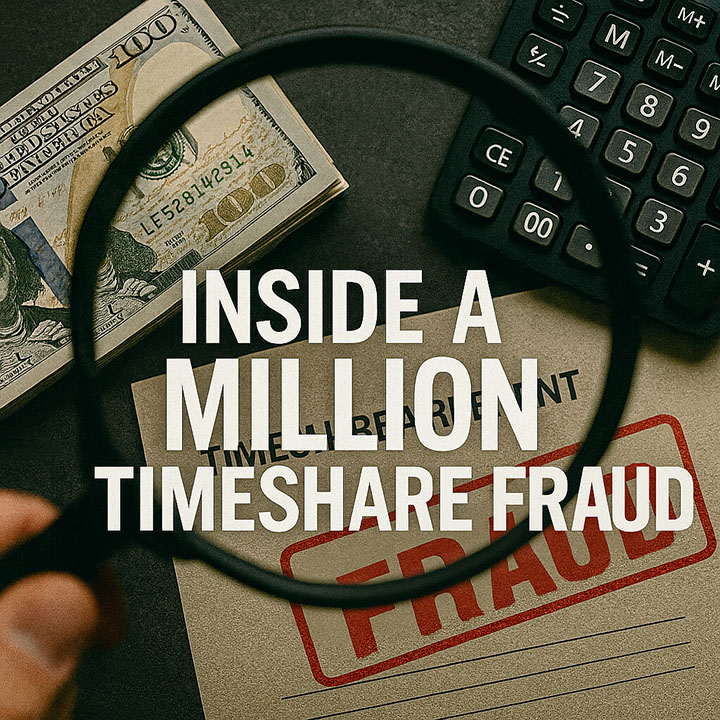
Inside a Million Dollar Timeshare Scam
Inside a Million Timeshare Scam reveals how fraud can evolve into an organized, multiyear conspiracy. In Georgia, an elderly couple fell victim to a sophisticated timeshare scheme that drained more than $1 million of their savings over four years. What began as a seemingly routine interaction escalated into relentless financial exploitation, ultimately leading investigators to a suspect in Florida. The case underscores not only the staggering financial loss but also the calculated persistence of criminals who prey on vulnerable seniors.
A Trust Built on Deceit
In April 2025, the Georgia Bureau of Investigation (GBI) launched a five-month inquiry into a complex online scam targeting the couple in Newnan, Georgia. Investigators uncovered a coordinated timeshare scheme that methodically stripped the victims of over $1 million.
As reported by HoodLine, Charles Henry Williams, 63, of Trinity, Florida, was arrested and charged with theft by deception and exploitation of an elder person—bringing a chilling sense of closure to a case rooted in years of financial abuse.
A Web of Coordination—and Warnings Echo Worldwide
 The investigation spotlighted how timeshare fraud isn’t an isolated crime; this operation involved collaboration among multiple state agencies, including the GBI’s Cyber Crime Center, the Georgia Attorney General’s office, as well as law enforcement partners in Tennessee and Florida.
Such scams are not unique to Georgia. In California, two retirees lost nearly $1 million after being conned in a timeshare fraud operation, one of many that have cost Americans hundreds of millions of dollars.
Timeshare scammers—aided by sophisticated sales scripts, fake escrow companies, and urgent, emotional manipulation—are exploiting the financial vulnerabilities of older Americans.
Anatomy of a Timeshare Scam: Common Tactics
- Fake Agents and Buyers: Fraudsters pose as brokers or buyers, often claiming they represent corporate investors and initiate friendly, personalized contact.
- Upfront Fees and Urgency: Victims are pressured into paying “processing,” “tax,” or “escrow” fees before any sale is completed—often followed by escalating demands.
- Use of Official Language and Fabricated Documentation: The illusion of legitimacy is carefully crafted with phony documents and fake company details.
The Human Cost of Timeshare Scams
 The devastation from timeshare and online fraud is not measured only in dollars—it’s measured in dignity, trust, and the unraveling of families. In Georgia, an elderly couple watched their life savings bleed away over four years, every payment chipping away at their independence and sense of safety. In California, one retiree was pushed so far by escalating demands that he sold his childhood home, surrendering the very foundation of his family’s history just to keep up with con artists. These aren’t isolated incidents—they’re part of a nationwide assault on seniors, a calculated exploitation of vulnerability.
The toll is crushing: victims are left humiliated, isolated, and emotionally devastated. Families inherit not only financial ruin but also the heavy burden of repairing shattered confidence and security. This is why Finn Law Group has spent more than a decade on the front lines of senior crime, challenging the predators who see older Americans as easy targets and sounding the alarm that these schemes
How You Can Avoid Becoming the Next Victim
 Authorities and consumer advocates offer these critical tips:
- Refuse any unsolicited offers—especially claims of a ready, willing buyer for your timeshare.
- Never pay upfront fees for services or resales that haven’t been verified. Legitimate sales require no such payments.
- Investigate the person or company—search for reviews, complaints, or licensing status.
- Consult with trusted professionals—attorneys or consumer protection groups can help validate offers or contracts.
- Speak up immediately—report scams to the FBI, IC3 (Internet Crime Complaint Center), or your local law enforcement.
Final Thoughts
Timeshare scams are expanding in scale, exploiting technology and international networks to target vulnerable victims. One need only look to Florida, a persistent staging ground for schemes that exploit international crime rings to prey on vulnerable timeshare owners through elaborate fraud.
While justice is finally moving forward for a senior couple in Georgia, their story is a painful reminder that the fight against timeshare fraud is far from over—it’s growing. If our timeshare blog brings you insight, please share it with those you care about most—because protecting loved ones starts with knowing the risks.
Disclosure: This article is intended for informational purposes only and should not be considered legal advice. Images included are used for illustrative and artistic purposes only and do not depict actual individuals, events, or specific locations.
____________________________________
Led by timeshare attorneys J. Andrew Meyer and Michael D. Finn with over 75 years of combined legal experience. The Finn Law Group is a national consumer protection firm that specializes in Timeshare Law. If you feel you need the services of a timeshare attorney, contact our law firm today at 855-FINN-LAW. Want to learn more on timeshare related issues? Follow us on X formally Twitter.