Timeshare Scams Spark Regulatory Warnings
Illinois Attorney General Kwame Raoul has recently issued a firm warning to residents about the escalating threat of timeshare resale scams. These deceptive schemes have become increasingly prevalent, often targeting individuals who are desperate to offload their timeshares due to financial strain or dissatisfaction with their ownership.
 Scammers today are using more sophisticated tactics, making it harder for even the most cautious consumers to identify the fraud. With the stakes higher than ever, Attorney General Raoul emphasizes the importance of vigilance and thorough research for anyone considering selling their timeshare. This alert serves as an important reminder that staying informed and cautious is the best defense against these evolving timeshare scams.
Escalating Risks of Timeshare Resale Scams
Timeshare resale scams are not new, but they have seen a revival, particularly as more owners seek to sell their timeshares due to financial limitations or issues with their timeshare. Scammers may attempt to pose as legitimate real estate agents or resale companies, promising quick sales and attractive returns. However, once they collect upfront fees, they often disappear, leaving the timeshare owner in a worse position than before.
Attorney General Raoul emphasized the importance of being cautious when dealing with any company claiming to offer resale services. In an interview, he noted,
“Unfortunately, bad actors are ready to target owners with scams and misinformation. I encourage timeshare owners to take precautions before paying upfront fees or signing any agreements when dealing with an unfamiliar individual or entity claiming they can assist in exiting a timeshare contract.”
How the Scams Work in Resale
 Timeshare resale scams are meticulously crafted to lure unsuspecting owners into a trap. The scam typically begins with unsolicited contact—whether through phone calls, emails, or letters—claiming that a buyer is ready and waiting to purchase the owner’s timeshare. This initial approach is the bait, designed to appeal to those eager to rid themselves of the financial burden of timeshare ownership. Once interest is piqued, the scammers reel in their target by presenting a seemingly straightforward and attractive offer.
They often provide detailed explanations and professional-looking documents to create a false sense of legitimacy. The urgency of the deal is emphasized, pushing the timeshare owner to act quickly and secure the “buyer” before the opportunity slips away.
The net is cast when the scammers request an upfront fee, often framed as necessary to cover closing costs, taxes, or other administrative expenses. This fee, they claim, is the final step before the sale can be completed. Once the payment is made, the scammers either disappear entirely or continue to string the seller along with additional requests for money, citing fabricated reasons to keep the deal alive. Ultimately, the promised sale never materializes, leaving the owner out of pocket and still burdened with their timeshare.
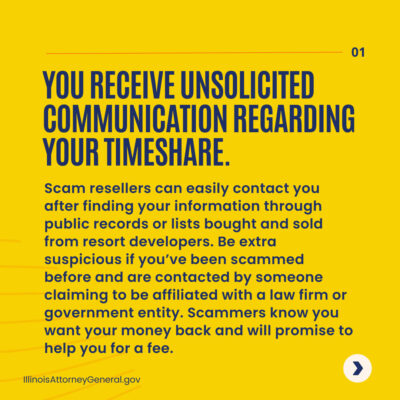 Raoul’s office has received numerous complaints from timeshare owners who have lost significant amounts of money to these scams. The Attorney General is the most recent voice in a wave of advisories encouraging anyone thinking about selling a timeshare to conduct thorough research on any resale company they consider. The AG’s office posted this image (left) on Twitter @ILAttyGeneral to boost additional awareness.
Protecting Yourself from Timeshare Scams
To safeguard against these scams, regulators suggests several key precautions:
- Do Your Homework: Before engaging with a timeshare resale company, thoroughly research their background. Check for any complaints with the Better Business Bureau (BBB) and verify their licensing status.
- Beware of Upfront Fees: Legitimate resale companies typically earn their commission after the sale is complete. Be suspicious of any company that demands upfront payments.
- Get Everything in Writing: Ensure that all promises and terms are documented in writing. Avoid relying on verbal agreements, as they are difficult to enforce.
- Consult with a Legal Professional: Before signing any timeshare resale contract, consider consulting with an attorney who specializes in timeshare law. They can help you spot potential red flags.
The Broader Impact of Timeshare Scams
 Timeshare resale scams not only financially devastate individuals but also contribute to the growing negative perception of timeshare as a whole. As more owners fall victim to these fraudulent timeshare schemes, trust in legitimate resale companies diminishes, making it even harder for owners to sell their vacation properties. To combat this, regulators across the country are increasingly using the media to expand awareness of these and other major consumer protection issues. By leveraging media platforms, they aim to educate the public, amplify warnings, and help prevent further fraud victimization
This regulatory warning highlights the necessity of conducting your own due diligence when dealing with agents in the timeshare resale market. Timeshare owners should remain vigilant against unsolicited offers and promises that seem too good to be true. By dedicating time to research and verification, they can greatly diminish the risk of becoming victims of these scams.
For those who believe they have been targeted or scammed, the Attorney General’s office encourages filing a complaint to help prevent others from falling prey to these deceitful practices. The IC3 program, developed by the FBI and National White Collar Crime Center (NW3C), can provide valuable assistance in identifying current trends and patterns in timeshare resale scams. It also serves as an important tool for regulators to investigate and prosecute these fraudulent activities.
Final Concerns
 Timeshare resale scams have become a major concern for owners trying to sell their properties, with regulators across the country, including Attorney General Raoul, raising the alarm. As these fraudulent schemes continue to spread, it is more important than ever for consumers to stay informed and exercise caution. As we have suggested, timeshare owners can better safeguard themselves against prevalent and deceptive scams by taking proactive measures and seeking professional legal assistance if needed
Disclosure: This article is for information purposes and is not intended as legal advice
_______________________________________________
Led by timeshare attorneys J. Andrew Meyer and Michael D. Finn with over 75 years of combined legal experience. The Finn Law Group is a consumer protection firm that specializes in Timeshare Law. If you feel you need the services of an attorney, please call us for a free consultation.
Call 855-FINN-LAW or Follow us on Twitter X.