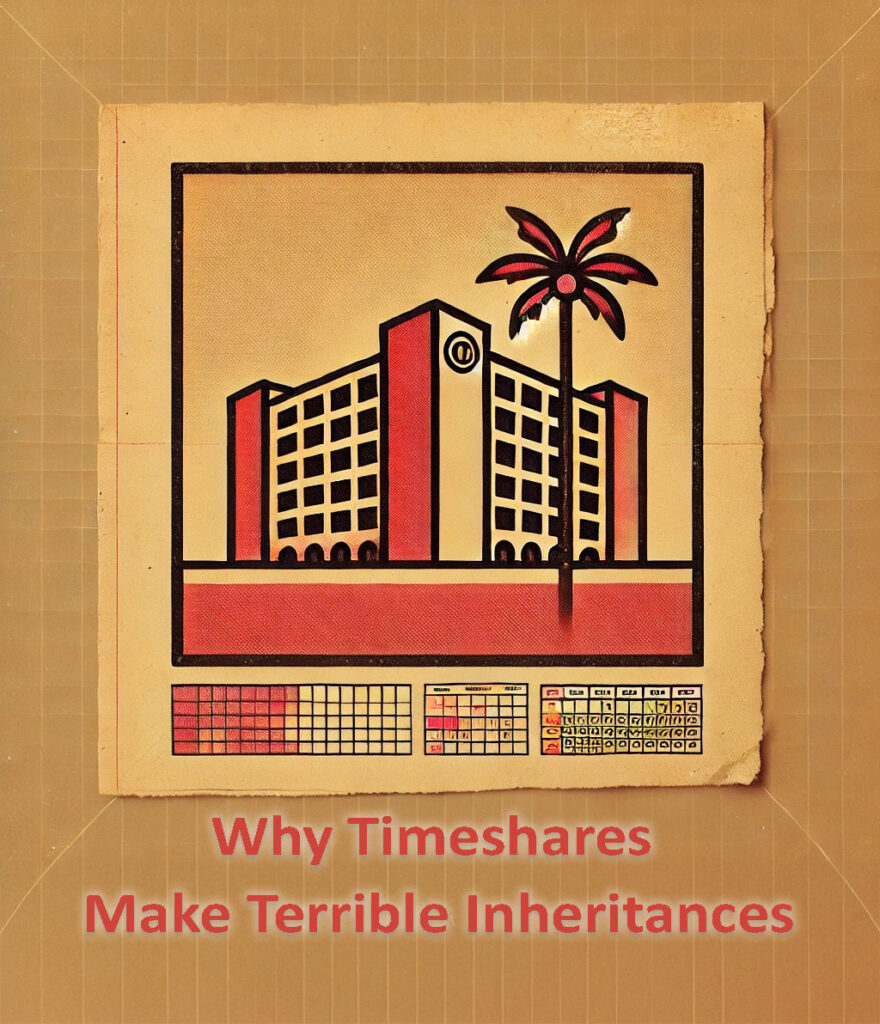
Why Timeshares Make Terrible Inheritances
 When Kiplinger published its list of the worst assets to inherit, timeshares were ranked number one—and the reasoning is compelling. Though often sold as affordable paths to luxury vacations, timeshares rarely live up to the promise, particularly when passed from one generation to the next. What appears on the surface as a legacy of leisure often reveals itself as a web of escalating costs, rigid usage rules, and contractual entanglements. Let’s look closer at why timeshares make terrible inheritances.
Heirs may initially believe they’re receiving a week in paradise, but in reality, they’re inheriting annual maintenance fees, looming special assessments, and long-term obligations that can be nearly impossible to cancel. These burdens tend to come as a surprise, especially to adult children or relatives who neither use nor want the timeshare, and find themselves with few options to sell, transfer, or legally disclaim the inheritance. In many cases, what was once marketed as a lasting investment in family memories becomes an ongoing financial liability fraught with fine print and false promises.
Timeshares: A Financial Legacy Few Want to Receive
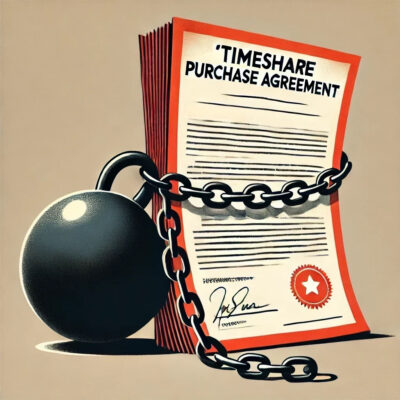 As Kiplinger’s report makes clear, timeshares may begin as a cherished family escape, but they end up being among the least desirable assets to inherit. The resale market is oversaturated, with many properties fetching little to no value due to restrictive transfer policies and weak demand. This lack of liquidity can leave heirs stuck with a commitment they never agreed to—and often one they can’t afford to maintain.
T. Eric Reich, a Kiplinger contributor and president of Reich Asset Management, emphasizes that timeshares should not be viewed as appreciating assets. “I tell clients to sell it for basically nothing if they have to, just to get rid of it,” Reich notes. The priority, he explains, is freeing the estate—and your heirs—from a contract that continues to cost money long after the vacations have stopped.
Adding to the problem, timeshare contracts frequently include language that is dense, complex, and confusing. These agreements are often “in perpetuity,” meaning the obligations continue long after the original owner has passed away. Heirs may find themselves liable for rising annual fees that can escalate without warning, and for special assessments tied to property renovations or upgrades—regardless of whether the timeshare is ever used.
The Legal and Financial Issues of Inherited Timeshares
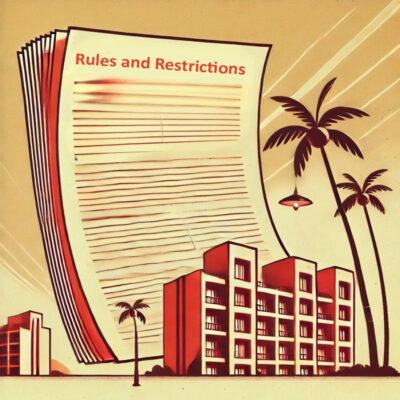 From a legal perspective, the act of inheriting a timeshare is not as straightforward as it may seem. While heirs can take steps to disclaim an inheritance, timing is critical. Once accepted—even implicitly through payment or use—an heir may become legally responsible for fees and debts attached to the timeshare.
As attorney Neil Carbone tells Kiplinger, “they must be very cautious not to use the property after you’re gone, such as a last memorial trip, because this could prevent an effective disclaimer or count as taking over the timeshare contract..”
These can include outstanding maintenance fees, special assessments, and even collections or credit issues if obligations go unmet. The added stress of dealing with these legal complexities can compound grief during an already emotionally difficult time.
A Legacy That Extends Beyond the Original Owner
 One of the most problematic aspects of timeshare ownership is the long-term nature of the contracts—some of which are structured to last indefinitely. These “in perpetuity” clauses are not uncommon and can bind not only the original purchaser but also their heirs to ongoing financial obligations. In practical terms, this means that children—and potentially even grandchildren—may find themselves responsible for a timeshare they never asked for and may never use.
Unless clear steps are taken during estate planning to avoid the transfer, these obligations can survive the death of the original owner and pass through probate to the next of kin. Without proper legal intervention, family members may have little choice but to take on the associated maintenance fees and contractual commitments, often without any viable path to exit. The result is an unintended and sometimes indefinite financial burden passed from one generation to the next.
Consider More Thoughtful Alternatives
If your intention is to leave behind something of value, consider assets that offer flexibility and real financial benefit. Traditional investments such as retirement accounts, cash savings, or even a designated vacation fund give your family the freedom to make their own choices—without being tethered to annual fees or usage restrictions.
T. Eric Reich, a Kiplinger contributor and president of Reich Asset Management, emphasizes that timeshares should not be viewed as appreciating assets. “I tell clients to sell it for basically nothing if they have to, just to get rid of it,” Reich notes. The priority, he explains, is freeing the estate—and your heirs—from a contract that continues to cost money long after the vacations have stopped.
Protect Your Loved Ones from Unwanted Obligations
A gift should bring joy, not stress. Yet, for many families, inheriting a timeshare results in confusion, financial strain, and legal uncertainty. Kiplinger’s ranking is a sobering reminder that well-intentioned estate plans can backfire if they include assets like timeshares, which are notorious for their lack of value and abundance of fine print.
If you currently own a timeshare and are evaluating your estate planning strategy, now is the time to speak with a qualified attorney. There may be options to sell, transfer, or legally disclaim the property—before it becomes someone else’s problem.
Disclosure: This article is for informational purposes only and does not constitute legal advice. Individuals should consult with an attorney or financial advisor to discuss their specific estate planning needs.
Led by timeshare attorneys J. Andrew Meyer and Michael D. Finn, with more than 75 years of combined legal experience, the Finn Law Group is a nationally recognized consumer protection firm that concentrates on Timeshare Law. If you have questions or concerns about timeshare ownership or inheritance issues, contact us for a free consultation—available in-office or by phone. Call 855-FINN-LAW. Be sure to follow us on X for more insights on timeshare-related legal issues.