
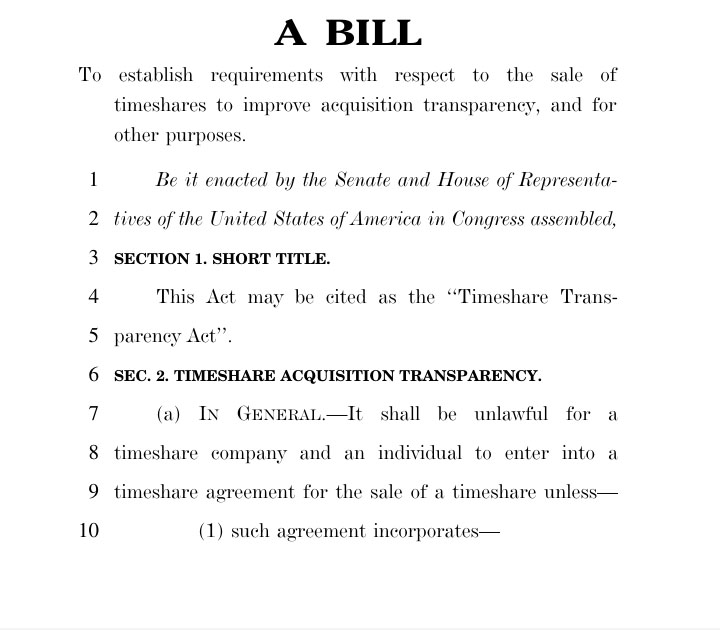
After many years of complaints and controversy surrounding the timeshare industry, a new federal bill called the Timeshare Transparency Act has been introduced in Congress to offer consumers stronger protections and clearer information before they buy. Here is a breakdown of what sparked this effort, who is behind it, and why it is getting serious attention now.
Why This Bill Was Filed
Millions of Americans buy timeshares every year, often while on vacation and do so under “Today Only” sales pressure from resort representatives. Over time, many owners discover hidden fees, confusing contract terms, and limited options to exit their agreements. Consumers have long reported that they felt rushed, misled, or boxed in by paperwork they did not fully understand until after a short rescission period.
Those complaints are a big part of why federal lawmakers stepped in. The timeshare bill is meant to confront a pattern people describe repeatedly: buyers agree to a deal during a high-pressure sales pitch, then later learn the real long-term cost and use restrictions do not match what they thought they were buying.
Who Is Behind the Timeshare Transparency Act
The bill is a bipartisan effort led by Senator John Curtis (R Utah) and Senator Adam Schiff (D California). Supporters say the goal is simple: make timeshare sales more honest and less confusing for regular families.
Senator Curtis has described the problem in plain terms and explained the standard he wants the industry to meet:
“First, you should know what you’re buying, there should be transparency; second, you should know if there’s going to be radical changes to what you’ve bought; and third, you should be able to change your mind within an agreed upon period of time.”
That quote captures the main theme of the bill: clear information up front, fair notice when things change, and real room to reconsider after the sales pitch ends.
What the Bill Would Change for Buyers
While the final shape of the bill will depend on the legislative process, the Timeshare Transparency Act is designed to push timeshare sales toward clearer disclosures and more consumer-friendly rules. Supporters have highlighted several themes in the proposal, including:
- Clear, easy to compare cost information so buyers can see what they are paying now and what they may pay later.
- Better notice and transparency around changes that could affect the value or cost of ownership after purchase.
- A stronger, clearer timeshare cancellation window, so consumers have time to review the deal away from the sales environment.
- More direct information about timeshare exit options, so owners are not left guessing about how to leave the contract.
In other words, the bill aims to reduce the “surprise factor” that so many owners report after signing.
Why It Comes Now After Many Years of Timeshare Issues
Timeshare complaints are not new. What is new is the growing pressure for transparency across consumer markets, especially in travel related industries where fees, fine print, and add on’s can pile up fast. At the same time, lawmakers are hearing more consistent stories from constituents who feel trapped in timeshare contracts they did not fully understand at the moment of purchase.
This federal timeshare bill arrives now because consumer frustration has hit a point where Congress is being asked to do more than issue warnings. The push is shifting toward rules that force clearer disclosures and give people a meaningful chance to reconsider before they are locked in for years.
When to Hire a Timeshare Attorney
A good attorney cannot change the past, but the right one can help you understand your options and protect you from making the situation worse. Consider hiring a timeshare attorney if:
- You believe you were misled during the sales process and want to explore legal remedies.
- Your timeshare maintenance fees or special assessments are rising, and you are unsure what the contract allows.
- You were promised benefits that do not exist in writing, or the written contract conflicts with what you were told.
- You are pressured into an “upgrade” or “owner update” and want someone to review the documents first.
- You are considering a resale, transfer, or exit program and want to avoid scams or risky agreements.
- You have already tried to resolve the issue directly with the developer and are getting nowhere.
In many cases, the most valuable thing an attorney does is slow everything down and force the paperwork and individual circumstances to speak for itself.
Final Thoughts
The Timeshare Transparency Act is a sign that Washington is finally taking a harder look at an industry that has generated years of consumer complaints. Whether the bill becomes law or evolves through amendments, the message is clear: people want straightforward pricing, understandable contracts, and a fair chance to reconsider big financial decisions after the sales pressure is gone. If that standard becomes the norm, it could be a real turning point for timeshare buyers and owners alike.
_________________________________________________________________________________
Disclosure: This article is for general informational purposes only and does not constitute legal advice. You should consult a qualified timeshare attorney for advice specific to your situation.
Led by timeshare attorneys J. Andrew Meyer and Michael D. Finn with over 75 years of combined legal experience. The Finn Law Group is a national consumer protection firm that specializes in Timeshare Law. If you feel you need the services of a timeshare attorney, contact our law firm today at 855-FINN-LAW. Want to learn more about timeshare related issues? Follow us on X, formally Twitter.