
Timeshare Scams Are Preying on Seniors
How Scammers Work Through Timeshare Frauds
 Criminals behind timeshare scams often begin by contacting owners directly—via phone, email, or even mail—claiming they can help sell or rent out the timeshare, or otherwise generate income from it. They may pose as legitimate brokers, attorneys, or agents of government or victims’ assistance offices. Once they have a victim’s trust, they request upfront payments for “fees,” “taxes,” or “processing costs.” Let’s look closer into how timeshare scams are preying on seniors.
Impersonation Scams Prey on Senior Victims
One tactic is to misrepresent that the victim is owed restitution from a prior timeshare or other scam, and that a fee must be paid to receive it. In a recent case, a man working as part of a larger criminal group is accused of defrauding an elderly resident of the region by posing as an agent of the Federal Office for Victims of Crime, specifically targeting elderly people who were previously victims of a timeshare scam.
In that case, an 89-year-old victim allegedly paid more than $300,000 and took on over $89,000 in debt—including opening a home equity line of credit—to try to pay the fraudster.
Key Cases: Recent Arrests & Methods Used
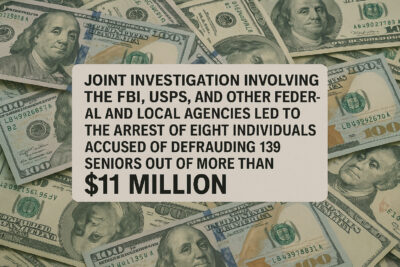 According to WXXI News, a joint investigation involving the FBI, IRS, USPS, and other federal and local agencies led to the arrest of eight individuals accused of defrauding 139 seniors out of more than $11 million.
“My office takes this stuff very, very, very seriously, especially when people are preying on our elderly,” said Michael DiGiacomo, U.S. Attorney for the Western District of New York, at a news conference. “And when in fact we get information, and we can develop a case, we will find those individuals, we will arrest those individuals, and we will prosecute those people to the fullest extent of the law.”
The scams included impersonation of government agencies and customer support fraud. Some defendants allegedly used false names, posing as officials to demand payments for restitution, fees, or processing.
What Red Flags Should Seniors Watch For
- Demand for upfront fees or taxes before any service is provided—especially if you are told you must pay to access restitution or your money back.
- Claims that you’ve won something or are owed money, but must pay to get it.
- Impersonation of government agencies, attorneys, or agencies like the Federal Office for Victims of Crime.
- Urgent or pressure-laden language (“act now or you lose the chance,” etc.)
- Unsolicited calls, emails, or messages from unfamiliar people asking for financial info.
Legal Consequences for Perpetrators
The recent cases carry significant charges, including wire fraud, identity theft, computer fraud, money laundering, and mail fraud. Each charge comes with severe penalties, and convictions can result in decades behind bars, reflecting the gravity of these crimes.
What sets today’s enforcement apart is how technology and advanced communication systems have transformed collaboration among agencies. Federal and local law enforcement now work together in real time through specialized task forces, seamlessly sharing intelligence, digital evidence, and investigative leads. This level of coordination allows authorities to track fraudulent activity across state and even international borders far more effectively than in the past.
The results speak for themselves: joint investigations have not only led to high-profile arrests but have also disrupted complex fraud networks, restored millions in stolen funds, and delivered justice to vulnerable victims. This modern approach demonstrates that when agencies leverage technology and pool resources, outcomes are stronger, swifter, and more impactful.
How Victims Can Seek Help & Protection
 If you suspect you’ve been targeted by a scam, the first and most important step is to stop all communication with the suspected perpetrator. Do not send additional money, even if pressured or threatened. Scammers often rely on creating a false sense of urgency, and cutting off contact removes their ability to manipulate you further.
Take time to document everything. Save emails, text messages, phone numbers, receipts, and even the names used by the caller or sender. These records are invaluable for investigators and can strengthen the case against those responsible.
Next, report the incident to authorities. Start locally with your police department, and then contact your state attorney general’s office. On the federal level, agencies like the FBI accept reports through the Internet Crime Complaint Center at IC3.gov. By filing a report, you’re not only protecting yourself but also helping investigators connect patterns and pursue the larger fraud networks behind these schemes.
It’s also important to talk with trusted family members or friends before making financial transfers or signing any unexpected documents. Scammers often isolate their victims, but involving someone you trust can provide perspective and help prevent further harm. In addition, elder fraud hotlines and nonprofit organizations that advocate for seniors offer resources, counseling, and support tailored to the unique pressures victims may face.
Finally, remember that sharing your story can empower others. Speaking openly about what happened, whether with friends, community groups, or online consumer protection forums, helps break the stigma of being scammed. It reminds others that fraud can happen to anyone—and your experience could be the reason someone else recognizes the warning signs before it’s too late. By stepping forward, you’re not only reclaiming control but also helping to build a stronger line of defense for your community.
Disclosure: This article is for informational purposes only and should not be taken as legal advice. Any images used are for illustrative purposes only and do not depict actual individuals, events, or locations.
At Finn Law Group, we understand how devastating timeshare-related crimes can be—particularly for seniors, who are often targeted by scammers exploiting trust, confusion, or financial vulnerability. Complex contracts, aggressive sales tactics, and fraudulent schemes create a system where many older consumers feel trapped, misled, or powerless. Our mission is to stand up for victims, shed light on industry practices, and provide clarity when the legal system feels overwhelming.
Led by timeshare attorneys J. Andrew Meyer and Michael D. Finn, who bring more than 75 years of combined legal experience, Finn Law Group is a national consumer protection firm dedicated exclusively to Timeshare Law. If you or someone you love has been impacted by a timeshare scam or senior-targeted fraud, reach out to us at 855-FINN-LAW for experienced legal guidance.
To stay informed on consumer protection issues and ongoing timeshare-related developments, follow us on X (formerly Twitter) for updates and insights.