Timeshare Postcard Scam Makes a Comeback: What You Need to Know
For decades, unsolicited travel offers have been one of the most recognizable marketing tools used to attract consumers to timeshare sales presentations. While the names on the postcards may change, the approach often remains remarkably similar.
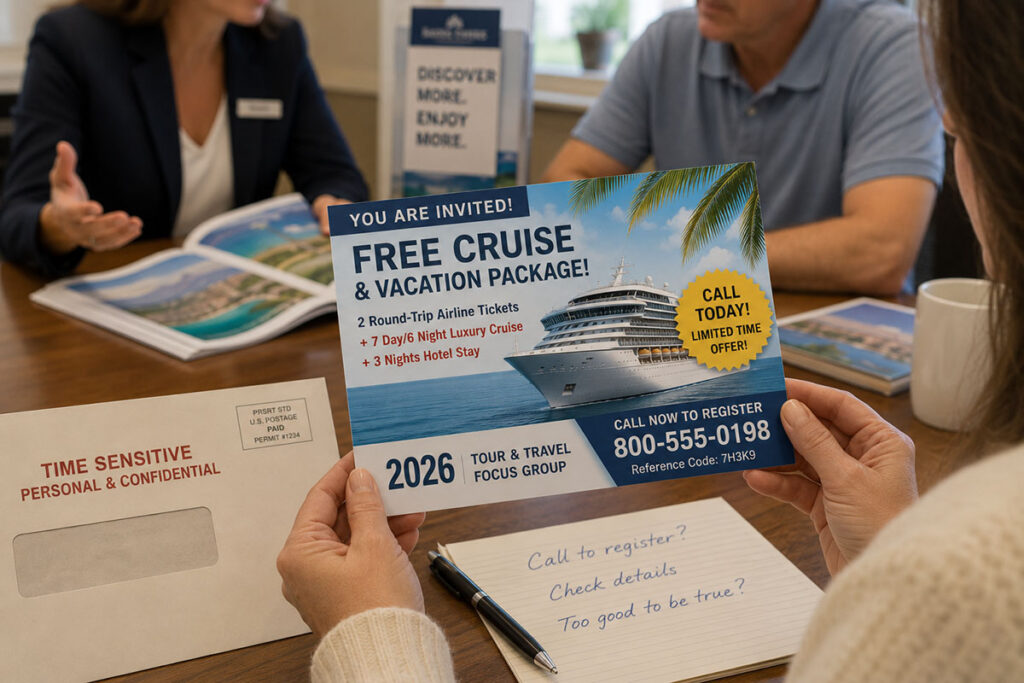
Consumers have recently reported receiving postcards promoting free cruises, complimentary airfare, resort stays, or vacation packages through organizations with names such as “2026 Tour & Travel Focus Group.” The offers appear attractive at first glance, but many recipients later discover that accepting the promotion involves attending a lengthy sales presentation for a timeshare or vacation club.
Understanding how these vacation promotions work can help consumers recognize potential warning signs before sharing personal information or committing to attend a meeting.
Why These Postcards Continue to Appear
The concept is simple. A consumer receives what appears to be an exclusive invitation offering valuable travel incentives in exchange for attending what is described as a brief informational meeting or travel presentation.
The promotion often emphasizes urgency, limited availability, or special qualifications that encourage recipients to respond quickly. While not every travel promotion is deceptive, consumers should understand that the primary purpose of many of these mailers is to generate qualified prospects for a sales presentation rather than simply give away free vacations.
What Consumers Commonly Report
Although individual promotions differ, consumer complaints often describe similar experiences. Some recipients report being promised complimentary airfare, hotel accommodations, cruises, or vacation packages that ultimately required significant restrictions, additional fees, or attendance at lengthy sales presentations.
Others describe being told the presentation would last a short period of time, only to find themselves participating in a much longer sales process focused on purchasing a timeshare or vacation club membership. Many consumers also report that the company sponsoring the promotion was not clearly identified until much later in the process.
Warning Signs to Watch For
Consumers should approach unsolicited travel offers carefully, particularly when they include several of the following characteristics:
Extraordinary Vacation Offers
Promotions advertising free cruises, luxury resort stays, airfare, or expensive vacation packages with little explanation deserve careful scrutiny.
Pressure to Respond Quickly
Language suggesting that only a limited number of people qualify or that the offer expires immediately is often designed to encourage quick decisions before consumers have time to research the promotion.
Unclear Sponsorship
Legitimate travel promotions generally identify the company responsible for the offer. If the sponsoring organization is difficult to identify or appears unrelated to the advertised travel brands, additional research is advisable.
Requests for Sensitive Information
Consumers should be cautious whenever an unsolicited promotion requests Social Security numbers, banking information, or detailed financial information before any travel arrangements have been confirmed.
Long Sales Presentations
Many recipients report that what began as a travel promotion ultimately became a lengthy sales presentation focused on purchasing a timeshare or vacation ownership product.
Why These Sales Promotions Continue to Work
The success of these campaigns is not based solely on the promise of a free vacation. They are built around well-established marketing principles. Limited-time offers create urgency. Vacation imagery appeals to emotion. Small incentives encourage consumers to attend presentations they otherwise might decline.
As one promotion loses effectiveness, another often appears using a different company name, updated graphics, or revised language while relying on many of the same marketing techniques. For consumers, recognizing the pattern is often more valuable than remembering the name of a particular promotion.
If You Already Responded
Many people do not realize they may have concerns until after they have attended the presentation. If you accepted the invitation, attended a sales meeting, or signed documents during the presentation, begin by gathering everything you received.
This may include the original postcard, promotional materials, purchase documents, financing paperwork, emails, text messages, and notes describing what occurred during the presentation. If personal information was provided during the process, monitoring your credit reports and financial accounts is also a prudent step.
The more documentation you preserve, the easier it becomes to understand exactly what occurred and evaluate any available options.
Why Legal Review May Be Appropriate
Not every promotional postcard results in a legal issue. However, if a consumer believes important representations made during the promotion or sales presentation were inaccurate or misleading, those facts may warrant further review.
An experienced timeshare attorney can evaluate the purchase documents, discuss the circumstances surrounding the presentation, and determine whether the facts raise legal issues involving the sales process or the resulting contract. Every situation is different, which is why an individualized legal review is often more valuable than relying on generalized information found online.
Frequently Asked Questions
Are all travel postcards scams?
No. Some travel promotions are legitimate marketing programs. However, unsolicited offers promising expensive vacations should be researched carefully before responding.
Why do these promotions often involve timeshare presentations?
The travel incentive is frequently used to encourage consumers to attend a sales presentation where a timeshare or vacation ownership product is offered.
Should I provide my Social Security number to qualify?
Consumers should be cautious about providing sensitive personal information in response to unsolicited promotions without fully understanding who is requesting it and why.
What if I already attended the presentation?
Keep all documents you received, write down everything you remember about the presentation, and preserve any communications relating to the promotion.
Can an attorney review what happened?
Yes. If you believe you were misled during the promotion or sales presentation, an attorney can review your documents and explain what legal options may be available based on your individual circumstances.
Final Thoughts
Timeshare marketing has evolved over the years, but many of the underlying techniques remain familiar. Free vacations, limited-time offers, and exclusive invitations continue to attract consumers looking for travel opportunities.
The best protection is taking time to research any unsolicited offer before responding, asking questions about who is sponsoring the promotion, and understanding exactly what is expected in return.
If you have already attended a presentation and believe you were misled, speaking with an experienced timeshare attorney can help you better understand your rights and the options available based on your specific circumstances.
Disclosure
This article is provided for informational purposes only and should not be considered legal advice. Every consumer transaction is unique and depends on the specific facts, contractual terms, and applicable law. Receiving a promotional travel offer does not necessarily indicate unlawful conduct. If you believe you were misled during a timeshare or vacation club sales presentation, you should consult with a licensed attorney to discuss your specific situation.
About Finn Law Group
Led by timeshare attorneys J. Andrew Meyer and Michael D. Finn, whose combined legal experience exceeds 75 years, Finn Law Group is a national consumer protection law firm headquartered in St. Petersburg, Florida. The firm represents consumers in matters involving timeshare disputes, deceptive sales practices, consumer fraud, credit reporting issues, debt collection matters, and other consumer protection claims.
If you would like an experienced timeshare attorney to review your situation and discuss your legal options, contact Finn Law Group for a free consultation by calling 727-214-0700 or emailing contact@finnlawgroup.com.
Follow Finn Law Group on X for the latest consumer protection news, legal insights, and educational resources designed to help consumers better understand their rights.