
Timeshare Debt as Lingering Vacation Expense
More Than Memories: WalletHub Reports Vacation Debt Lingers
 According to WalletHub’s Summer Travel Credit Card Survey, more than 1 in 3 Americans still carry credit card debt from their last vacation. While many consumers associate vacations with freedom and relaxation, the financial hangover can last far longer than the tan lines. For some, that debt doesn’t just come from flights or resort stays—but from timeshare purchases made while on vacation, often emotionally influenced and financed at high interest rates. In fact, timeshares often represent one of the most enduring forms of vacation-related debt. The financial commitment begins with the initial down payment—frequently made using a timeshare-sponsored credit card that is opened on the spot, often without adequate time for thoughtful consideration.
From there, the cost escalates with the full purchase price, which is typically financed at double-digit interest rates. This creates a lingering debt cycle masked as a vacation benefit, where consumers are left paying for a moment of spontaneity with years of financial regret. The result? A “vacation” that follows them home—in the form of monthly statements and accumulating interest charges.
Attorney Mike Finn: “You’re Buying a Vacation in Today’s Dollars—at Credit Card Rates—for 10 Years”
Attorney Mike Finn of Finn Law Group offers a sobering take on how these lingering debts are structured:
“Buying a timeshare can be like buying a lifetime of vacations in today’s dollars at credit card rates—then paying that off over a 120-month term. The catch? You don’t even get full ownership. You just get the bills.”
The reality is stark: many consumers sign contracts while on vacation, often under pressure, and later find themselves locked into long-term financial obligations for a property they can barely use or even book when they want.
Timeshare Upgrades: The Perfect Storm of Emotional Spending and Long-Term Debt
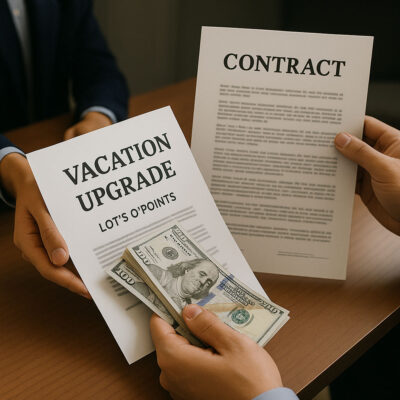 Timeshare upgrades are a prime example of what WalletHub refers to as “lingering vacation debt.” It’s not uncommon for vacationers to sit through a so-called “owner update” that quickly turns into a high-pressure sales pitch. Tempted by the illusion of more flexibility or better destinations, owners upgrade—and take on new debt.
Each upgrade may come with new financing, typically at double-digit interest rates, and it doesn’t end there. Owners remain responsible for rising annual maintenance fees, property taxes, and special assessments, regardless of whether they use the timeshare or not.
No True Ownership, Just Perpetual Liability
 One of the most misunderstood aspects of timeshare ownership is the lack of actual ownership. Unlike real estate, where you hold title and equity, most modern timeshares are sold as points or vacation club memberships. These contracts offer limited control and nearly no resale value, yet bind consumers to indefinite financial commitments.
Even when paid in full, timeshare owners face lifelong maintenance fees and the looming threat of assessments. This creates a form of “forever debt”—one that can outlast the original credit card vacation expense and become a family liability passed to heirs.
How Consumers Can Protect Themselves
If you find yourself burdened with vacation-related debt from a timeshare purchase or upgrade, know that legal help is available. Consumer protection attorneys can review your timeshare contract, investigate potential misrepresentations, and help you understand your options—whether through negotiation, cancellation, or litigation.
Final Thought: Lingering Vacation Debt Deserves More Attention
 The WalletHub survey highlights a growing issue in American financial behavior: we’re spending more on vacations than we can afford, and often committing to long-term obligations with little understanding of the consequences. Timeshare purchases and owner upgrades exemplify this trend and serve as a cautionary tale of how easy it is to convert a temporary escape into a permanent financial burden.
Remember, you hold the cards—and you owe it to yourself and your family to take a step back and consider whether a timeshare truly fits your lifestyle, both now and in the years to come. As Attorney Mike Finn puts it, “That ‘Today Only’ deal they’re pushing? It’ll still be there tomorrow—but the debt it creates might be with you for decades.”
Disclosure: This article is intended for informational purposes only and should not be considered legal advice. Images included are used for illustrative and artistic purposes only and do not depict actual individuals, events, or specific locations.
____________________________________
Led by timeshare attorneys J. Andrew Meyer and Michael D. Finn with over 75 years of combined legal experience. The Finn Law Group is a national consumer protection firm that specializes in Timeshare Law. If you feel you need the services of a timeshare attorney, contact our law firm today at 855-FINN-LAW. We provide a free consultation in office or by phone. | Want to learn more on timeshare related issues? Follow us on X.