The Return of the Timeshare Reseller
A Familiar Problem Resurfaces
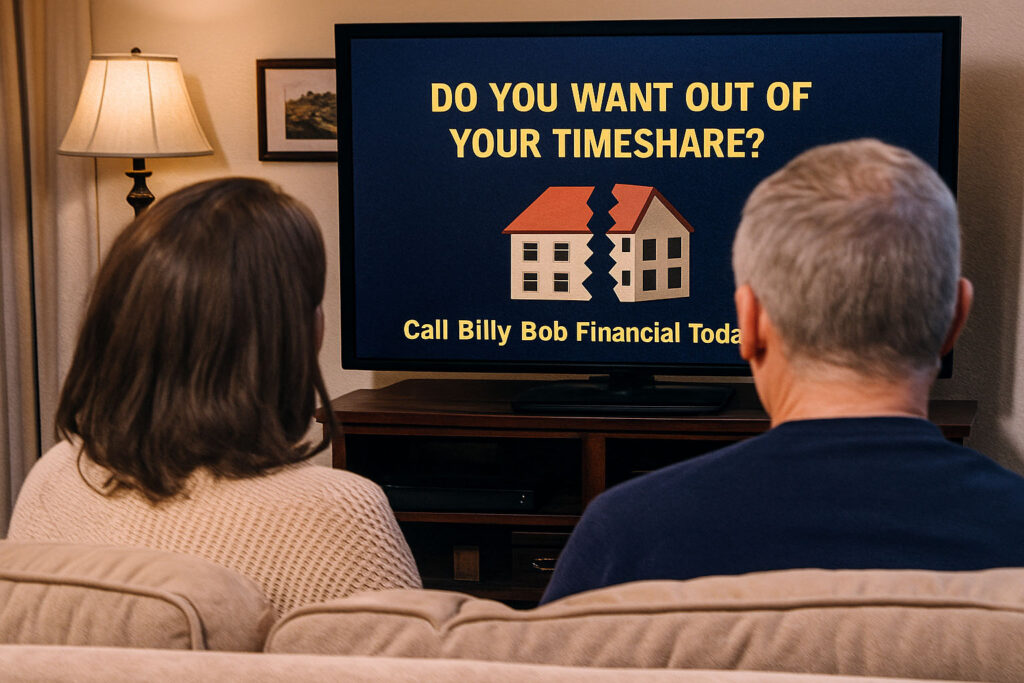
 For many Americans, owning a timeshare was once seen as a ticket to carefree family vacations and lasting memories. But over the years, rising maintenance fees, limited booking options, and changing lifestyles have turned that dream into a source of frustration—leaving countless owners searching for a way out. Now, with economic pressures mounting and retirement incomes tightening, a new wave of resellers has emerged, promising quick and easy exits.
Unfortunately, what feels like relief often turns out to be another burden. The Federal Trade Commission (FTC) is once again warning consumers about timeshare resale scams, a deceptive practice that preys on vulnerable sellers eager to reclaim control of their finances.
According to a recent Space Coast Daily report, the FTC notes that fraudulent timeshare resale companies are flooding the market with convincing offers, often backed by polished websites and professional-sounding representatives. But behind that façade, their goal is not to help owners sell, it’s to take their money and disappear.
The Pitch: Too Good to Be True
Timeshare resale scams usually begin with an unsolicited phone call or email. The pitch sounds hopeful:
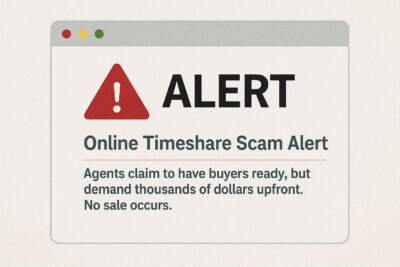
“We already have a buyer lined up for your timeshare—sometimes even an international investor. All we need is a small upfront payment to cover taxes or transfer fees.”
Once that payment—often thousands of dollars—is made, the so-called company vanishes, or the seller is met with endless excuses. According to the FTC, victims are sometimes told additional funds are needed for “title insurance,” “closing costs,” or “legal documentation.” Each payment deepens the loss.
The sad reality is that there never was a buyer, and the sale was never real.
Why timeshare resale scams Are Especially Vulnerable
 The return of the timeshare reseller has brought renewed concern, as the FTC’s warning underscores that timeshare resale scams succeed because they exploit both financial and emotional vulnerabilities.
- Emotional Fatigue and Desperation
Many timeshare owners feel trapped—paying ever-increasing maintenance fees for a property they no longer use. Scammers know this and exploit that exhaustion with promises of quick relief. - Lack of Transparency in the Resale Market
Unlike traditional real estate, there is no standard MLS or regulated valuation system for timeshares. Owners have no clear benchmark for what their property is worth, which makes them more susceptible to inflated or fabricated offers. - Pressure Tactics and False Authority
Fraudulent companies often use fake credentials, posing as licensed brokers or even implying affiliation with major resort brands. They use time-sensitive language like “This buyer is only available today” to push sellers into quick, emotional decisions. - Regulatory Gaps
While state regulators and the FTC pursue these cases, enforcement is difficult because many of these operations use offshore accounts or fake business addresses. By the time a victim realizes the truth, the scammers have already closed shop and resurfaced under another name.
What the FTC Recommends to Timeshare Owners
In its October 2025 alert, the FTC advises timeshare owners to stay cautious and never pay upfront fees to resell a timeshare. Legitimate real estate/resale agents are almost always paid after a successful sale and closing and not before.
The consumer protection agency recommends several practical steps:
- Get all promises in writing. Don’t rely on verbal assurances or emails.
- Verify the company’s license through state real estate boards or consumer protection offices.
- Search online for complaints or reviews using the company’s name and terms like “scam” or “complaint.”
- Be skeptical of cold calls or offers that claim your timeshare can sell at a profit. The secondary market rarely yields high returns.
- Report suspicious behavior to the FTC or state attorney general’s office immediately.
Even when done legitimately, timeshare resales seldom return the original investment. Most owners are lucky to recover a fraction of what they paid, which makes avoiding further loss all the more important.
Recognizing the Signs Before It’s Too Late
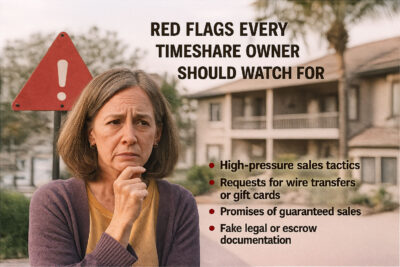 The red flags every timeshare owner should watch for:
- High-pressure sales tactics. You’re told to act fast or lose a buyer.
- Requests for wire transfers or gift cards. These payment types are untraceable and nearly impossible to recover.
- Promises of guaranteed sales. No legitimate timeshare reseller can promise a sale or set price.
- Fake legal or escrow documentation. Scammers often create counterfeit contracts that look real but have no legal validity.
The return of the timeshare reseller has created new confusion in the marketplace. When uncertainty creeps in, owners are often told to contact their resort developer to verify whether a supposed buyer or broker is legitimate. On the surface, that advice seems sound—but even this path can feel uncertain. Some developers do offer internal resale or surrender programs that appear safer and more transparent, yet owners have learned that these programs can come with their own fine print, delays, and restrictions.
The Human Toll of Timeshare Resale Fraud
 Behind every complaint filed is a story of trust violated. Seniors on fixed incomes often fall victim because they’re desperate to eliminate rising maintenance costs. Some owners have spent decades faithfully paying their fees—only to lose thousands more trying to escape them.
These scams don’t just drain bank accounts; they drain confidence. Victims describe feelings of shame, anger, and helplessness—emotions that make them less likely to seek help or report the crime. The FTC and state authorities are working to change that narrative by urging victims to come forward.
Moving Forward: Protecting Consumers Through Awareness
The resurgence of resale scams reminds us that consumer education remains the best defense. Understanding how these schemes work—and recognizing the emotional hooks scammers use—empowers timeshare owners to pause and verify before acting.
If you or someone you know has been targeted, report it immediately at reportfraud.ftc.gov. Every report helps regulators identify patterns, shut down bad actors, and protect others from the same trap.
Final Thoughts
The “return of the timeshare reseller” may look new, but the story is old and familiar tactics dressed up in fresh marketing. While the promises sound tempting, timeshare owners should remember one simple truth: a real buyer never needs your money to make the deal happen.
The FTC’s renewed warning serves as a timely reminder to slow down, verify every detail, and keep your hard-earned money out of the hands of those who profit from desperation.
Disclosure: This article is for informational purposes only and should not be taken as legal advice. Any images used are for illustrative purposes only and do not depict actual individuals, events, or locations.
Led by timeshare attorneys J. Andrew Meyer and Michael D. Finn, who bring more than 75 years of combined legal experience, Finn Law Group is a national consumer protection firm dedicated exclusively to Timeshare Law. If you or someone you love has been impacted by a timeshare scam or senior-targeted fraud, reach out to us at 855-FINN-LAW for experienced legal guidance.
To stay informed on consumer protection issues and ongoing timeshare-related developments, follow us on X (formerly Twitter) for updates and insights.