
The Problem with FICO Scores
 FICO scores, a cornerstone of the credit industry, significantly influence an individual’s financial opportunities. However, the system faces criticism for its lack of transparency and fairness, often leading to potentially unjust outcomes for many consumers.
According to TheBigNewsletter.com, FICO sells an astounding 10 billion scores annually—four times the number of McDonald’s burgers and twice the number of Starbucks coffees sold each year.
The company reports that nine out of ten lending decisions depend on FICO scores, making it imperative to address its shortcomings for the sake of consumer protection.
Lack of Transparency: A Barrier to Financial Empowerment
In an era when Americans are working harder than ever to buy homes, cars, or access other financial opportunities, FICO scores present significant challenges, primarily due to their lack of transparency. The algorithm used to calculate these scores is proprietary and not disclosed to the public, leaving consumers in the dark about how their financial behaviors impact their scores. This secrecy prevents individuals from taking informed actions to improve their creditworthiness.
Without knowing the specific factors and their weights, consumers are left guessing. This often leads to frustration and a sense of helplessness, as people are unable to effectively manage their credit profiles or understand why their scores fluctuate. The opacity of the FICO scoring system thus stands as a formidable barrier to financial empowerment, making it difficult for consumers to achieve their financial goals despite their best efforts.
Incomplete Picture of Creditworthiness
 FICO scores primarily rely on credit reports, which include detailed information on credit accounts, payment history, and debt levels. However, this data set often overlooks other crucial factors that could provide a more comprehensive view of a person’s financial health. For instance, FICO scores do not typically consider income, which reflects an individual’s capacity to meet financial obligations. Similarly, savings, which indicate financial prudence and preparedness for unexpected expenses, are also excluded. Employment history, which can show stability and the ability to generate a steady income, is another significant factor not considered in FICO scores. This narrow focus can disadvantage individuals who are financially responsible but lack an extensive credit history, such as young adults, recent immigrants, or those who prefer using cash over credit. Consequently, their true creditworthiness is not accurately reflected, potentially limiting their access to essential financial products like loans and mortgages, and leading to higher interest rates that could otherwise be avoided.
Impact of Errors on Credit Reports
 Errors in credit reports are not uncommon and can have a significant, often devastating, impact on FICO scores. Inaccurate information, such as incorrect account details, outdated records, or signs of fraudulent activity, can unfairly lower a person’s score. For example, a clerical error might show a paid-off loan as still outstanding, or a victim of identity theft could have unauthorized debts recorded in their name.
Correcting these errors can be a cumbersome and time-consuming process, often requiring multiple disputes and follow-ups with credit reporting agencies. During this period, consumers may face higher interest rates or be denied credit altogether, making it difficult to finance essential needs like housing, education, or healthcare. This unfair treatment exacerbates financial stress and creates unnecessary barriers to economic stability. The delay in rectifying these errors means that consumers are left in a precarious financial situation, potentially missing out on opportunities and facing increased financial strain.
Disproportionate Impact on Certain Demographics
Research indicates that FICO scores can disproportionately affect certain demographic groups, including minorities and low-income individuals. These groups often have limited access to credit and financial education, leading to lower scores. They also face systemic issues, such as predatory lending practices and economic instability, which further impact their credit. This disproportionate effect perpetuates economic inequality and restricts opportunities for financial advancement.
Penalization for Short-Term Financial Hardships
FICO scores tend to penalize individuals for short-term financial hardships. A temporary job loss or medical emergency that leads to missed payments can significantly damage a person’s credit score, even if they were otherwise financially responsible. Recovery from such setbacks can take years, during which individuals may face increased financial strain due to higher borrowing costs. This penalization is not only unfair but also adds to the burden during already challenging times.
 Encouragement of Debt Over Savings
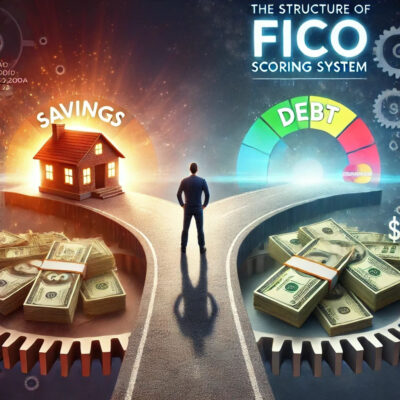
The structure of the FICO scoring system can inadvertently encourage individuals to take on more debt rather than save money. Since a significant portion of the score is based on credit utilization and history, consumers might prioritize maintaining active credit accounts over building savings. This behavior can lead to higher levels of debt and financial vulnerability, undermining long-term financial health.
Moving Forward: A Call for Fairness
To address these issues, several changes could be implemented to create a fairer and more transparent credit system:
- Increase Transparency: Disclosing the FICO scoring algorithm would empower consumers to make more informed decisions about their credit behaviors.
- Incorporate Broader Financial Data: Including factors such as income, savings, and employment history could provide a more accurate measure of creditworthiness.
- Efficient Error Correction: Streamlining the process to correct errors on credit reports would ensure fairer outcomes and reduce undue financial stress.
- Reduce Disproportionate Impact: Policies aimed at financial education and protections against predatory lending could help level the playing field for all demographic groups.
- Revise Scoring Model: Adjusting the scoring model to reduce penalization for short-term financial hardships and encourage savings over debt would promote healthier financial behaviors.
Final Thoughts: Advocating for Fairness in Credit Reporting
FICO scores have been a cornerstone of the credit industry for decades, serving as a critical measure of creditworthiness. However, they are not without flaws, and it’s important to recognize the challenges they present. As consumers, it’s vital to remember that you have rights when it comes to credit reporting. The Fair Credit Reporting Act (FCRA) provides you with the right to dispute inaccurate information and requires credit reporting agencies to correct any verified errors promptly.
By acknowledging and understanding the inherent issues within the FICO scoring system, consumers can better navigate their financial journeys. It’s essential to educate yourself on how these scores work and recognize their limitations. Being informed empowers you to take proactive steps in managing your credit. Remember, you have the right to dispute inaccurate information on your credit reports, and credit reporting agencies are obligated to correct any errors. By staying vigilant and advocating for your financial well-being, you can work towards a fairer assessment of your creditworthiness, ensuring that your financial health is accurately represented and safeguarded.
Disclosure: This article is for informational purposes only and is not intended as legal advice.
____________________________________
Led by attorneys J. Andrew Meyer and Michael D. Finn with over 75 years of combined legal experience, the Finn Law Group is a consumer protection firm specializing in Timeshare Law and FCRA (Fair Credit Reporting Act) violations. Based in St. Petersburg, Florida the primary mission of the Finn Law Group is to protect consumers from unfair and deceptive business practices.
To learn more about the Finn Law Group, please visit our social media page on X.