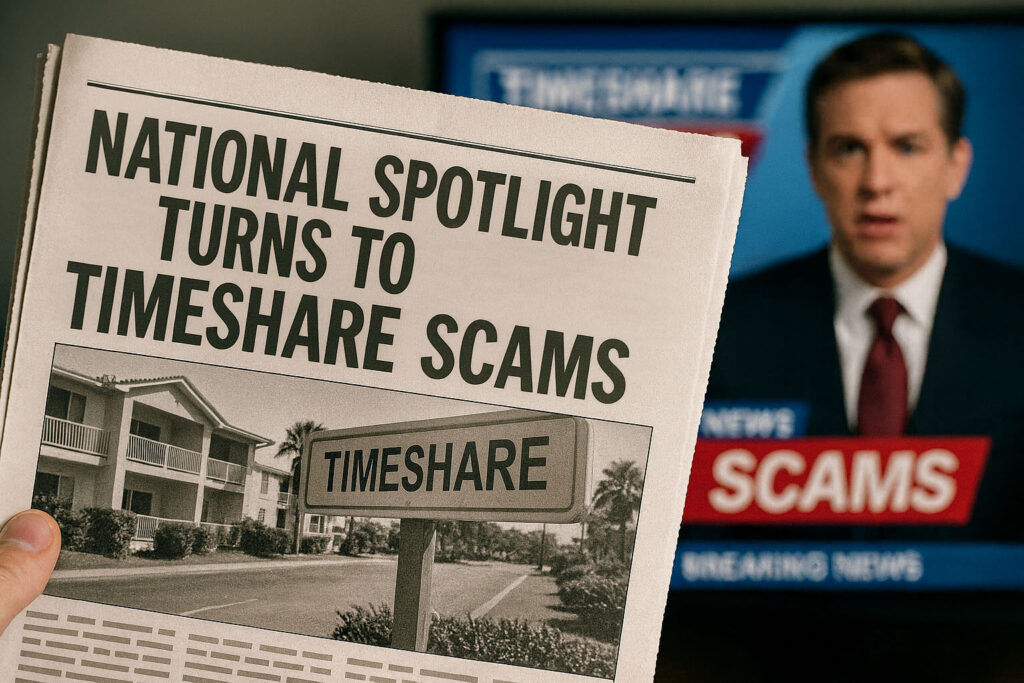
National Spotlight Turns to Timeshare Scams
 Timeshare scams have been around for decades, but now they’ve reached a level that can’t be ignored. Across the country, these schemes are making headlines and catching the eye of both state and federal officials. What used to be dismissed as a “buyer beware” issue has now turned into a widespread consumer protection crisis.
States like Utah are now sending a clear message: enough is enough. With so many people losing money, especially seniors and families, state consumer protection units are stepping up. At the same time, national news outlets are reporting on the surge in fraud, putting public pressure on regulators to act. The attention has become so strong that it is reshaping the conversation about what national protections need to be in place for everyday people caught in the timeshare trap.
Utah Signals a Turning Point
The Utah Division of Real Estate is drawing a firm line in the sand when it comes to fraudulent timeshare offers, warning consumers to be more careful than ever. According to Director Leigh Veillette, one of the clearest signs of a scam is when a company demands money upfront before providing any real service or result. She told Fox 13 in Salt Lake City.
“If a company is wanting upfront fees, if you’re going to purchase a timeshare, if you’re looking for someone to help you exit a timeshare, that is a red flag,”
This advice cuts to the heart of a widespread problem in the timeshare industry. Scammers often exploit the stress and financial strain that timeshare owners face, promising quick exits or resale opportunities—but only after collecting large fees in advance. The reality, however, is that many of these companies disappear once they have the money, leaving consumers even more frustrated and financially burdened.
Unsolicited Offers: A Trap for the Unaware
 Another critical warning sign, Veillette explained, is unsolicited offers. Whether it’s a cold call, an email, or even a mailed letter, unexpected outreach should raise immediate suspicion. Instead of trusting strangers who appear out of nowhere, she advises consumers to rely on the original source of their timeshare contract.
“The first step for someone who owns a timeshare who is interested in potentially selling that timeshare or exiting that interest is to reach out to the actual company that they purchased the timeshare from,” said Veillette.
While it’s practical to check with the developer first, some operate behind the veneer of “programs” that offer little real help or misdirect with resale. And if owners already feel misled or mistreated, returning to the developer is rarely comfortable. In those cases, seeking independent legal advice can provide a clearer path forward.
Thinking Beyond the Purchase of Timeshare
Veillette also urged timeshare buyers to consider the long-term implications of ownership, particularly what happens after they pass away. Many consumers buy into timeshares during their prime vacation years without realizing that these contracts often outlast them.
“Make sure that at the time of purchase, they understand what is going to happen to that interest,” Veillette stressed. “That timeshare upon their death, is it going to pass to family members? Is that going to potentially become a financial liability or burden on your family members?”
This is a sobering reminder that timeshares, while marketed as lifestyle investments, carry lasting legal and financial obligations. If ownership automatically transfers to heirs, the property can quickly become a burden instead of a benefit. Families unprepared for timeshare maintenance fees or contractual obligations may find themselves entangled in unwanted responsibilities.
The Larger Message
Utah’s warning reflects a broader shift in how regulators are addressing timeshare fraud. By highlighting upfront fees, unsolicited offers, and the long-term consequences of ownership, Veillette and the Division of Real Estate are signaling that education and awareness are the best defenses. Consumers who recognize the red flags and take proactive steps can protect themselves and their families from becoming the next victims of costly timeshare scams.
A Growing National Concern
 While western states like Utah are taking a strong stand, they are not alone. Federal agencies, state regulators, and even financial advisors are all warning that the scale of timeshare fraud has grown too large to overlook. News outlets are reporting a steady stream of stories about families drained of savings or seniors tricked by promises that never came true. This growing national spotlight is forcing a closer look at how these timeshare scams are operating and what can be done to stop them.
Common tactics include:
- Guaranteed results that never happen (“We’ll sell your timeshare fast”).
- Pressure to act quickly with contracts that hide the fine print.
- Cold calls or emails claiming buyers are already lined up, but requiring fees to move forward.
The Federal Trade Commission (FTC) has warned that companies promising easy exits for a price almost always fail to deliver. The best protection, according to the FTC, is to avoid paying money before services are complete and to verify the company’s credentials.
Why Utah’s Stand on Timeshare Scams Matters
Utah’s media response is a sign that state agencies are beginning to recognize just how serious this issue has become. Timeshare scams are no longer a local or state nuisance—they are a nationwide problem with tens of thousands of victims. By stepping forward, Utah is setting an example of what consumer protection can look like when state authorities, federal agencies, and the media all work together to identify and hold bad actors accountable.
What You Can Do to Protect Yourself
If you own a timeshare and are worried about scams, here are a few simple steps to follow:
|
Step |
Why It Matters |
|---|---|
|
Don’t pay upfront fees |
Most scams demand money first but deliver nothing. |
|
Contact your timeshare provider |
They may have official programs to help owners exit. |
|
Report suspicious activity |
File complaints with the FTC or your state real estate division. |
|
Get legal advice |
An attorney can help you understand contracts and protect your family from liability. |
|
Stay informed |
Awareness is the strongest defense against fraud. |
Final Thoughts
Timeshare ownership is marketed to deliver lasting vacation memories, not ongoing financial stress. Yet in Western states like Utah, Colorado, Nevada, and Arizona, owners have become a frequent target for increasingly aggressive timeshare scams. Fraudsters know that these regions are home to a high concentration of timeshare properties and eager vacationers, making families especially vulnerable to unsolicited offers and demands for upfront fees. The red flags are often easy to spot—but only if consumers know what to watch for.
Disclosure: This article is intended for informational purposes only and should not be considered legal advice. Images included are used for illustrative and artistic purposes only.
____________________________________
The Finn Law Group is a law firm that specializes in timeshare law and advises on how to spot and avoid timeshare scams, which include predatory resale schemes, fake rental offers, and fraudulent exit services. They warn against high upfront fees for services, aggressive sales tactics, lack of transparency, and pressure to pay via untraceable methods like cryptocurrency or gift cards. To avoid scams, the Finn Law Group recommends verifying credentials, checking independent reviews, conducting due diligence, and consulting the Better Business Bureau or the Federal Trade Commission (FTC) for information.