Legal Standards for Service Animals at Timeshares
 We often hear from frustrated owners who are confused and do not understand the restrictions that apply to their furry companions when staying at timeshares. We understand how important it is for some pet owners to take their pets on vacation. Pets however are often prohibited at many timeshares.
This article aims to clarify the legal standards regarding service animals at timeshares. Navigating these regulations can be challenging, especially with the different rules for service animals compared to emotional support or therapy animals. Our goal is to provide you with this information, ensuring you understand your rights and responsibilities when traveling with a service animal to a timeshare.
What is a Service Animal?
 Service animals are defined by the Americans with Disabilities Act (ADA) as dogs that are individually trained to perform tasks or do work for people with disabilities. These tasks must be directly related to the individual’s disability. Examples include guiding people who are blind, alerting people who are deaf, pulling a wheelchair, or alerting and protecting a person who is having a seizure.
Importantly, emotional support animals, therapy animals, and comfort animals do not qualify as service animals under the ADA. While these animals provide significant emotional support and comfort through their presence, this role is not considered a trained task related to a disability. As a result, they do not receive the same legal protections as service animals.
Understanding these distinctions is important when planning a vacation that involves staying at timeshares. Clarity on the rules and regulations of pets, ensures you know your rights and responsibilities when traveling with a service animal.
Service Animals at Timeshares
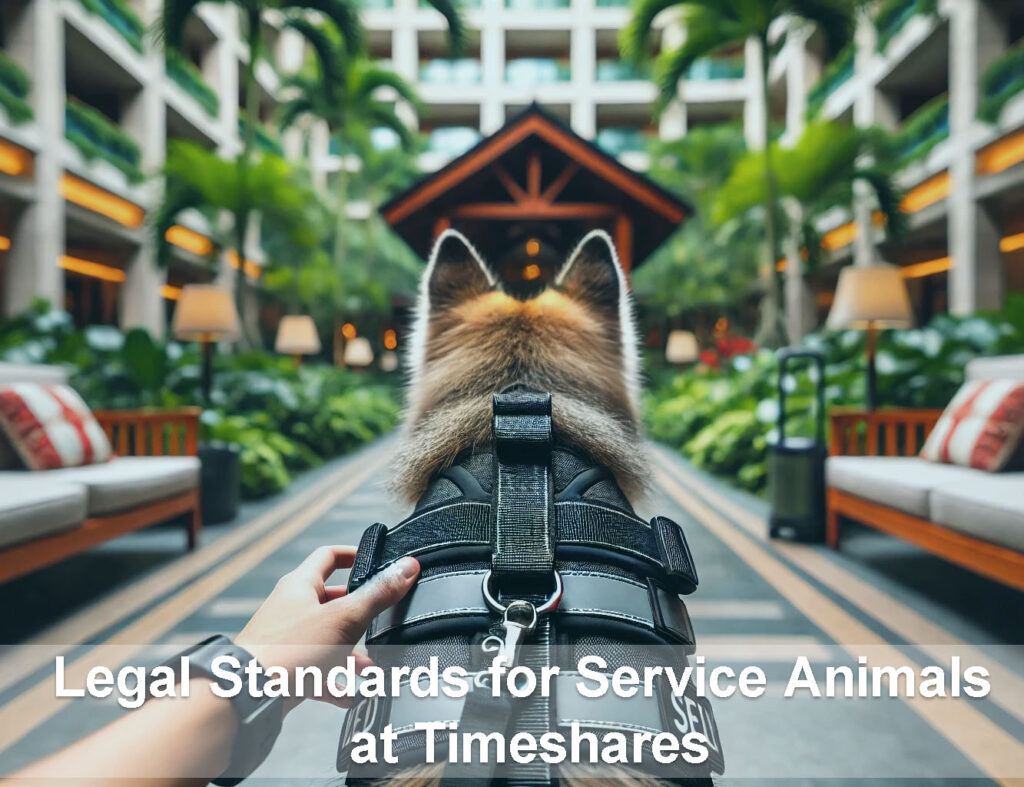
 Timeshare properties, like other public accommodations, are required by the ADA to allow service animals to accompany their handlers in all areas where the public is normally allowed to go. This includes guest rooms, dining areas, pools, and other common spaces within the property. The presence of a service animal in these areas is essential for the independence and safety of individuals with disabilities.
Getting off to the right start includes ensuring that your reservations clearly state that you are traveling with a service animal. This can help the timeshare resort prepare any necessary accommodations and avoid misunderstandings at check-in. It’s essential for the reservation system to document the presence of a service animal and include any special instructions to accommodate both the handler and the animal effectively. Timeshare resort properties may limit the number of units available for service animals due to size constraints and other factors.
Service animals must be under the control of their handler at all times, typically via a harness, leash, or tether. However, the ADA recognizes that these devices may not always be practical due to the nature of certain disabilities. In such cases, handlers may use voice control, signals, or other effective means to manage their service animals.
Limitations for Other Animals
While service animals are afforded protections under the ADA, other types of animals are not. Emotional support animals, comfort animals, and therapy dogs do not qualify as service animals under the ADA because they are not trained to perform specific tasks related to a disability. Consequently, timeshare properties are not required to allow these animals on their premises.
This means that unless a property specifically allows pets or has a policy in place to accommodate emotional support animals, these animals will not be permitted. Timeshare resorts often post their policies regarding pets both on their websites and on property signage to ensure clarity for all guests. It’s important for travelers to review these policies in advance to avoid any inconvenience or misunderstandings during their stay.
Legal Considerations and Property Policies
Timeshare properties must comply with the ADA, which means they cannot ask for certification or documentation proving that a dog is a service animal. They are permitted to ask only two questions: (1) Is the dog a service animal required because of a disability? and (2) What work or task has the dog been trained to perform? Any other inquiries about the person’s disability or the dog’s capabilities are not allowed under ADA regulations.
Responsibilities of the Timeshare Owner and Handler
Timeshare owners are responsible for their service animals at all times. This includes ensuring the animal is housebroken and that it does not cause damage or disturbances. Timeshare properties have the right to exclude a service animal if it is out of control, not housebroken, or poses a direct threat to the health or safety of others. However, the handler must be given the opportunity to remain on the property without the animal if the service animal is excluded.
Resolving Disputes on Service Animals
In the case of disputes between timeshare owners and properties regarding service, it’s important to know your rights. Under the ADA, individuals with disabilities have legal recourse if they believe their rights have been violated. This includes filing a complaint or seeking legal action against the property.
It’s also essential to understand that some states may have their own laws and regulations in addition to the ADA relating to service animals at timeshares. It’s advisable to research these laws before traveling to a particular state with a service animal.
Final Thoughts
Understanding the distinction between service animals and other support animals is crucial when planning a stay at a timeshare. While service animals are protected by the ADA and must be accommodated, other animals that provide emotional support or companionship do not have the same legal protections and are typically not allowed. Always check with the specific timeshare property about their policies on pets and support animals before making travel arrangements to ensure compliance with their rules and regulations.
For more detailed information, you can visit the ADA’s official site here.
Disclosure: This article is for information purposes only and is not intended as legal advice.
_____________
Led by timeshare attorneys J. Andrew Meyer and Michael D. Finn with over 75 years of combined legal experience. The Finn Law Group is a consumer protection firm that specializes in Timeshare Law. For issues related to timeshare that may require the assistance of a law firm, please contact our office for a free consultation at 727-214-0700 or email us at info@finnlawgroup.com | Looking for more on timeshare, check out our social media page on X.