
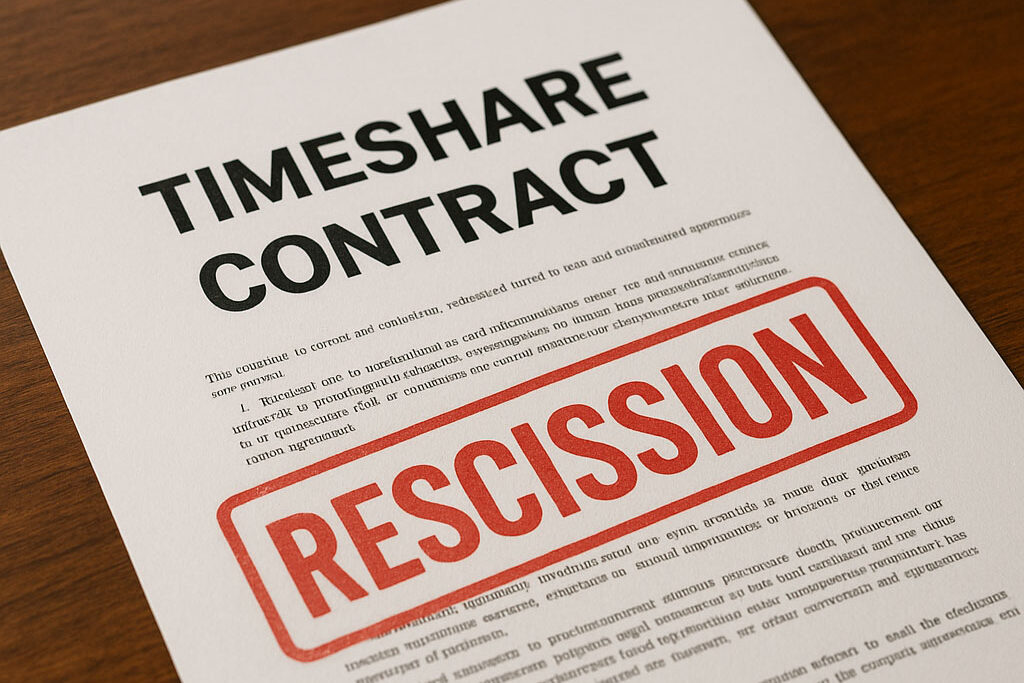
How to cancel timeshare after rescission period
If you bought a timeshare and later realized you missed the rescission window, you’re in a frustrating yet common position. Most developers treat the sale as final once the recission period ends, and they rarely offer a simple refund after that point.
Still, missing rescission does not always mean you are stuck in a timeshare forever. Depending on what happened during the sale, what your contract says, and whether required disclosures were properly handled, there may be legal and practical ways to pursue a timeshare exit.
Below is a clear guide to what rescission is, what to do first, what options may exist after the deadline, and how a consumer-focused timeshare law firm may approach these cases.
What is a timeshare rescission window?
The rescission window is a short period of time set by state law when you can cancel a timeshare purchase for any reason. In many states it’s only a matter of days. The clock may start when you sign, when you receive required disclosures, or when the full contract packet is delivered, depending on the state and the paperwork.
Once rescission ends, the developer usually treats the agreement as binding. That doesn’t mean the contract can never be challenged. It means you may need a different approach than a simple “buyer’s remorse” cancellation.
Step one: confirm you truly missed rescission
Before you do anything else, confirm the deadline and how it was calculated. Timeshare paperwork can be confusing, and buyers sometimes receive key documents after signing day. Even if you believe it’s too late, don’t guess. Confirm it.
Here’s what to check:
- Find the section titled “Notice of Cancellation,” “Rescission,” or “Buyer’s Right to Cancel.”
- Confirm the required delivery method (certified mail, overnight delivery, fax, email, etc.).
- Determine when the cancellation period began, based on the contract and required disclosures.
- Save proof of when you actually received the complete contract packet if it arrived later.
After rescission, cancellation becomes a contract dispute
Once the rescission period has passed, getting out of a timeshare is less like returning a product and more like disputing an agreement. In plain terms, you generally need a reason the contract should be voided, rescinded under other legal principles, enforced differently, or terminated under the company’s own rules.
A lawyer reviewing your case will usually look for facts that support recognized legal claims, such as misrepresentation, missing disclosures, or unfair business practices.
Legal angles that may apply after the deadline
1) Misrepresentation or deceptive sales claims
If you were promised important terms that turned out not to be true and those promises influenced your decision, that can matter. Common examples include claims about:
- “Guaranteed” availability or easy booking
- Maintenance fees being capped or staying low
- A strong resale market or “easy resale”
- Rental income that would “cover the payments”
- A “risk-free trial” that wasn’t truly risk-free
- Upgrades that were described as the solution to availability problems
Developers often point to contract language stating you did not rely on verbal statements. Those clauses can be obstacles, but they do not automatically excuse deceptive conduct. Depending on the facts and your state’s consumer protection laws, a misrepresentation claim may still be viable.
2) High-pressure tactics and lack of informed consent
Timeshare presentations can be long, intense, and designed to produce fast decisions. If you were rushed through documents, denied time to read, pushed past clear objections, or pressured into signing under conditions that were unfair, those details may support a claim that the agreement was not entered into properly.
3) Missing or defective disclosures
Some states require specific disclosures, notices, or public offering documents. If required documents were not delivered, delivered late, or delivered in a defective way, it can create leverage—and in some cases may trigger additional rights.
4) Breach of contract or unfair changes to the program
If the company is not providing what the contract promises or if it changed key terms beyond what the paperwork allows. This can support a legal dispute. Examples owners often raise include:
- Reservation access that does not match what was promised
- Points program changes that reduce value
- Benefits that disappear or become unusable in practice
5) Financing-related issues
If you financed the purchase, the loan adds another layer. Sometimes the financing disclosures, the way credit terms were presented, or the relationship between the developer and the lender changes the negotiation strategy. A review should include both the timeshare contract and the financing documents.
What not to do after rescission
Panic decisions can make the situation worse. These are the big ones to avoid:
Don’t stop paying without a plan
Nonpayment can trigger collections, late fees, credit reporting, and even legal action. Some timeshare owners decide to stop paying, but it should be a planned choice based on legal advice and your risk tolerance, not a desperate move.
Don’t trust “guaranteed exit” promises
A legitimate provider should explain your options, risks, likely outcomes, and what happens if the first strategy does not work.
The timeshare exit space attracts various scams. Be cautious of any company that:
- Guarantees cancellation
- Charges large upfront fees with vague deliverables
- Immediately tells you to stop paying
- Refuses to put key promises in writing
- Pressures you to sign the same day
Don’t sign new paperwork at an “owner update”
Many “owner updates” are sales meetings in disguise. Signing new documents can add obligations, increase costs, and weaken your legal position.
Options that may work without a lawsuit
Not every timeshare exit requires litigation. Depending on the developer, your account status, and the facts, practical paths may include:
Voluntary surrender or deed-back
Some developers have surrender programs, hardship options, or deed-back processes. Many require the loan to be paid off and the account to be current. Even when a program exists, communication matters. A careful approach can help protect you and create a clear paper trail.
Negotiated settlement or release
If the facts are strong, companies sometimes negotiate a written resolution. The goal is a written release, clear confirmation the account is closed, and specific terms addressing collections and credit reporting.
Transfer strategies (only when legally and contractually allowed)
Some owners explore transferring their timeshare interest. This can be risky if done incorrectly, especially with points-based memberships, right-to-use products, or contracts restricting transfer. A bad transfer can create clouded title and leave you liable even after you think you’re “done.”
What to do right now: build your file
If you want out of a timeshare after rescission, evidence matters. Start organizing immediately.
1) Gather all documents
Collect:
- The full contract packet (all pages)
- Disclosure documents and any public offering statement
- Financing paperwork
- Payment history and account statements
- Emails, letters, and texts with the developer
- Any notes you already have about what you were told
2) Write your timeline while it’s still fresh
Small details can become important later. Create a simple timeline that includes:
- Date and location of the timeshare presentation
- How long you were there
- Names and titles of who you spoke with (if known)
- What you were promised and what you asked
- What documents you received that day vs. later
3) Don’t “upgrade” your way out of the problem
If the developer offers an upgrade as the solution, be careful. Timeshare upgrades often increase the financial burden and may not fix the underlying issues.
4) Get a legal review early
A timeshare attorney can separate what is legally meaningful from what is simply frustrating. That clarity can save time, money, and stress as well as keep you from making moves that hurt your position.
How a timeshare law firm may help after rescission
Every case is different, but legal support often includes:
- Reviewing the contract, disclosures, and sales record for violations
- Identifying claims under state consumer protection laws
- Communicating with the developer and lenders to pursue resolution
- Sending demand letters that preserve rights and create a paper trail
- Negotiating surrender agreements, settlements, and written releases
- Filing suit or arbitration when appropriate and supported by the facts
The point is not only “getting out.” It’s reaching a resolution that reduces risk and avoids unpleasant surprises later.
Final thoughts
After the rescission window closes, canceling a timeshare is harder, but not automatically impossible. The strongest cases often involve clear misrepresentations, missing disclosures, or provable unfair practices. If what you were promised doesn’t match the contract, if the sales process crossed the line, or if the program changed in ways that stripped value, it may be worth having a qualified timeshare attorney review your situation.
Disclosure: This article is for general informational purposes only and does not constitute legal advice. Consult a qualified timeshare attorney for advice specific to your situation.
___________________________________________________________________________________
Led by timeshare attorneys J. Andrew Meyer and Michael D. Finn, with over 75 years of combined legal experience, Finn Law Group is a national consumer protection firm that focuses on timeshare law. If you believe you need legal help, contact our office at 855-FINN-LAW. For more timeshare-related education and updates, follow us on X (formerly Twitter).