
How to Book Safe Vacation Rentals
What Every Traveler Needs to Know Before They Book
 Vacation rentals have become more popular than ever, so have the scams. The appeal of booking a cozy lakefront cabin or beachside condo online—often at a lower price than a hotel—can sometimes blind even the savviest traveler to red flags. And when the deal turns out to be too good to be true, it usually is. That’s often when attorneys get involved—after the money is lost, the vacation is ruined, and the scammer has vanished.
The truth is, once you’ve heard enough of the good, the bad, and the truly ugly stories, you start to see the bigger picture. The problem of fraudulent vacation rentals isn’t just a fluke—it’s growing. That’s why it’s so important to arm consumers with clear, actionable advice. In this article, we’ll break down the types of vacation rentals and what to look for when booking. These recommendations will provide you with a clearer understanding on how to book safe vacation rentals.
Types of Vacation Rentals to Consider
 According to Lake News, vacation rentals come in many forms—each offering a different experience depending on your travel style, budget, and comfort level. Here’s a helpful breakdown:
- Rental by Owner: Platforms like Airbnb, Vrbo, and HomeAway offer privately owned vacation properties—ranging from condos to full houses—often with kitchens, multiple bedrooms, and fewer hidden fees like paid parking. These options can be ideal for families or longer stays.
- Bed and Breakfast (B&B): Typically smaller and more intimate than hotels, B&Bs are often located within private homes or small inns. Guests usually enjoy personalized service and breakfast included in the stay. Some rooms may have shared bathrooms, so it’s important to check the details.
- Hotel: The traditional hotel offers predictable amenities such as room service, gyms, restaurants, and pools. Hotel stays can include some meals, like breakfast, and are often suited for business travelers or those seeking full-service accommodations.
- Motel: Motels are generally more basic than hotels, designed for short-term stays or road trip layovers. They offer affordable lodging and convenient parking, but fewer luxury amenities.
- All-Inclusive Resort: These properties offer a fixed price that typically includes lodging, meals, beverages (sometimes alcohol), activities, and entertainment. They are ideal for travelers looking to relax without managing daily expenses or logistics.
- Timeshare: While not a traditional rental, a timeshare is a shared ownership model where individuals purchase the right to stay at a vacation property for set periods each year—often one-week intervals. Timeshare owners may be limited to one location or have access to multiple resorts under a broader vacation club.
No matter which type of accommodation you choose, the most important thing is ensuring the vacation rental is legitimate. Doing your homework upfront can help you avoid costly scams and disappointing experiences.
What to Look for in a Vacation Rental
To help you avoid being the next victim of a fake vacation rental listing, here are the essentials to verify before you book:
1. Verified Listings on Reputable Platforms
Stick with platforms like Airbnb, Vrbo, or Booking.com. These sites offer some level of verification, user reviews, and payment protection. Scammers often target people through social media or classified ad sites where there’s little oversight.
2. Clear, Detailed Descriptions and Photos
Trustworthy hosts provide honest, thorough descriptions and multiple recent photos. Be cautious if photos look generic or too polished—reverse image search can help detect stolen content from other listings.
3. Host Communication
A responsive and transparent host is key. Ask questions about the property and gauge the quality of their replies. Hesitation, vagueness, or pressure to book quickly are all red flags.
4. Secure Payment Channels
Never pay via wire transfer, Zelle, Venmo, or cryptocurrency. Use the payment platform provided by the booking site—it protects you and gives you a paper trail in case of fraud.
The Rise of Fake Vacation Rentals: What You’re Up Against
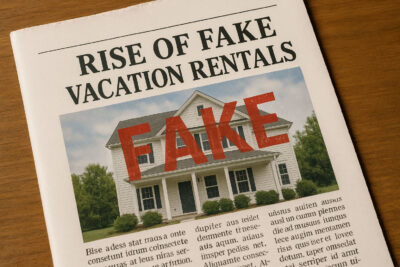 As consumer demand grows, so does the sophistication of scammers. Fake listings are getting harder to spot, and often, victims don’t realize they’ve been duped until they arrive at the address—only to find the property either doesn’t exist or isn’t available to rent.
In some cases, scammers impersonate real owners or create listings for homes that are actually for sale, not for rent. In others, entire fake websites are built to look like legitimate rental agencies. These scams don’t just cost travelers their money—they cost time, trust, and sometimes the entire vacation.
How to Spot and Avoid a Scam
1. Beware of Off-Platform Requests
One of the most common scam tactics is convincing you to take the transaction off the platform. The scammer might promise a discount or faster confirmation—but without platform protections, you’ll have no recourse if something goes wrong.
2. Check the Reviews (and Their Authenticity)
A lack of reviews or only glowing, overly vague testimonials can be signs of a fake listing. Look for detailed, realistic experiences shared by past guests.
3. Search for the Property Online
Do a quick address lookup or reverse image search of the photos. If you find the same photos listed elsewhere with different details—or discover the property is for sale—you’re likely looking at a scam.
4. Too Good to Be True? It Probably Is
If the price is way below average for the area, the photos look professionally staged, and the host is rushing you to book—stop. Take a breath and do more research.
What to Do If You’ve Been Scammed
If you believe you’ve been the victim of a vacation rental scam:
- Report the listing immediately to the rental platform you used.
- Contact your bank or credit card company to dispute the transaction.
- File a complaint with the Federal Trade Commission (FTC) and your state Attorney General.
- Consult an attorney—especially if the amount lost is significant or if legal guidance is needed for pursuing recovery or damages.
Final Thoughts: Trust, But Verify
Booking a vacation rental should be part of the fun, not a source of stress or regret. As fake listings become more sophisticated, it’s more important than ever to slow down, ask questions, and do your homework.
At Finn Law Group, we’ve seen how these scams unfold—and how painful the aftermath can be. That’s why we believe in helping consumers not just respond to fraud, but prevent it in the first place. If you’re unsure about a vacation rental agreement, or if something doesn’t feel right, reach out to a trusted professional for advice before you book.
Because the best kind of vacation getaway is one you can trust.
Disclosure: This article is intended for informational purposes only and should not be considered legal advice. Images included are used for illustrative and artistic purposes only and do not depict actual individuals, events, or specific locations.
____________________________________
Led by timeshare attorneys J. Andrew Meyer and Michael D. Finn with over 75 years of combined legal experience. The Finn Law Group is a national consumer protection firm that specializes in Timeshare Law. If you feel you need the services of a timeshare attorney, contact our law firm today at 855-FINN-LAW. Want to learn more on timeshare related issues? Follow us on X.