
How to Avoid Florida Storm Scammers
 Natural disasters like hurricanes can wreak havoc on communities, causing extensive damage to homes and infrastructure. While these events often bring people together to support one another, they also attract individuals looking to exploit the situation.
If you’ve been impacted by recent hurricanes in Florida, it’s important to be aware of common scams that can surface in the aftermath. Being informed can help you protect yourself from becoming a victim twice—first to the storm, and then to fraudsters.
Understanding the Threat of Storm Scammers
In the wake of a hurricane, the urgency to repair damaged property and return to normal life can make homeowners more susceptible to scams. Fraudsters know that you’re eager to fix your home and may present offers that seem too good to pass up. They might pose as contractors, insurance adjusters, or representatives from aid organizations, offering services or assistance that they have no intention of fulfilling. Falling prey to these scams can leave you with unfinished repairs, depleted finances, and added stress during an already challenging time.
Common Scams to Watch Out For
In the aftermath of a major storm event, it’s important to be on high alert for scams that can hinder your recovery efforts. Storm scammers often prey on the vulnerability and urgency that homeowners feel during these times. Here are some common scams to be aware of and tips on how to protect yourself.
 Price Gouging on Materials and Services
Price gouging involves raising the prices of essential goods and services to unreasonable levels during a crisis. This practice is illegal in Florida, especially during a state of emergency.
Be cautious of:
- Inflated Prices on Building Materials: Materials like plywood, shingles, and other construction supplies may suddenly be sold at significantly higher prices. This can make it financially challenging to carry out necessary repairs.
- Exorbitant Fees for Emergency Services: Services such as debris removal, water extraction, and temporary repairs might be offered at rates far above the norm. Some providers may add hidden fees or unnecessary services to inflate the cost.
How to Protect Yourself:
- Research Standard Prices: Before making purchases, check the average costs of materials and services online in your area.
- Keep Receipts and Document Transactions: Save all receipts and document any price discrepancies.
- Report Suspected Price Gouging: If you believe you’re being overcharged, report it to the Florida Attorney General’s Office or local consumer protection agencies.
Disaster Charity Fraud Scams
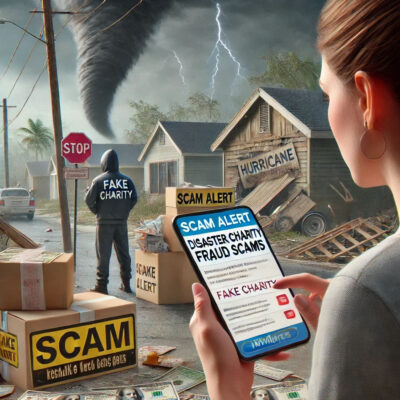 After a disaster, many people feel compelled to donate to relief efforts. Scammers exploit this generosity by creating fake charities or impersonating legitimate organizations to steal money or personal information.
Protect yourself by:
- Verifying the Charity’s Legitimacy: Before donating, research the organization through official websites, such as the IRS’s Tax Exempt Organization Search, Charity Navigator, or the Better Business Bureau’s Wise Giving Alliance. Legitimate charities are transparent about their mission and how donations are used.
- Avoiding Cash Donations: Use traceable payment methods like credit cards or checks. These methods provide a record of your donation and offer recourse if fraud is detected.
- Being Wary of Urgent Appeals: Storm scammers often pressure you to donate immediately. Take your time to make informed decisions.
- Not Sharing Personal Information: Be cautious if a charity requests sensitive personal information like your Social Security number or bank account details.
Upfront Payment Scams From Building Contractors
 Fraudulent contractors may offer quick repairs but require substantial upfront payments and then disappear without completing the work.
Be wary of contractors who:
- Ask for Large Sums of Money Before Any Work Is Completed: While a small deposit may be reasonable, especially for custom materials, significant upfront payments are a red flag.
- Refuse to Provide a Written Contract or Estimate: A legitimate contractor should offer a detailed contract outlining the scope of work, materials, timelines, and costs.
- Lack Proper Identification or Credentials: Contractors should have valid licenses and insurance and be willing to provide this information upon request.
How to Protect Yourself:
- Check Credentials: Verify the contractor’s license and insurance status with the Florida Department of Business and Professional Regulation.
- Get Multiple Estimates: Obtain written estimates from at least three contractors to compare prices and services.
- Avoid Paying in Cash: Use checks or credit cards so you have a payment record. Be cautious of contractors who only accept cash.
- Read the Contract Carefully: Ensure all verbal agreements are included in the written contract, and don’t sign anything with blank spaces that could be altered later.
- Consult Local References: Ask for and check references from past clients in your area.
Tips for Homeowners to Stay Safe
Recovering from hurricane damage requires careful planning and precaution to ensure that you don’t fall victim to scams. Here are some detailed steps you can take to protect yourself and your property during the rebuilding process.
Research Contractors Thoroughly – Verify Licenses and Insurance:
Before hiring a contractor, confirm that they are licensed to operate in Florida. You can check a contractor’s license status through the Florida Department of Business and Professional Regulation’s website. Additionally, ensure they carry both general liability insurance and workers’ compensation insurance. This protects you in case of accidents or damages that occur during the repair work.
Check References and Reviews:
Ask for references from previous clients and take the time to contact them. Look for online reviews on reputable websites like the Better Business Bureau or Angie’s List. Positive feedback from other homeowners can provide peace of mind about the contractor’s reliability and quality of work.
Confirm Business Details:
Legitimate contractors will have a physical business address and valid contact information. Be wary of those who only provide a P.O. Box or use personal email addresses. A professional online presence and clear communication channels are indicators of a reputable business.
Get Multiple Estimates
- Compare Detailed Quotes: Obtain written estimates from at least three different contractors. Each estimate should include a breakdown of labor costs, material expenses, timelines, and any other fees. This allows you to compare not just the price but also the scope of work and materials to be used.
- Identify Unreasonable Charges: Be cautious of quotes that are significantly higher or lower than others. Extremely low bids may indicate subpar materials or hidden costs that could surface later. High bids without justification could be a sign of price gouging.
- Understand Payment Terms: Review the payment schedule outlined in the estimates. Legitimate contractors typically require a reasonable deposit (usually no more than 10-20% of the total cost) with the remaining balance due upon completion of milestones or the entire project.
Report Suspicious Storm Scammer Activity
- Contact Local Authorities: If you encounter individuals or businesses engaging in fraudulent activities, such as unlicensed contracting or price gouging, report them to local law enforcement or consumer protection agencies. Providing detailed information can help authorities take action.
- Notify State Agencies: The Florida Department of Agriculture and Consumer Services and the Florida Attorney General’s Office are resources for reporting scams and fraudulent practices. They can investigate and potentially prevent others from becoming victims by calling the Florida Fraud Hotline at 1-800-378-0445
- Inform Your Community: Share information about scams and suspicious individuals with neighbors, local community groups, or through social media. Raising awareness can help others avoid falling prey to similar schemes.
Moving Forward
Recovering from a hurricane is a tough journey that takes time and patience. The added worry of how to avoid Florida storm scammers make things even harder. By being proactive—like carefully checking out contractors and staying informed—you can protect yourself and help your community. Remember to put your safety and financial well-being first during this time.
Disclosure: This article is for information purposes only and is not intended as legal advice.
__________________
Led by attorneys J. Andrew Meyer and Michael D. Finn with over 75 years of combined legal experience. The Finn Law Group is a national consumer protection firm that specializes in Timeshare Law as well as other consumer protection areas. If you have been victimized and want to know your rights as a consumer, contact us for a free consultation at 855-FINN-LAW. | Follow us for more consumer protection tips on Twitter X.