How to Avoid Debt Relief Scams
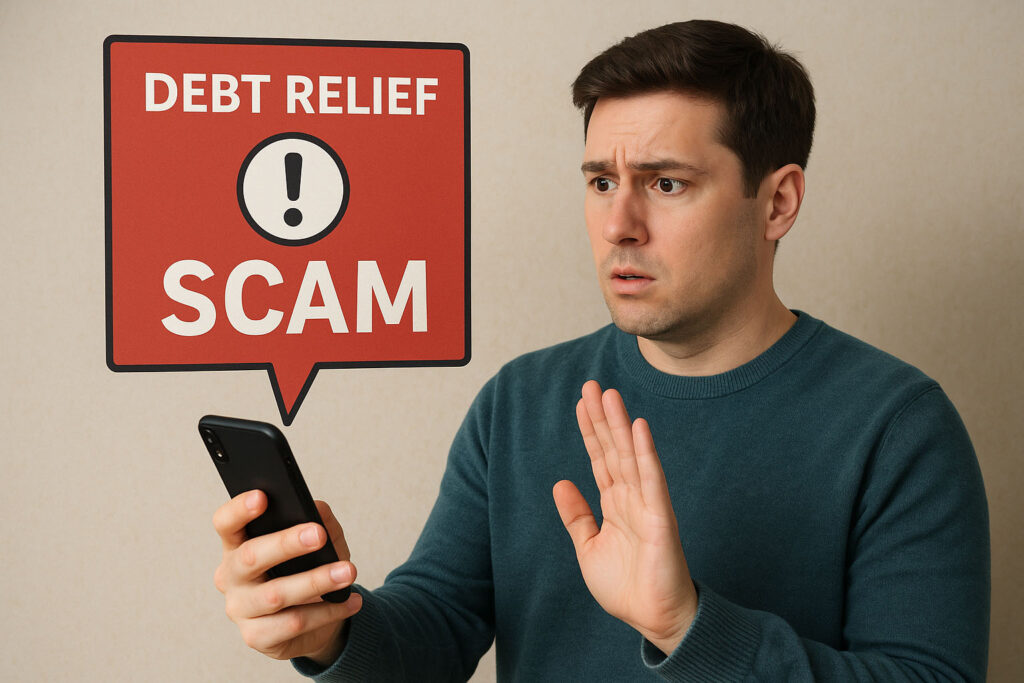
You don’t need extra worry when you’re dealing with debt, but sadly, there are people and companies out there who take advantage of that worry. The recent case against the “Accelerated Debt” operation is a sharp reminder of how bad these scams can get — and how important it is for you to know what to look out for. US News reports that the FTC uncovered serious violations in a major debt relief scam—here’s what they found, which laws were broken and how to avoid debt relief scams.
What the FTC Discovered: The “Accelerated Debt” Case
- A debt relief scheme called Accelerated Debt allegedly took in about $100 million. The scam mostly targeted older people, including veterans.
- The defendants made false promises: saying they could reduce your debt by up to 75% or more.
- They impersonated trusted entities: banks, credit card companies, government agencies, and credit bureaus. This is meant to trick people into believing they’re dealing with someone legitimate.
- They collected illegal advance fees. That means people were asked to pay money before any promised debt relief services had been delivered.
- They used remotely created checks (which are checks created without the account holder’s physical signature) to take money from consumers.
- They obtained people’s credit reports unlawfully.
- They violated telemarketing-rules, including contacting people despite Do Not Call Registry restrictions, and using both inbound and outbound telemarketing to lure victims.
Laws the FTC Says Were Violated
Here are some of the laws and rules that the Accelerated Debt scheme is alleged to have broken:
Law / Rule | Key Protection | What Was Violated |
|---|---|---|
FTC Act | Prohibits deceptive or unfair business practices. | False promises about debt reduction, misrepresentation. |
Telemarketing Sales Rule (TSR) | Rules about how telemarketing can be used, including bans on certain advance fees, making truthful statements, Do Not Call compliance. | Charging unlawful advance fees; contacting people listed on the Do Not Call registry. |
Impersonation Rule | Makes it illegal to impersonate banks, government agencies, or credit bureaus in order to deceive people. | They pretended to be credit card issuers, banks, etc. |
Fair Credit Reporting Act (FCRA) | Regulates who can access credit reports, how they can be used. | The scam used credit reports without lawful purpose. |
Gramm-Leach-Bliley Act (GLBA) | Protects consumers’ private financial information; limits false statements to get someone’s financial info. | False claims used to obtain financial account numbers, unlawfully handling private data. |
Why This Matters to You as a Consumer
If one of these debt scams targets you, it doesn’t just cost money. It can:
- Hurt your credit score. In one example, a veteran’s score dropped from the high-700s to the 500s.
- Push you further into debt, especially when you stop making payments to real creditors.
- Drain savings, including retirement funds, because the scam operators ask for large sums up front.
Signs & Red Flags (What to Watch For)
 Here are warning signs — some shown clearly in the Accelerated Debt case — that you might be dealing with a scam:
- Someone tells you they can reduce your debt by a very large percentage (like 75% or more) with guarantees.
- They want large payments before doing anything.
- They impersonate banks, credit card companies, government agencies, or use logos/names that seem official.
- They use telemarketing aggressively, including to people on the Do Not Call list.
- They advise you to stop paying your real creditors.
- They ask for your credit reports or financial account info without explaining why or doing it legally.
- They want you to pay via checks you didn’t sign, or through weird channels.
What You Can Do to Protect Yourself
 Because these debt relief scams are so harmful, being cautious isn’t just smart — it’s necessary. Here are steps you can take:
- Do your research. Look up the company’s name with your state attorney general’s office and consumer protection agencies. See if any complaints are filed.
- Ask for all the details in writing. Fees, timelines, what exactly they’re going to do. If they refuse, that’s a red flag.
- Never pay large fees in advance. Legit services don’t require payment until after they’ve done something measurable.
- Check for impersonation. If they claim to be the government or a bank, verify that independently (e.g. using official websites or phone numbers you trust).
- Don’t stop payments to your creditors unless you’ve verified the legitimacy of the service. Stopping payments can damage your credit further.
- Report suspicious practices. You can report to the FTC (e.g. via ReportFraud.ftc.gov), your state consumer protection office, or your attorney general.
A Final Word
 Debt is heavy. It can feel overwhelming, even isolating. If you’re considering debt relief, you’re already taking a brave step. Just make sure the help you find is real—not someone looking to take advantage of your situation. You deserve honesty, clear answers, and someone who treats you with respect.
Often, the best people to guide you through these challenges are attorneys who regularly handle debt-related issues. They understand the laws, your rights, and how creditors operate. Unlike scammers, they are obligated to put your interests first and can help you find a real path forward.
It’s okay to ask questions. It’s okay to say no. And it’s always okay to seek professional legal help. Protecting your financial future is worth it—and you don’t have to do it alone.
Disclosure: This article is intended for informational purposes only and should not be considered legal advice. Images included are used for illustrative and artistic purposes only and do not depict actual individuals, events, or specific locations.
____________________________________
At Finn Law Group, we focus on helping consumers navigate the complicated world of debt and financial obligations. Debt relief laws, creditor practices, and federal regulations often overlap in ways that leave people confused or vulnerable. Our role is to protect your rights, explain what your options really mean, and bring clarity to a system that too often feels stacked against those already struggling with debt.
Led by attorneys J. Andrew Meyer and Michael D. Finn with over 75 years of combined legal experience. The Finn Law Group is a national consumer protection firm that specializes in Timeshare Law. If you feel you need the services of a timeshare attorney, contact our law firm today at 855-FINN-LAW. Want to learn more on timeshare related issues? Follow us on X formally Twitter.