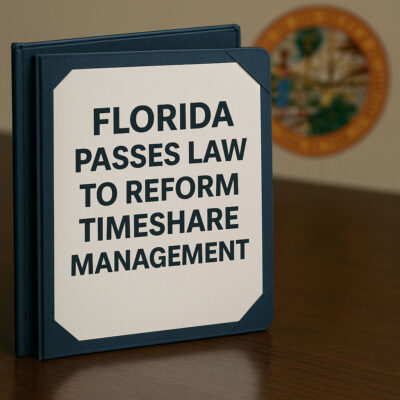
Florida Passes Law to Reform Timeshare Management
 New law reshapes how Florida timeshares are governed—what owners need to know in 2025
Starting July 1, 2025, a newly passed Florida law will reshape how timeshare plans are managed across the state. With unanimous support in the House (115-0), CS/HB 897—titled Timeshare Plan Management—introduces targeted changes to increase transparency, set clearer duties for timeshare managers, and offer limited liability protections for those who follow the rules.
With over 275,000 timeshare units and approximately 1.5 million timeshare owners in Florida, this law could significantly impact how these properties are managed and how associations disclose their business practices. Here’s what you need to know.
What Does the Timeshare Law Actually Do?
 The new law focuses on how community association managers (CAMs) and timeshare management firms operate, especially when conflicts of interest could arise.
Key Provisions:
Conflict of Interest Disclosures Now Mandatory
If a timeshare management firm or association provides goods or services through a company it owns or is affiliated with, this must now be disclosed annually. That disclosure can be made through several means—such as in the annual budget, management contract, mailed notices, or posted on the plan’s website.
Timeshare Boards Only Required to Meet Once a Year
While more meetings can be scheduled, the law establishes a minimum of just one annual board meeting for the administration of timeshare condominiums. This change may streamline governance but also puts more weight on owners to stay informed between meetings.
Good Faith Standard of Care for Managers
Licensed Florida CAMs and timeshare management firms must perform their duties with care, honesty, and good faith—similar to how nonprofit board members are expected to act. This means acting in the best interest of the association and its owners, and making decisions a prudent person in a similar position would make.
Limited Legal Liability for Managers—With Conditions
If a manager or firm acts in good faith, they are protected from monetary damages.
But that protection disappears if the firm or individual:
- Commits a criminal act;
- Gains improper personal benefit;
- Acts recklessly, in bad faith, or with disregard for human rights or property.
Why These Changes Matter for Timeshare Owners
 Transparency and accountability are recurring concerns in the timeshare industry. Owners often have limited visibility into how their maintenance fees are spent or whether the companies hired to maintain the vacation properties are truly independent.
This law tackles those concerns head-on by:
- Requiring firms to disclose self-dealing, helping owners spot potential red flags.
- Encouraging responsible management behavior by defining clear duties and legal standards.
- Preventing frivolous lawsuits against managers who act in good faith—potentially lowering administrative costs for owners’ associations.
For owners, the new framework could result in better oversight, more consistent standards across resorts, and improved communication from Florida timeshare associations.
What Owners Should Do Next
While the bill won’t take effect until July 1, 2025, timeshare owners and board members should begin preparing now:
- Review Current Disclosures: Ask whether your management firm uses affiliates to provide services—and if so, how this is disclosed.
- Monitor Annual Meetings: With only one required meeting a year, participation becomes even more important. Mark your calendar.
- Know Your Rights: Understanding what “good faith” looks like can help you hold your board and managers accountable without jumping to conclusions.
- Speak Up: If you suspect bad faith behavior or undisclosed conflicts of interest, now is the time to raise your concerns.
Behind the Bill: Why Florida Took Action
 The legislation, sponsored by Rep. Berfield and mirrored by a companion Senate bill from Sen. McClain, updates several sections of Florida’s Vacation Plan and Timesharing Act. It replaces outdated rules, particularly those governing community association managers who specialize in timeshares—an area often regulated differently than traditional homeowner associations.
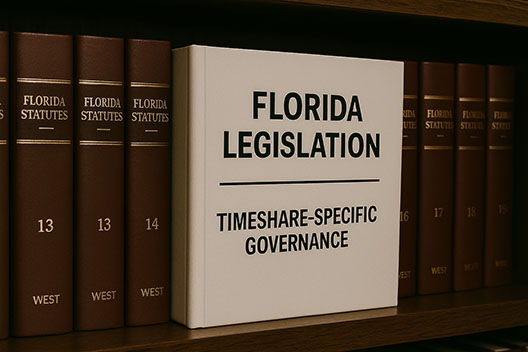
Unlike broader HOA legislation, this bill is laser-focused on timeshare-specific governance and the growing need for transparency in a market with millions of stakeholders and billions in annual economic impact.
Timeline: When the Law Takes Effect
- Effective Date: July 1, 2025
- Who’s Affected: Timeshare owners, owners’ associations, management firms, and community association managers.
Final Thoughts
For too long, timeshare governance has operated in a legal gray zone when it comes to conflicts of interest and liability standards. Florida’s new timeshare law provides a clearer roadmap for both managers and owners, aiming to strike a balance between protection and accountability.
By staying informed and engaged, timeshare owners can help ensure these reforms lead to real-world improvements—making the shared dream of vacation ownership more transparent and trustworthy for everyone involved.
Disclosure: This article is intended for informational purposes only and should not be considered legal advice. Images included are used for illustrative and artistic purposes only and do not depict actual individuals, events, or specific locations.
____________________________________
Led by timeshare attorneys J. Andrew Meyer and Michael D. Finn with over 75 years of combined legal experience. The Finn Law Group is a national consumer protection firm that specializes in Timeshare Law. If you feel you need the services of a timeshare attorney, contact our law firm today at 855-FINN-LAW. Want to learn more on timeshare related issues? Follow us on X.