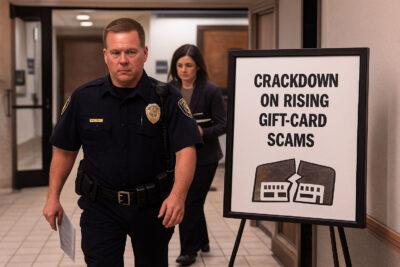
Crackdown on Rising Gift-Card Scams
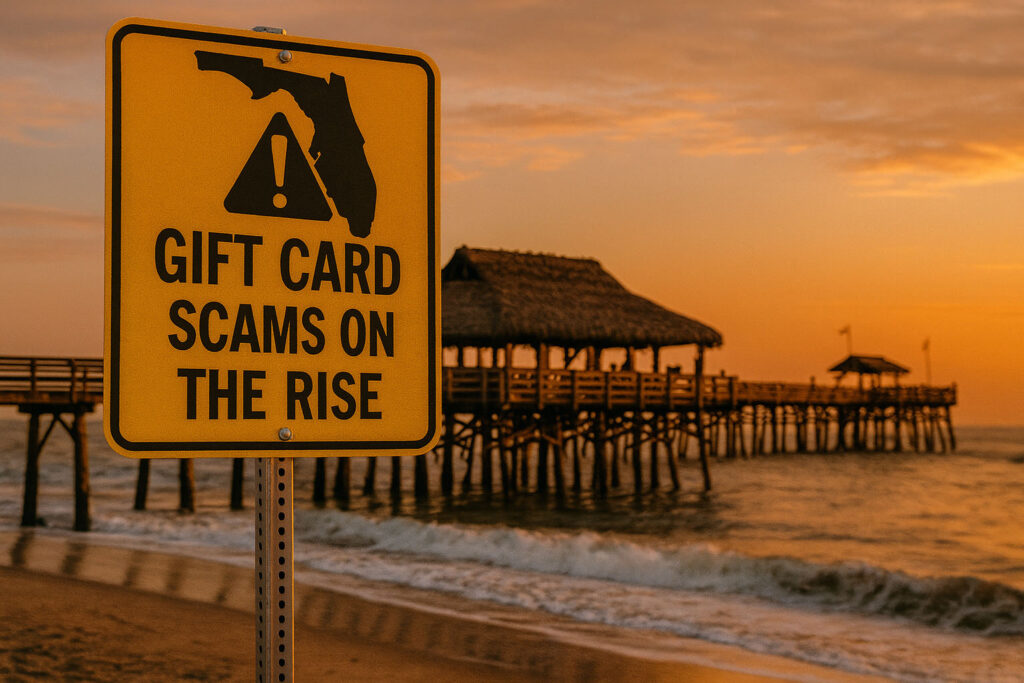
 In recent years, Florida has seen a sharp rise in gift card scams, many of them tied to the state’s tourism and vacation market. Scammers often pose as travel companies or timeshare representatives, luring people with offers of “free vacations” or urgent membership renewals that must be paid with gift cards.
Once the cards are drained, victims are left with no trip, no refund, and no way to trace the money. The losses have added up across the state, prompting lawmakers and law enforcement to push back with new laws set to take effect October 1, 2025. These laws are designed to close loopholes that fraudsters have used for years and to finally give prosecutors the power to treat gift card fraud as a serious crime.
Think It Can’t Happen to You?
Many people believe they could never fall for a gift card scam — until it happens. The truth is, scammers have perfected their pitch, often catching victims off guard with urgent calls or convincing offers. Imagine planning a long-awaited vacation and getting a call from someone claiming to be from your timeshare company, warning that your reservation will be canceled unless you pay immediately with gift cards. In the moment, stress and urgency take over, and even cautious consumers can hand over card numbers without realizing they’ve been duped. By the time the mistake sinks in, the money is gone.
The Surge in Gift Card Scams
 Gift card fraud is now a major portion of consumer fraud complaints. In 2023 alone, Americans lost $217 million through gift card–related scams, out of a record $10 billion in total scam losses, according to Federal Trade Commission data.
Criminals use many tactics:
- Altering bar codes or tampering with physical cards in stores
- Stealing PIN numbers or redemption codes before cards are activated
- Impersonating government agencies or tech support and demanding gift cards as payment
- Creating fake retailer websites to trick consumers into entering card data
Why Florida Needed Gift Card Fraud Laws
Despite the growing problem, prior to 2025 Florida had no statute specifically defining gift card fraud. Scammers were prosecuted under broader theft or fraud laws. Lawmakers argued that prosecutors and investigators lacked clear legal tools to go after increasingly sophisticated gift card schemes.
Rep. Sam Greco, a co-sponsor, described the need this way:
“These schemes have resulted in meaningful financial losses for both consumers and businesses, while our law enforcement and prosecutors currently lack the necessary tools to combat this misconduct effectively.”
The measure won unanimous approval in both chambers — 37–0 in the Senate and 115–0 in the House — a rare sign of complete agreement. Lawmakers from both parties recognized that this wasn’t about politics, but about protecting consumers from a fast-growing form of fraud that affects families and businesses across Florida and beyond.
What the New Law Does
 Under SB 1198 / HB 1007, Florida will codify gift card fraud and impose tiered penalties based on the value of the fraud.
Key provisions include:
- First-degree misdemeanor (up to 1 year in jail, $1,000 fine) for fraud involving less than $750 in value
- Third-degree felony (up to 5 years in prison, $5,000 fine) when the value of misused gift cards or stolen goods exceeds $750
- Law enforcement may aggregate multiple fraudulent transactions to elevate the charge
- The law explicitly covers tampering, acquiring or retaining redemption information without consent, altering packaging, and fraudulently using cards or codes
Forward Thinking on Gift Card Reloads
One challenge lawmakers discussed was how to handle reloadable gift cards or cards with no value until activated. Some worried that scammers could argue no crime had occurred because the card technically held no money at the time of tampering. This gray area could set up a “case of first impression,” forcing courts to decide how the new law should apply in situations where value is added only after the fraud has already taken place.
What Consumers Can Do to Protect Themselves
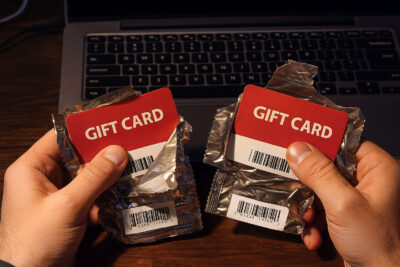 As Florida’s new law ramps up penalties, consumers can also take steps to protect themselves:
- Buy cards from trusted sources — avoid third-party sellers or online listings from strangers.
- Inspect physical cards for signs of tampering (scratches, broken seals) before purchase.
- Never give out a gift card number or PIN to someone calling unexpectedly claiming to be an agency or tech support.
- Check suspicious websites or offers promising “discounted” gift cards — they may be phishing sites.
- Report any suspected scam to the Florida Attorney General’s office or the FTC. Florida’s “Scams at a Glance” guide warns that gift card scams account for more than a quarter of all the FTC cases it investigates.
Florida Gift Card Fraud Case
A recent federal case in South Florida highlights the seriousness of these schemes. Prosecutors say two individuals tampered with gift cards in dozens of grocery stores across Palm Beach, Broward, and Miami-Dade counties. After unsuspecting shoppers purchased and activated the cards, the scammers quickly drained the funds, leaving victims with worthless plastic and no way to recover their money.
Outlook and Challenges in Enforcement
The new law gives Florida prosecutors clearer authority to pursue crimes like these, but enforcement will remain a challenge. Many gift card scams operate across state lines or involve international networks, making them difficult to track and prosecute. The South Florida case is just one example of how far-reaching these fraud rings can be — and why stronger laws alone won’t be enough without ongoing vigilance and coordinated enforcement.
Final Thoughts on Gift Card Fraud
By officially defining gift card fraud as a crime, Florida is sending a clear message: these scams are not minor slip-ups, but serious offenses with real consequences. The new law gives prosecutors the tools they need to pursue offenders more aggressively, and it may discourage would-be scammers from targeting consumers in the first place. While no law can eliminate fraud entirely, this step offers stronger protection for Floridians and a measure of justice for those who have already been victimized.
Disclosure: This article is intended for informational purposes only and should not be considered legal advice. Images included are used for illustrative and artistic purposes only and do not depict actual individuals, events, or specific locations.
____________________________________
Led by timeshare attorneys J. Andrew Meyer and Michael D. Finn with over 75 years of combined legal experience. The Finn Law Group is a national consumer protection firm that specializes in Timeshare Law. If you feel you need the services of a timeshare attorney, contact our law firm today at 855-FINN-LAW. Want to learn more on timeshare related issues? Follow us on X formally Twitter.