
When Buying a Car Feels Like a Timeshare
The Shared Pain of Over-Selling
A recent social media post by @jaredpeno struck a chord with people online who’ve felt the same frustration. His car-buying experience, as he described it, was three hours, aggressive upsells, weird disclosures, and signatures for a variety of things he didn’t want. His punchline summed it up perfectly:
“Basically a timeshare experience.”
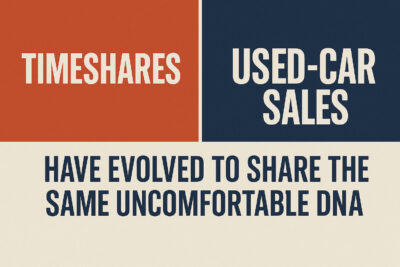 That comparison triggered a knowing chuckle across the internet, because it’s painfully accurate. Whether it’s a car lot or a resort presentation, both industries have built reputations for turning what should be an exciting purchase into an endurance test. Within hours, the post drew engagement not just from frustrated consumers but also from professionals within the automotive industry who understood the sting behind the humor.
Car consultant @MikeCalcara chimed in with a telling response:
“They say ‘leading with pain’ is a marketing strategy… a timeshare pitch is a great analogy for the dealership experience these days.”
And with that, the thread became something more which is a reflection of how two very different industries have evolved to share the same uncomfortable DNA.
When the Sale Becomes the Struggle
Most of us remember a time when buying a car was exciting. It was a big moment. The test drive, the new car smell, and the delivery. But for many consumers today, that excitement fades fast, replaced by an exhausting mix of upsells, fine print, and pressure tactics that feel more like an interrogation than a transaction.
Timeshare owners can relate. What starts as a free vacation and presentation often spirals into hours of relentless sales pressure and confusing disclosures. Both experiences often share one defining feature: the buyer walks away wondering how something so personal turned into something so manipulative.
The Psychology Behind “Leading with Pain”
 As Calcara noted, “leading with pain” isn’t just a figure of speech, it’s a strategy. The idea is simple and unsettling: if you make the consumer uncomfortable enough, the act of buying becomes an escape from the discomfort.
It’s why dealerships draw out the paperwork. It’s why timeshare presentations run longer than expected. It’s why “special pricing” only lasts for the next 10 minutes. The longer you stay in the seat, the more you’re nudged toward a decision that benefits the seller, not necessarily the buyer. In both scenarios, fatigue becomes a tool. Many consumers stop negotiating because they’re emotionally worn out, not because they’re satisfied.
The Common Threads of Aggressive Sales
When you strip away the products and the pitches, car lots and timeshare sales floors share the same architecture of persuasion:
- Aggressive Upsells: What began as a simple purchase quickly morphs into a costlier commitment, wrapped in urgency and jargon.
- Opaque Paperwork: Signatures pile up, often under the reassurance that “it’s just standard language.”
- Artificial Urgency: Expiring offers “today only” create fear rather than confidence.
These tactics are not accidental; they’re psychologically engineered to keep consumers off balance, ensuring that the decision feels like relief rather than empowerment.
The Human Side of the Experience
 Beneath all the signatures and sales tactics lies something profoundly human: disappointment. No one walks into an automotive dealership or timeshare presentation hoping to feel pressured or misled. They show up because they’re trying to make a positive choice for their family, their lifestyle, or their future.
That’s why Jared’s post resonated so deeply. It wasn’t about cars or timeshares specifically, it was about trust. The kind of trust consumers extend freely, and the kind too often repaid with manipulation. Shared moments like this, even when wrapped in humor, reveal a collective exhaustion with industries that have normalized stress and confusion as part of the customer journey.
Consumer Protection: Awareness Is the First Defense
When high-pressure sales tactics become routine, consumer awareness becomes the first line of defense. Both federal and state laws protect buyers from deceptive practices, misrepresentation, and unfair contract terms. This system often relies on consumers recognizing when something isn’t right.
If you’re sitting across the table from a salesperson and your instincts start whispering “this doesn’t feel right,” that’s not paranoia, that’s protection.
You have every right to:
- Request time to review documents before signing.
- Decline add-ons, warranties, or memberships you don’t want.
- Ask for clear explanations of every disclosure and fee.
- Walk away, even after hours of “negotiation” if not satisfied.
Final Thoughts
Remember, your time and your signature are your leverage. No reputable company or business should make you feel cornered into a major purchase or sale. At Finn Law Group, we witness the impact of high-pressure sales environments every day.
Whether it’s in timeshare presentations, real estate closings, or automotive contracts, the story is often the same — consumers worn down by the process later discover that what they signed doesn’t align with what they were promised. The good news is, you’re not powerless. Consumer protection laws are there for a reason: to make sure every agreement is grounded in clarity, not buried in confusion.
If you believe you were misled or pressured into signing an agreement that doesn’t reflect your understanding, you have the right to seek legal review and recourse.
The law may be complex, but fairness shouldn’t be.
Disclosure:
Finn Law Group is a consumer protection law firm focused on contractual and real estate matters, including timeshare and related consumer disputes. The information contained in this article is provided for educational purposes only and does not constitute legal advice. Reading this article does not create an attorney-client relationship. If you believe you’ve been the victim of an unfair or deceptive practice, consult a qualified attorney to review your individual situation.
Led by timeshare attorneys J. Andrew Meyer and Michael D. Finn, who bring more than 75 years of combined legal experience, Finn Law Group is a national consumer protection firm dedicated exclusively to Timeshare Law. If you or someone you love has been impacted by a timeshare scam or senior-targeted fraud, reach out to us at 855-FINN-LAW for experienced legal guidance.
To stay informed on consumer protection issues and ongoing timeshare-related developments, follow us on X (formerly Twitter) for updates and insights.