Can You Cancel a Timeshare After the Resort Changes Ownership?
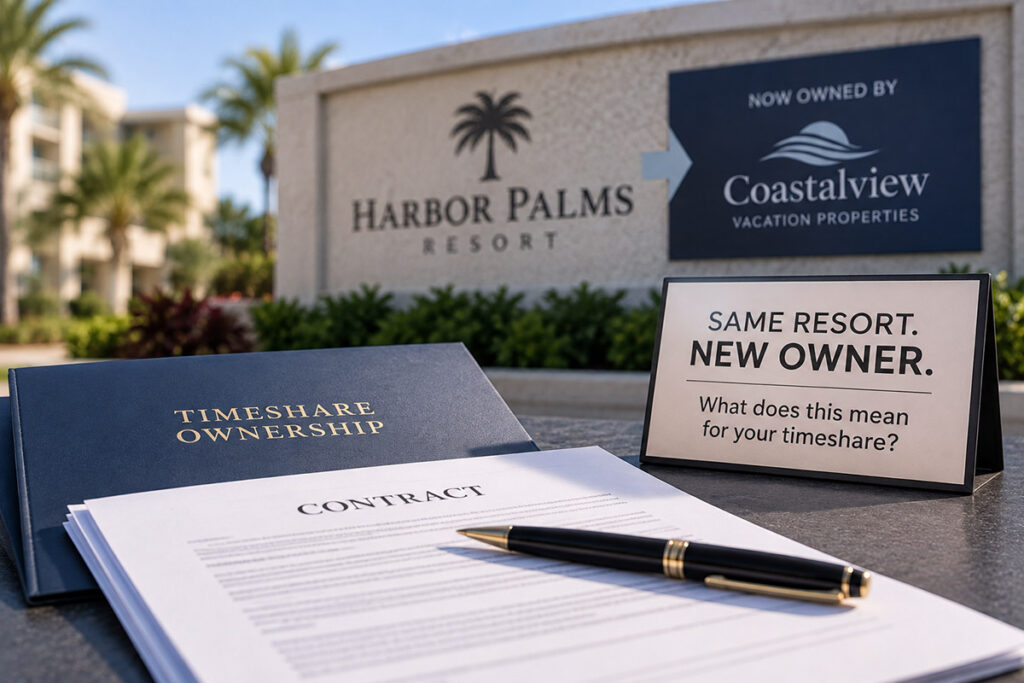
Timeshare resorts change hands. A property may be sold. A developer may merge with another company. A new management company may take over operations. A vacation ownership portfolio may be acquired by a larger hospitality brand. Sometimes the resort keeps essentially the same identity. Other times, the name, reservation system, points program, customer service operation, and even the way owners interact with the property can begin to look very different.
For an existing owner, that can create an obvious question:
What happens to the timeshare I originally purchased?
A resort ownership change does not automatically cancel a timeshare. It also does not necessarily create a new right to cancel one. But it can make it important to understand who now controls the resort or program, what happened to the owner’s agreement, and whether the owner’s rights and obligations have changed.
For owners who were already considering leaving their timeshare, a sale or corporate transition can also bring older questions back to the surface. The place to begin is not with the new logo on the building. It is with the documents.
A Resort Sale Does Not Usually Make the Timeshare Disappear
When a hotel changes ownership, a guest can simply decide whether to stay there again. A timeshare owner is in a different position.
The owner may hold a deeded real estate interest, points, a trust interest, a club membership, a right-to-use interest, or another form of vacation ownership. The rights and obligations associated with that interest are governed by documents that existed before the resort changed hands.
That is why the announcement that “the resort has been sold” does not, by itself, tell an owner what happened legally. The underlying real estate may have been sold. A management contract may have changed. A parent company may have been acquired. A vacation club may have been reorganized. A portfolio of resorts may have changed ownership.
Those transactions can have very different consequences. An owner therefore should not assume either that the old agreement disappeared or that everything necessarily transferred unchanged.
The legal structure of the transaction is important to understand
Start by Identifying What Actually Changed
One of the most useful things an owner can do after receiving an ownership-change notice is determine exactly what the notice says. Was the resort sold? Did only the management company change? Was the developer acquired? Did the homeowners association remain the same? Is the property joining a different vacation club? Is the owner being asked to sign anything new?
These details can be more important than the new company name. For example, replacing the company that manages the front desk and property operations may have little effect on an owner’s underlying deed. A larger corporate acquisition involving the developer or vacation club could involve different contractual questions.
Owners should preserve the letter, email, account notice, or other communication announcing the change. Then compare it with the original ownership documents.
Before asking whether the timeshare can be canceled, determine what actually happened to the timeshare.
What Happens to Your Existing Agreement?
There is no universal answer that applies to every resort acquisition. Existing ownership interests and contractual obligations may continue after a corporate or property transaction, but exactly how they continue depends on the type of ownership, the documents involved, applicable law, and the structure of the transaction.
For deeded owners, the deed itself can be particularly important. A change in the company operating or managing the resort does not necessarily change who owns the individual timeshare interest.
Points, trust, club, and right-to-use programs may present different issues. The documents may contain provisions addressing assignments, successors, management rights, amendments, or changes involving the entities responsible for administering the program.
This is why owners should be cautious with broad statements such as “the new company has to honor everything the old company promised.”
The written agreement matters. So do the governing documents and the nature of the transaction. If there is a disagreement over what carried forward, the question may eventually require legal interpretation rather than an answer from customer service.
Be Careful When the New Company Wants You to Sign Something
An ownership transition can sometimes be followed by offers to convert, upgrade, enroll, exchange, or move into a different vacation program. That does not necessarily mean anything improper is happening. A new operator may legitimately want to integrate owners into its existing system or offer different products.
But an existing owner should understand exactly what is being signed. A new agreement may affect points, reservation rights, fees, financing, ownership duration, exchange privileges, or other terms. It may supplement the original documents, replace portions of them, or create an entirely new transaction.
An owner who was already unhappy with the original timeshare should be especially careful about trying to solve that problem by purchasing another product.
Ask a straightforward question:
Does this agreement end my existing ownership, or does it change what I own while keeping me in the program?
If the answer is unclear, do not rely solely on the sales presentation. Read all of the documents before signing.
Maintenance Fees Can Become a Source of Confusion
Owners may also notice changes in maintenance fees after a resort changes ownership or management. The timing can naturally lead to the conclusion that the new company simply raised the fees. But maintenance fees may involve association budgets, insurance, reserves, repairs, taxes, management costs, capital projects, or other expenses governed by documents separate from the corporate acquisition.
A fee increase occurring after a sale does not, by itself, establish that the acquisition caused the increase or that the charge is improper. Owners should instead ask how the fee was established. What do the declaration, association documents, or club rules provide? Was a new budget adopted? Was an assessment imposed? What entity has authority over the charge? Were applicable notice or approval procedures followed?
That is a much more useful inquiry than simply comparing the new bill with last year’s bill.
The fact that ownership changed does not eliminate the owner’s right to understand why the financial obligation changed.
What If the New Company Changes How You Use the Timeshare?
This can become more significant. A new operator or corporate owner may introduce different reservation systems, policies, exchange arrangements, or program features. Whether those changes are permitted depends on the owner’s documents and the authority granted to the entities administering the program.
Some operating rules may be amendable. Other rights may be more firmly established by the underlying ownership documents. An owner may become concerned when the practical experience after the acquisition no longer resembles what existed before it.
Perhaps a reservation system changed. A benefit disappeared. Points work differently. An exchange relationship changed. Or the owner believes the new company is not recognizing something contained in the original agreement.
That does not automatically establish a breach of contract or right to cancel. But it does create a reason to compare what the documents provide with what is actually happening. That comparison is often where the legal analysis begins.
Does a Change in Ownership Give You a New Rescission Period?
Generally, owners should not assume that it does. A statutory rescission period is ordinarily associated with a particular timeshare purchase transaction and is governed by applicable state law. A later change in resort ownership or management does not necessarily restart the cancellation period associated with the original purchase.
A different issue can arise if the owner signs a new purchase, upgrade, conversion, or other transaction during the transition.
That new transaction may have its own contractual and statutory considerations, depending on what was purchased and the law that applies. This is one reason owners should pay close attention to the documents when a new company proposes an upgrade shortly after taking over a resort.
The original purchase and the new transaction should not automatically be treated as the same thing. For more information about how these issues are evaluated, Finn Law Group discusses the legal framework on its timeshare cancellation law page.
Did Your Timeshare Resort Change Ownership?
If a sale, acquisition, or management change has left you uncertain about your contract, fees, usage rights, or options, the first step is understanding what legally changed.
Call Finn Law Group at 727-214-0700 or schedule a free consultation.
When an Ownership Change Becomes a Legal Question
A resort changing hands is not, standing alone, evidence of a legal problem.
The legal questions usually arise from what happens afterward.
An owner may believe the new company is not honoring a written provision. There may be disagreement about which entity is responsible for an existing dispute. A new agreement may have changed the ownership in ways the owner did not understand. Or the transition may reveal concerns involving the original sale, financing, disclosures, or subsequent upgrades.
At that point, the question is no longer simply “Who owns the resort?”
It becomes “What are my rights under the documents I signed?”
An attorney can review the ownership history and determine whether the corporate transition itself is legally relevant or whether the more important issue existed before the resort was sold. A sale can bring an old problem to light without necessarily creating the problem.
Exit Company vs. Timeshare Attorney After an Ownership Change
Owners searching for help after a resort sale may encounter both non-law-firm exit companies and timeshare attorneys.
They are not necessarily providing the same service.
A legitimate exit company may offer administrative, negotiation, transfer, or other services. A law firm provides legal representation and can evaluate contractual rights, potential claims, and legal remedies.
The comparison becomes particularly important when the issue involves more than simply wanting to leave the timeshare.
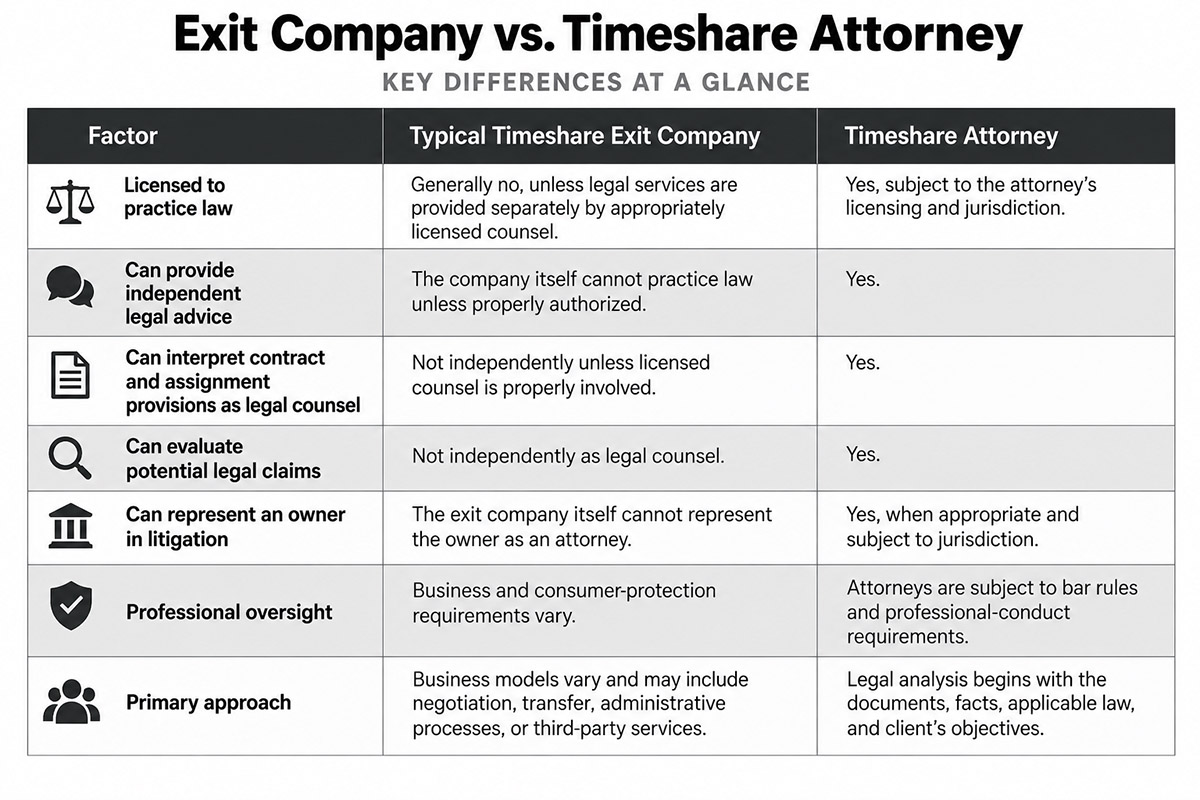
The purpose of this comparison is not to suggest that every exit company is fraudulent or that every ownership change requires an attorney. It is to understand what service you are purchasing.
If the issue involves interpreting the original agreement, determining the effect of an assignment or corporate transaction, evaluating disputed representations, or deciding whether legal rights have been affected, those are legal questions.
Finn Law Group explains this further in its discussion of why hiring a timeshare cancellation law firm differs from working with an exit company.
What Documents Should You Keep After a Resort Sale?
Owners do not need to become corporate investigators. They should, however, preserve enough information to establish what happened. Keep the original purchase agreement and deed or membership documents. Save the notice announcing the ownership or management change. Preserve any new club rules, reservation materials, fee notices, upgrade offers, amendments, or agreements sent after the transition.
If you communicate with both the former company and the new company about an existing problem, keep those communications together. The objective is to create a timeline showing what you originally purchased, what changed, when it changed, and what you were asked to do afterward.
That becomes particularly important if different companies begin giving conflicting answers.
How Finn Law Group Reviews a Timeshare After an Ownership Change
Finn Law Group begins with the ownership itself.
Attorneys may review the original purchase agreement, deed or membership structure, governing documents, financing, subsequent upgrades, notices concerning the sale or acquisition, and communications from the old and new companies.
The objective is not to assume that the resort sale created a cancellation right.
It is to determine what changed legally, what remained in place, and whether the owner’s rights or obligations have been affected.
If there was already a dispute involving the original sale, the review may also include representations made during the sales presentation, disclosures, financing, and later modifications to the ownership.
Where supported by the facts and applicable law, representation may include communication, negotiation, dispute resolution, or litigation.
The strategy should follow the legal analysis, not the change of ownership itself.
Frequently Asked Questions
Does a resort sale automatically cancel my timeshare?
No. A change in resort ownership, management, or corporate control does not by itself cancel an owner’s timeshare. The effect of the transaction depends on the ownership structure, governing documents, transaction, and applicable law.
Does the new company have to honor my original agreement?
That depends on what agreement is involved and the legal structure of the transaction. Owners should not assume either that every obligation disappeared or that every promise automatically transferred unchanged. Review the written documents and the notice explaining the transition.
Can the new company raise my maintenance fees?
A corporate or management change does not itself answer whether a particular fee increase is authorized. Maintenance fees may be governed by association documents, budgets, club rules, or other provisions. Review how the increase was approved and what documents govern it.
Should I sign an upgrade offered by the new company?
Understand the transaction before signing. Determine whether the new agreement actually terminates an existing ownership or simply modifies, converts, or adds to it. If the documents are unclear, independent review may be appropriate.
Does the resort sale restart my rescission period?
Do not assume that it does. Rescission rights generally relate to a particular purchase transaction and applicable law. A later upgrade or new purchase may present a separate issue and should be evaluated on its own facts.
Should I stop paying maintenance fees during the transition?
A change in ownership does not automatically eliminate existing payment obligations. Stopping payment can potentially lead to late fees, collection activity, credit consequences, foreclosure, or other enforcement depending on the ownership and applicable law. Understand the consequences before withholding payment.
Can I still pursue cancellation after the resort is sold?
A resort sale does not necessarily eliminate legal rights that otherwise exist. Whether cancellation or another remedy may be available depends on the ownership documents, purchase history, facts, and applicable law. The source draft likewise identifies continued cancellation rights as an issue owners may need to evaluate after a sale.
Additional information is available in Finn Law Group’s timeshare attorney FAQs.
The Resort May Have a New Owner. Your Documents Still Matter.
A new name on the resort does not tell you what happened to your timeshare. That requires looking beneath the branding and determining what transaction actually occurred.
Was the property sold? Did management change? Was the developer acquired? Did the association remain in place? Were your ownership documents assigned or amended? Have you been asked to sign something new?
For many owners, the transition may have little effect on the fundamental ownership. For others, it may create new questions about fees, usage, upgrades, or which company is responsible for an existing problem.
Do not assume the sale either frees you from the timeshare or takes away your existing legal options.
Understand what changed first. Then determine whether that change affects the rights and obligations contained in your documents.
About Finn Law Group
Finn Law Group is a timeshare law firm focused on representing consumers in timeshare-related matters. From its Florida headquarters, the firm works with owners confronting complex contracts, disputed sales representations, cancellation concerns, developer disputes, and other legal issues arising from timeshare ownership.
The firm’s practice begins with legal analysis rather than a standardized exit process. Attorneys review the ownership documents, sales history, applicable law, and individual circumstances before advising a client about potential options. Where supported by the facts and law, representation may include negotiation, dispute resolution, or litigation.
To learn more about the lawyers behind the firm’s timeshare practice, review Finn Law Group’s attorney credentials.
If your resort has changed ownership and you are unsure what that means for your timeshare, call 727-214-0700 or schedule a free consultation.
Disclosure
This article is provided for informational purposes only and should not be considered legal advice. Every timeshare transaction and consumer protection matter is unique and depends on the specific facts, documents, ownership structure, transaction, jurisdiction, and applicable law. A sale, acquisition, merger, rebranding, or management change does not by itself establish a right to cancel a timeshare or a violation of an owner’s rights. Contract assignment, successor obligations, maintenance fees, rescission rights, and available remedies vary. If you have questions about how a resort ownership change affects your timeshare, consult with a licensed attorney regarding your specific circumstances.
| Ready to Find Out Where You Stand? Schedule a free consultation with Finn Law Group and get a clear answer about your timeshare contract after a resort ownership change. Call 727-214-0700 |