
Don’t Fall for Debt Collection Scams
Know Your Rights in Florida
 Debt collection scammers are scary and persistent. They use threats, pressure, and fear to make people believe they owe money — even if they don’t. Often, they’ll say you’ll be sued, arrested, have your wages garnished, or be forced to appear in court unless you pay immediately.
For many Floridians, this kind of aggressive approach feels real enough to act on. But here’s the truth: Scammers are counting on your fear.
Let’s walk through how these scams work, what your rights are under Florida law, and how legal help can make a difference if you’re being targeted.
What Debt Collection Scams Look Like
 Scammers pretending to be debt collectors often:
- Call repeatedly and aggressively
- Claim you owe a debt you don’t recognize
- Use threats of arrest, lawsuits, or legal actions
- Demand payment via untraceable methods like wire transfers or gift cards
- Refuse to provide basic details about the debt
Sometimes, they even spoof phone numbers to make it look like they’re calling from a Florida courthouse or local law enforcement agency.
In some cases, scammers have partial personal information — your name, last four digits of your Social Security number, or even your address — to make their threats seem more legitimate.
Understanding the Legal Line: Real Debt Collectors vs. Scammers
Real Debt Collector (Legally Bound) | Scammer (Operating Illegally) |
|---|---|
Must send written notice within 5 days | Refuses or delays sending anything in writing |
Cannot threaten criminal arrest over civil debts | Claims you’ll be arrested or taken to court immediately |
Must follow both federal and Florida debt collection laws | Ignores laws entirely and uses fear tactics |
Must honor your request to verify the debt | Gets angry or aggressive if you ask questions |
Important Note for Florida Residents:
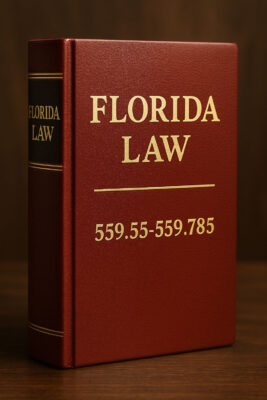 Florida follows both the federal Fair Debt Collection Practices Act (FDCPA) and the Florida Consumer Collection Practices Act (FCCPA). The FCCPA is even broader in some ways, applying not only to third-party debt collectors, but also to original creditors. It prohibits harassment, abusive collection tactics, and false threats — all commonly used by scammers.
What to Do if You’re Contacted by a Suspicious Debt Collector in Florida
1. Request Written Validation of the Debt
Under federal and Florida law, you’re entitled to written notice of the debt — including the name of the original creditor, amount, and your right to dispute it. If the debt collector refuses to send this, they may be breaking the law.
2. Slow Down and Don’t Pay Immediately
Scammers count on emotion and urgency. A legitimate collector — or a real law firm — will not force you to pay right now over the phone. If someone demands immediate payment or threatens arrest, hang up.
3. Verify the Debt Through Proper Channels
Check your credit report, contact the alleged creditor directly, or consult a Florida attorney. Never use the number the caller gives you — look up contact info independently.
4. Keep Records of All Communications
If you suspect you’re being harassed, document everything. Record the dates and times of calls, what was said, and save voicemails or texts. This is crucial if you need to build a legal case or file a formal complaint.
When to Get a Lawyer Involved
 Florida law offers strong protections, but enforcing them often requires the help of a qualified attorney. If you’re being harassed, lied to, or falsely threatened by someone claiming to be a debt collector, a consumer protection attorney can:
- Send a cease-and-desist letter on your behalf
- File a complaint with the Florida Attorney General or Federal Trade Commission
- Take legal action under the FDCPA or FCCPA, which can include statutory damages up to $1,000, attorney’s fees, and other relief
- Investigate identity theft or mistaken identity, which may be the root of the issue
Many Florida law firms offer free consultations for cases involving debt collection abuse or scams. If you’re not sure whether the call was real or fake, it’s better to get legal guidance before making any payments.
Report the Scam
If you suspect a debt collection scam, report it to:
- Florida Attorney General
- Federal Trade Commission (FTC)
- Consumer Financial Protection Bureau (CFPB)
- BBB Scam Tracker
You’re not just protecting yourself — you’re helping protect others in your Florida community from falling for the same scheme.
Final Thoughts: You’re Not Alone
Scammers target people who are stressed, vulnerable, or just trying to do the right thing. If you’ve been contacted by a fake collector, it’s not your fault — and you do have options.
You don’t have to deal with this alone. Legal help is available, and the law is on your side.
Just because someone knows your name and address doesn’t mean they have a legal right to your money. Don’t let fear drive your decisions — get the facts, know your rights, and reach out to our firm if you need help verifying a debt.
For more guidance and resources, check out this BBB Tip on Phony Debt Collection.
Disclosure: This article is intended for informational purposes only and should not be considered legal advice. Images included are used for illustrative and artistic purposes only and do not depict actual individuals, events, or specific locations.
____________________________________
Led by attorneys J. Andrew Meyer and Michael D. Finn, with over 75 years of combined legal experience, the Finn Law Group is a national consumer protection firm focusing on Timeshare Law and debt collection abuse. If you believe you need the services of a timeshare attorney or have been subjected to unlawful collection tactics, contact our law firm today at 855-FINN-LAW. Want to learn more about timeshare-related issues and consumer protection? Follow us on X.