Why Maintenance Fees Rise Faster Than Inflation
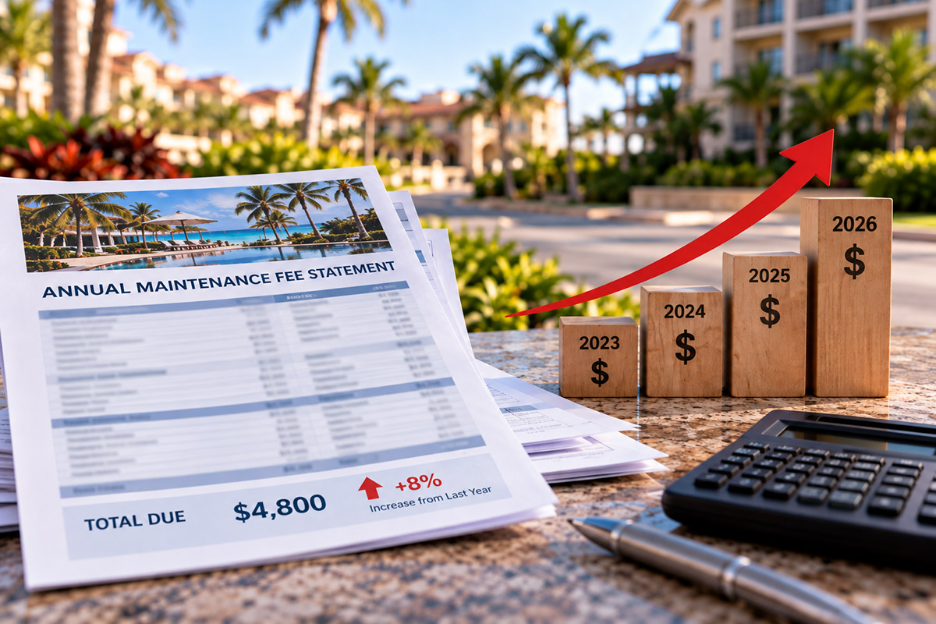
For many timeshare owners, the annual maintenance fee statement has become one of the least welcome pieces of mail. The amount is higher than last year, sometimes considerably higher, and the explanation often points to inflation, rising operating costs, insurance, or necessary property improvements.
Those explanations may be legitimate. Resorts face many of the same financial pressures as hotels, condominium associations, and other property owners. Labor costs increase; buildings require maintenance, and insurance premiums can change significantly from one year to the next.
But owners are asking a reasonable question: If inflation has moderated, why do my timeshare maintenance fees continue to rise at a much faster pace?
The answer often involves more than inflation.
Timeshare resort budgets contain dozens of expenses, including staffing, utilities, property maintenance, insurance, management fees, reserve contributions, administrative services, and costs associated with operating a vacation ownership program. Some expenses are necessary and easily understood. Others are more difficult to evaluate, particularly when owners receive limited information about how costs are calculated or allocated.
At Finn Law Group, we believe timeshare owners should understand what they are being charged, what their governing documents authorize, and when rising fees deserve closer examination. An increase alone does not establish wrongdoing, but that does not mean every charge should be accepted without question.
Why Inflation Does Not Tell the Whole Story
Inflation measures changes in the prices of goods and services across the broader economy. A timeshare maintenance budget, however, reflects the particular expenses of operating and maintaining a resort.
Those costs do not necessarily rise at the same rate as the Consumer Price Index.
For example, a resort in a coastal area may experience a substantial increase in property insurance even when general inflation is relatively modest. An older property may require major repairs, while a resort facing labor shortages may need to increase wages to maintain staffing.
Other expenses may rise because of deferred maintenance, new reserve requirements, higher property taxes, or changes in service contracts.
These are legitimate reasons why an individual resort’s costs might exceed inflation in a particular year.
The concern becomes more significant when above-inflation increases occur repeatedly without clear explanations. Owners may be paying more each year without receiving additional benefits, improved accommodations, or a better vacation experience.
That does not necessarily mean the fees are improper. It does mean the underlying budget deserves attention.
Inflation can explain some cost increases. It should not become a substitute for explaining the entire resort budget.
What Actually Goes into a Timeshare Maintenance Fee?
Timeshare maintenance fees are generally intended to cover the expenses associated with operating, maintaining, and administering the resort or vacation ownership program. The exact categories depend on the ownership structure and governing documents.
Some expenses are straightforward. Others require a closer look at how costs are assigned, who provides the services, and whether the amounts are reasonable under the circumstances.
Property Maintenance and Everyday Operations
Every resort has routine operating expenses. Buildings require repairs, swimming pools need servicing, landscaping must be maintained, and common areas need cleaning and upkeep.
These costs are part of maintaining a property that owners expect to use.
However, the budget should provide enough information to help owners understand how these expenses are changing. A significant increase in general maintenance, for example, may reflect legitimate repairs or higher contractor costs. It may also raise questions about whether work was properly planned or whether certain expenses should have been anticipated in earlier budgets.
The issue is not whether the resort should maintain its property. It is whether owners can understand what they are paying for.
Insurance, Taxes, and Utilities
Property insurance can be a major expense, especially for resorts in areas exposed to hurricanes, flooding, wildfires, or other risks. Premiums, deductibles, and coverage terms can change substantially.
Property taxes, electricity, water, sewer services, and waste removal also contribute to annual expenses. Resorts with extensive amenities may face particularly high utility costs. These categories often provide understandable reasons for increases, but owners should still be able to review how much each expense has changed. An explanation that simply attributes the entire increase to inflation may overlook the need to identify which expenses increased and by how much.
Staffing and Resort Services
Housekeeping, maintenance employees, front-desk personnel, security, and other staff are necessary to operate many timeshare properties. Wages, employee benefits, payroll taxes, and contracted labor costs can all affect the budget.
Owners may reasonably expect these expenses to rise over time. However, staffing costs should also be considered alongside the level of service being provided. If fees continue increasing while housekeeping schedules are reduced, amenities close, or service levels decline, owners may want a more detailed explanation.
Reduced service does not automatically establish a legal violation, but it can raise questions about budgeting, management decisions, and the benefits associated with ownership.
The Budget Categories That Deserve a Closer Look
Some maintenance fee expenses are less visible to owners than landscaping, insurance, or housekeeping. These are often the categories that deserve additional attention when fees increase substantially.
Management and Administrative Fees
Many timeshare resorts operate under management agreements with developers, affiliated companies, or outside management firms. These agreements may provide for management fees, accounting services, administrative support, reservation operations, and other expenses.
The existence of a management fee is not unusual. Resorts need professional administration, and management companies are entitled to compensation under valid agreements. However, owners should understand how those fees are calculated and whether the governing documents authorize them.
A fixed annual fee, a percentage-based management fee, and charges for additional administrative services can produce very different financial results. Where management services are provided by a company affiliated with the developer, owners may reasonably ask how the arrangement is structured and what safeguards govern the allocation of expenses. An affiliated relationship is not inherently improper. But it should not prevent appropriate review of the charges.
Timeshare Reservation Systems and Technology
Modern timeshare programs depend on reservation platforms, owner portals, account management systems, and other technology. Maintaining those systems can involve legitimate costs, including software, cybersecurity, technical support, and ongoing development.
The questions become more complicated when owners are charged for technology services without a clear explanation of what those services include or how costs are distributed across the ownership program. For example, an owner might reasonably question whether a system serves the resort association, the developer’s broader sales operation, or both.
That does not establish that a particular charge is improper. It highlights why expense allocation can be important. Owners should not assume every expense associated with a developer’s business is automatically a proper expense of their resort association.
Marketing, Sales, and Owner Communications
This is another category that deserves careful examination. Timeshare resorts and vacation clubs may incur legitimate costs communicating with owners, providing membership information, and administering owner programs.
However, operating an existing resort and marketing new timeshare sales are not necessarily the same function. When owners see budget categories involving marketing, promotional services, owner engagement, or similar activities, they may want to understand what those expenses actually cover.
Are the charges related to servicing existing owners? Are they associated with membership administration? Or do they involve activities primarily intended to generate additional sales? The answers depend on the governing documents, agreements, and actual use of the funds.
Owners should be able to understand why a particular expense belongs in the maintenance budget rather than simply accepting a broad category description.
Reserve Funding and the Cost of an Aging Resort
One of the most important parts of a timeshare budget is reserve funding. Reserves are funds set aside for major repairs and replacements that do not occur every year. Roofs, elevators, mechanical systems, furnishings, building exteriors, and other significant property components eventually require attention.
Proper reserve planning can help spread these expenses across years of ownership. When reserve contributions are inadequate, however, owners may face larger increases or special assessments when major work becomes necessary.
An aging resort may also require more extensive repairs than originally anticipated. Construction costs can rise, and maintenance that was postponed in prior years may become more expensive to complete. Owners should review whether reserve contributions have increased, whether reserve studies are available, and whether significant projects are planned.
A substantial reserve increase may reflect responsible long-term planning. It may also reveal that earlier budgets did not adequately prepare for predictable expenses. Those circumstances should be evaluated based on the property’s condition, financial records, and governing requirements.
Special Assessments Can Make Rising Fees Even More Difficult
Annual maintenance fees are only part of the financial picture. Depending on the governing documents, owners may also face special assessments for major repairs, storm damage, capital improvements, unexpected expenses, or other authorized purposes.
A special assessment can create a significant financial burden, particularly when it arrives shortly after an increase in annual maintenance fees. Owners should understand why the assessment is necessary, how the amount was calculated, whether insurance or reserve funds are available, and what authority permits the charge.
A properly authorized assessment may be enforceable even when an owner disagrees with the expense. But the existence of contractual assessment authority does not eliminate every question about how the assessment was approved, calculated, or administered.
When a resort repeatedly imposes assessments alongside increasing maintenance fees, owners may have good reason to examine the property’s financial planning more closely.
When the Budget Seems to Include Expenses That Do Not Belong
This is where the discussion becomes more than a question of inflation. A timeshare budget may contain numerous legitimate expenses, but not every charge associated with a resort or developer necessarily belongs in the amount billed to owners.
Depending on the ownership structure, questions may arise about costs associated with developer-controlled inventory, sales activities, affiliated service providers, corporate administration, or expenses shared among multiple properties.
For example, if a resort includes both timeshare inventory and accommodations controlled by other entities, owners may want to understand how common expenses are allocated. Similarly, when a management company provides services to several resorts, the method used to distribute shared costs may deserve examination.
These arrangements are not automatically improper. Some may be expressly authorized by the governing documents and supported by legitimate business reasons. The important question is whether the expenses are properly allocated and charged under the applicable agreements and law.
A maintenance budget should reflect expenses owners are legally responsible for paying, not simply every expense connected to operating a broader vacation business.
That is why vague budget descriptions, unexplained increases, and unclear allocations can warrant additional scrutiny.
Concerned About Rising Timeshare Maintenance Fees?
If your maintenance fees or assessments have increased significantly, Finn Law Group can review your ownership documents and circumstances to help determine whether legal questions deserve further attention.
Call 727-214-0700 or schedule a free consultation.
What Owners Should Review Before Accepting Another Increase
Owners who question their maintenance fees should begin with the documents governing the ownership. The purchase agreement, declaration, association documents, club rules, management agreements, and applicable budget provisions may explain how expenses are approved and allocated.
Annual budgets and financial statements can provide additional information. Comparing several years of maintenance fee statements is particularly useful. An owner may discover that insurance costs increased sharply in one year, reserve contributions rose in another, or management expenses have increased steadily over time.
The goal is to identify the actual sources of the increase.
Owners may also want to request information about significant changes in administrative expenses, related-party service agreements, reserve funding, and special assessments. Access to particular records depends on the ownership structure, governing documents, and applicable law. Not every owner has the same inspection rights. When questions arise, requesting an explanation from the developer or association in writing is generally a reasonable first step.
Can Rising Maintenance Fees Provide Grounds for Timeshare Cancellation?
This is an important question, and the answer requires care. A maintenance fee increase does not automatically give an owner the right to cancel a timeshare. Many contracts and governing documents permit annual increases and assessments, subject to applicable requirements.
The analysis may change when an owner questions whether charges were authorized, whether contractual procedures were followed, or whether material representations about future expenses influenced the purchase.
Some owners recall being told that maintenance fees would remain relatively stable or that future increases would be limited. Others may question whether important financial obligations were adequately disclosed.
Whether those circumstances support a legal claim depends on the evidence, written agreements, applicable law, and timing. An owner should not assume that every large increase is unlawful. But neither should the owner assume that all charges are beyond review simply because they appear on an annual statement.
Finn Law Group’s approach to timeshare cancellation law begins with examining the ownership documents and the circumstances surrounding the transaction.
What If the Timeshare Is No Longer Affordable?
For some owners, the central issue is no longer whether a particular increase was justified. It is whether the ownership still fits the household budget. An annual fee that was manageable ten years ago may be difficult to afford after retirement, reduced income, unexpected medical expenses, or other changes in financial circumstances.
Owners should first determine whether the developer or association offers a voluntary surrender, deed-back, or hardship program. Eligibility varies, and not every ownership qualifies. Some programs require outstanding financing to be paid off or maintenance fees to be current.
If a direct developer solution is unavailable, other options may deserve consideration.
Owners should be cautious about stopping payment without understanding the potential consequences. Depending on the circumstances, nonpayment may lead to collection activity, credit consequences, foreclosure, or other action.
They should also carefully evaluate any third-party exit service before paying additional fees. Understanding why hiring a timeshare law firm differs from hiring an exit company can help owners make a more informed decision.
Financial hardship does not automatically create a right to cancellation, but it is a legitimate reason to investigate available options.
How Finn Law Group Evaluates Maintenance-Fee Concerns
Finn Law Group is a national consumer protection law firm with extensive experience representing timeshare owners in contractual and legal disputes. Our attorneys understand that rising maintenance fees can create serious financial concerns, particularly when owners question the charges or no longer receive sufficient value from their ownership.
Our review may include purchase agreements, governing documents, maintenance-fee statements, special assessments, disclosures, sales materials, and communications with the developer. These records help us determine what the owner agreed to pay, what authority governs the charges, and whether the circumstances raise potential legal issues.
At Finn Law Group, we believe owners deserve more than a general explanation that costs have increased. They deserve an informed understanding of their contractual obligations, legal rights, and available options.
Frequently Asked Questions About Timeshare Maintenance Fees
Why are my timeshare maintenance fees increasing faster than inflation?
Resort expenses do not necessarily follow general inflation. Insurance, labor, utilities, reserve contributions, repairs, and management costs may increase at different rates. Owners should review the annual budget to identify which expenses are responsible for the increase.
Can a timeshare developer charge whatever it wants in maintenance fees?
Not necessarily. Maintenance fees and assessments are generally governed by contracts, association documents, and applicable law. The authority to approve and collect charges depends on the ownership structure and relevant requirements.
Can I challenge a timeshare special assessment?
Whether an assessment can be challenged depends on the governing documents, approval procedures, applicable law, and circumstances. An assessment is not automatically improper because it is expensive or unexpected.
Can I cancel my timeshare because maintenance fees are too high?
Higher maintenance fees alone do not ordinarily create an automatic right to cancellation. Owners may have developer surrender options, and certain circumstances involving contracts, disclosures, or sales representations may warrant legal review.
Should I stop paying maintenance fees if I no longer use my timeshare?
Nonuse generally does not end ownership obligations. Stopping payment may lead to collection activity, credit consequences, foreclosure, or other action depending on the circumstances. Owners should understand those risks before making a decision.
Additional information is available through Finn Law Group’s timeshare attorney FAQs.
Final Thoughts: Rising Costs Deserve More Than a General Explanation
Timeshare maintenance fees are not expected to remain unchanged forever. Resorts require maintenance, employees need to be paid, insurance costs fluctuate, and buildings eventually need major repairs.
Those are legitimate expenses of property ownership.
But an annual budget can also contain management charges, administrative services, shared operating expenses, technology costs, and other categories that are not always easy for owners to understand.
When maintenance fees rise faster than inflation, the appropriate question is not simply whether prices have increased. It is which expenses increased, why they increased, and whether the ownership documents and applicable law support the charges.
For owners already questioning the value of their timeshare, those answers can also help determine whether continued ownership makes financial sense.
If you have concerns about rising maintenance fees, special assessments, or your contractual obligations, contact Finn Law Group at 727-214-0700 to discuss your circumstances with an experienced timeshare attorney.
Disclosure
This article is provided for informational purposes only and should not be considered legal advice. Every timeshare dispute and consumer protection matter is unique and depends on the specific facts and applicable law. Online information should not be relied upon as a substitute for legal advice. If you have questions about your legal rights or are considering taking action regarding your timeshare, consult with a licensed attorney experienced in consumer protection and timeshare law before making important legal or financial decisions.