Why Duplicate Accounts Can Appear on Your Credit Report
Most consumers expect their credit report to provide an accurate snapshot of their financial history. After all, lenders, landlords, insurers, and other businesses often rely on this information when making important decisions.
While accuracy is the goal of the credit reporting system, many consumers are surprised to learn that the nationwide credit reporting agencies do not create most of the information found in a credit report. Instead, they collect data from thousands of businesses across the country that regularly report information about consumer accounts.
When information flows correctly through that system, a credit report can provide a reliable picture of a consumer’s credit history. However, because the system depends on information being reported, updated, and maintained by many different organizations, errors can sometimes occur. One example is the appearance of the same collection account more than once on a consumer credit report.
At first glance, duplicate reporting may make it appear that a consumer owes multiple collection accounts when only one debt actually exists. Understanding how the credit reporting system works helps explain why these issues sometimes occur and why accurate reporting is so important.
How Information Is Added to a Credit Report
The three nationwide credit reporting agencies, Equifax, Experian, and TransUnion, generally do not generate account information themselves. Instead, they receive data electronically from businesses known as data furnishers. These furnishers routinely submit information such as account balances, payment history, credit limits, account status, and collection activity.
The credit reporting agencies organize this information into an individual’s credit file, where it becomes part of the credit report that lenders and others may review when evaluating a consumer’s creditworthiness. Because millions of account updates are transmitted every day from thousands of different businesses, the system depends on each participant reporting complete and accurate information. If an account is reported incorrectly, updated improperly, or not removed when appropriate, inaccuracies can find their way onto a consumer’s credit report.
Why the Same Account May Appear More Than Once
Duplicate reporting does not always mean a consumer owes multiple debts. In some situations, an account may be transferred from one collection agency to another. If the original account is not updated correctly after the transfer, both collection agencies may appear on the credit report at the same time.
In other cases, the same debt may be reported under different account numbers, reported after ownership changes, or duplicated because of reporting errors during routine account updates.
Although only one financial obligation exists, the credit report may appear to show multiple collection accounts. That distinction is important because someone reviewing the report may conclude that the consumer has more outstanding debt or a more significant collection history than actually exists.
Why Accurate Credit Reporting Matters
Credit reports influence far more than a consumer’s ability to obtain a credit card. Mortgage lenders, automobile finance companies, landlords, insurers, and other businesses may review a consumer’s credit history when evaluating applications.
In certain circumstances permitted by law, employers may also review portions of a consumer’s credit history during the hiring process. Because so many financial decisions rely on accurate credit information, Congress enacted the Fair Credit Reporting Act to help promote fairness and accuracy within the credit reporting system. Among other requirements. The law requires consumer reporting agencies to follow reasonable procedures designed to ensure the maximum possible accuracy of the information they report.
Why This Issue Became the Subject of Litigation
The importance of accurate credit reporting has led to numerous lawsuits over the years involving alleged reporting errors. One recent example involved a proposed class action settlement with Equifax concerning allegations that some consumers’ credit reports reflected duplicate collection accounts. According to the allegations, duplicate reporting had the potential to make consumers appear to have more collection activity than actually existed. Equifax denied the allegations but agreed to resolve the litigation through a settlement rather than continue the case.
Like many class action settlements, the agreement represents a resolution of disputed claims and should not be interpreted as a finding that every class member experienced financial harm.
What Consumers Can Do
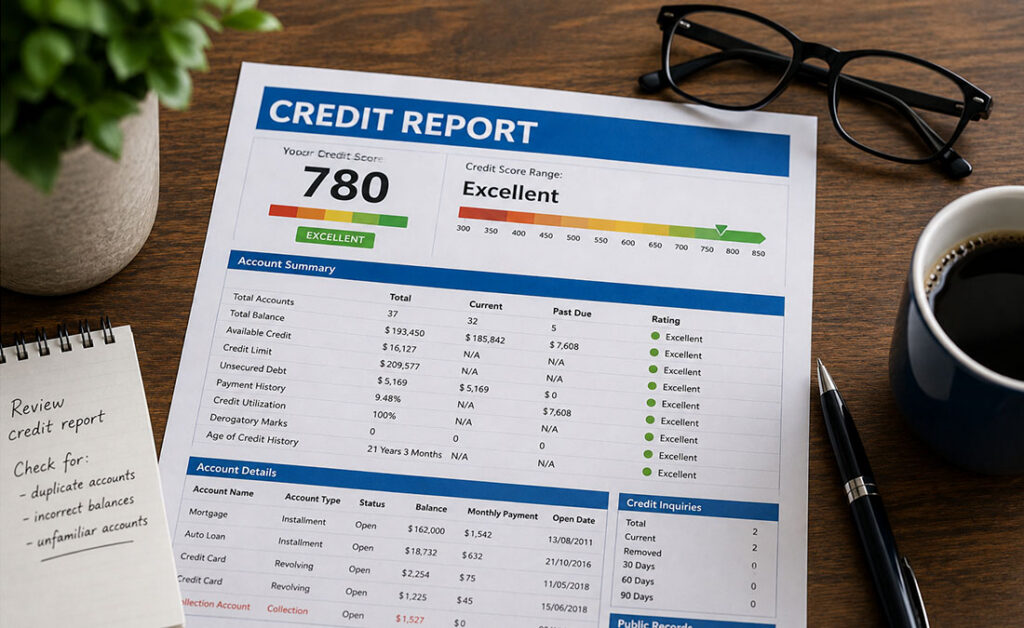
Reviewing your credit reports on a regular basis is one of the best ways to identify reporting errors before they affect your financial life. Federal law gives consumers the right to review their credit reports, making it easier to spot unfamiliar accounts, duplicate entries, incorrect balances, or other information that may not be accurate.
If you find information that appears incorrect, do not assume it will correct itself. Review your records, compare them to your credit report, and keep copies of account statements, correspondence, and any dispute letters or responses you receive. Maintaining thorough documentation can be valuable if questions arise later or additional action becomes necessary.
Many credit reporting errors can be resolved through the dispute process established under the Fair Credit Reporting Act. However, every situation is different. If the error remains unresolved, affects your ability to obtain credit, or causes other financial harm, consulting with an experienced consumer protection attorney can help you better understand your rights and determine whether additional legal remedies may be available.
Final Thoughts
The credit reporting system processes an extraordinary amount of information every day, and in most cases, that system functions as intended. However, because it relies on thousands of independent businesses reporting account information, mistakes can occur.
Understanding how credit information reaches your credit report can help you recognize potential inaccuracies, including duplicate collection accounts that may affect your financial profile. If you believe inaccurate information on your credit report has affected your ability to obtain credit or caused other financial harm, an experienced consumer protection attorney can review your situation and help you better understand your rights under the Fair Credit Reporting Act.
Disclosure: This article is provided for informational purposes only and should not be considered legal advice. Every credit reporting issue is unique and depends on the specific facts, the information reported, and the actions taken by the parties involved. If you believe your credit report contains inaccurate information or you have questions about your rights under the Fair Credit Reporting Act, you should consult with a licensed attorney experienced in consumer protection law before making important legal or financial decisions.
About Finn Law Group
Led by timeshare consumer protection attorneys J. Andrew Meyer and Michael D. Finn, whose combined legal experience exceeds 75 years, Finn Law Group is a national consumer protection law firm headquartered in St. Petersburg, Florida. The firm represents consumers in matters involving credit reporting errors, Fair Credit Reporting Act (FCRA) claims, debt collection issues, timeshare disputes, and other consumer protection matters.
If you would like an experienced consumer protection attorney to review your situation and discuss your legal options, contact Finn Law Group for a free consultation by calling 727-214-0700 or emailing contact@finnlawgroup.com.
Follow Finn Law Group on X for the latest consumer protection news, legal insights, and resources to help you better understand your rights.