Why Can’t I Sell My Timeshare?
It is one of the most current questions timeshare owners are asking:
“If I paid tens of thousands of dollars for my timeshare, why can’t I sell it?”
For owners attempting to sell their vacation ownership in the secondary market, the frustration can begin when life changes. Retirement, health issues, financial concerns, changing travel habits, or simply a loss of interest in timesharing can lead an owner to explore selling.
What they often discover is that the resale market looks very different from the sales presentation they attended years earlier. Some owners are shocked to learn that their timeshare has little to no resale value. Others find that there are few interested buyers. Many become targets for resale scams promising quick sales that never materialize. Understanding why timeshares can be difficult to sell requires insight into how the industry works and how the primary market differs from the secondary market.
The Difference Between New and Resale
Most consumers purchase a timeshare directly from a developer. During the sales presentation, buyers are often introduced to a polished marketing process that includes resort tours, sales professionals, promotional incentives, financing options, and extensive advertising campaigns. The developer is not simply selling a vacation product. The developer is also selling a lifestyle, future memories, flexibility, and convenience.
That marketing infrastructure is expensive.
By the time a consumer purchases a new timeshare, the sales price often reflects not only the value of the ownership interest itself, but also the costs associated with marketing, promotions, sales commissions, financing programs, gifts, resort tours, and customer acquisition.
When an owner later attempts to resell that same interest, those marketing systems are no longer working on their behalf. The resale market focuses primarily on the ownership itself, not the sales experience that originally accompanied it. As a result, the resale value may be dramatically different from the original purchase price.
Marketing Costs and Sales Commissions
Many consumers do not realize how much money developers spend to generate new sales.
The costs can include advertising campaigns, lead generation programs, promotional vacations, call centers, resort tours, sales representatives, managers, financing departments, and administrative support. Sales commissions, spiffs, and bonuses alone can represent a significant portion of the original purchase price. When a consumer purchases directly from a developer, those costs are built into the transaction.
A resale buyer, however, is not interested in paying for the original marketing campaign or sales commission that occurred years earlier. The buyer is looking at the value of the ownership today. That distinction often explains why a timeshare purchased for tens of thousands of dollars may attract little interest on the resale market.
Competition From the Developer
Another challenge facing resale sellers is direct competition from the developer itself.
Developers continue marketing new inventory every day. Prospective buyers often encounter attractive financing options, promotional incentives, bonus points, upgraded membership benefits, and other perks that may only be available through a direct developer purchase.
An individual owner trying to sell on the secondary market typically cannot offer those same incentives. As a result, resale listings may struggle to compete with the developer’s ongoing marketing efforts.
Restrictions Can Affect Resale Value
Many timeshare owners are surprised to learn that certain benefits may not transfer to a resale purchaser. Depending on the program, a resale buyer may lose access to specific membership benefits, loyalty programs, exchange opportunities, discounts, or other features available to owners who purchased directly from the developer. These restrictions can make resale ownership less attractive to potential buyers.
Consumers evaluating a resale opportunity often compare what they receive through the secondary market with what they could receive directly from the developer. If important benefits are excluded, demand for the resale interest may decline.
The Supply and Demand Problem
The timeshare resale market also faces a basic economic challenge.
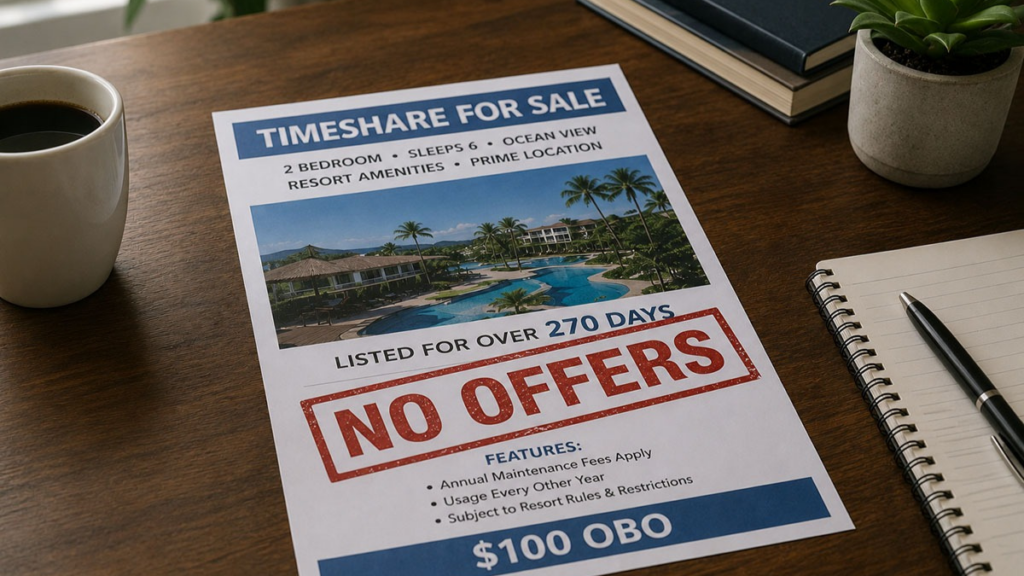
There are often more sellers than buyers. Many owners eventually reach a point where they want to exit their ownership. At the same time, relatively few consumers actively seek to purchase timeshares on the secondary market.
This imbalance creates downward pressure on pricing. In some cases, owners may find similar timeshares being advertised for a fraction of their original purchase price. In other situations, owners may discover that comparable interests are being offered for little or no cost simply because the seller wants relief from future maintenance fees. That can be difficult for owners who expected their timeshare to retain value like traditional real estate.
Timeshares Are Not Traditional Real Estate Investments
One of the biggest misconceptions in the marketplace is that timeshares function like residential real estate investments. They generally do not.
A traditional home may appreciate based on location, demand, land value, and market conditions. A timeshare ownership interest is typically a vacation product designed for personal use and enjoyment. The value proposition is fundamentally different.
Consumers who purchase timeshares expecting appreciation often become disappointed when they later explore resale options. For that reason, many consumer advocates encourage buyers to evaluate a timeshare based on its vacation benefits rather than its potential resale value.
Secondary Market Scams Thrive on Frustration
Unfortunately, the challenges of the resale market have created opportunities for scammers. Owners who are frustrated and eager to sell often become targets for companies promising quick buyers, guaranteed sales, inflated valuations, or immediate exits.
Many of these operations contact owners through unsolicited phone calls, emails, postcards, or online advertisements.
Common warning signs include:
- Upfront fees before any sale occurs
- Claims that a buyer is already waiting
- Guarantees that the timeshare will sell quickly
- Requests for wire transfers or unusual payment methods
- Pressure to act immediately
In many cases, the promised buyer never appears. The owner pays the fee and receives little or no meaningful service in return. Consumers should be especially cautious whenever a company guarantees a resale outcome before conducting any meaningful review of the ownership interest.
Why Some Owners Turn to Other Exit Options
Because resale can be difficult, some owners eventually explore alternative solutions. These may include developer-sponsored deed-back programs, surrender programs, transfers, negotiated exits, or legal review of their ownership situation.
Not every option is available to every owner, and some programs have significant eligibility requirements. The important point is that resale is not always the only path available. Owners who understand their rights and obligations are often in a better position to evaluate available options.
Final Thoughts
Many timeshare owners become frustrated when they discover that selling a timeshare is far more difficult than purchasing one. The reasons are often tied to the economics of the industry itself. High marketing costs, sales commissions, developer competition, transfer restrictions, and an oversupply of sellers all contribute to a challenging resale environment.
Unfortunately, these challenges also create fertile ground for resale scams that target owners who are looking for a way out. Before paying any company to market, transfer, or sell a timeshare, consumers should carefully research the business, understand the fees involved, and verify any claims being made.
Most importantly, owners should remember that the resale market operates very differently from the sales presentation where the ownership was originally purchased. Understanding that distinction can help consumers make informed decisions and avoid costly mistakes.
________________________________________________________________
Disclosure: This blog is for information purposes only and is not intended as legal advice. Always seek competent counsel for specific assistance in dealing with timeshare related issues.
Led by Timeshare attorneys J. Andrew Meyer and Michael D. Finn with over 75 years of combined legal experience. The Finn Law Group is a consumer protection firm that specializes in Timeshare Law. For a free consultation, please contact our office at 727-214-0700 or email us at info@finnlawgroup.com | Follow us for more timeshare blogs on X.