Timeshare Maintenance Fees Are Rising Again
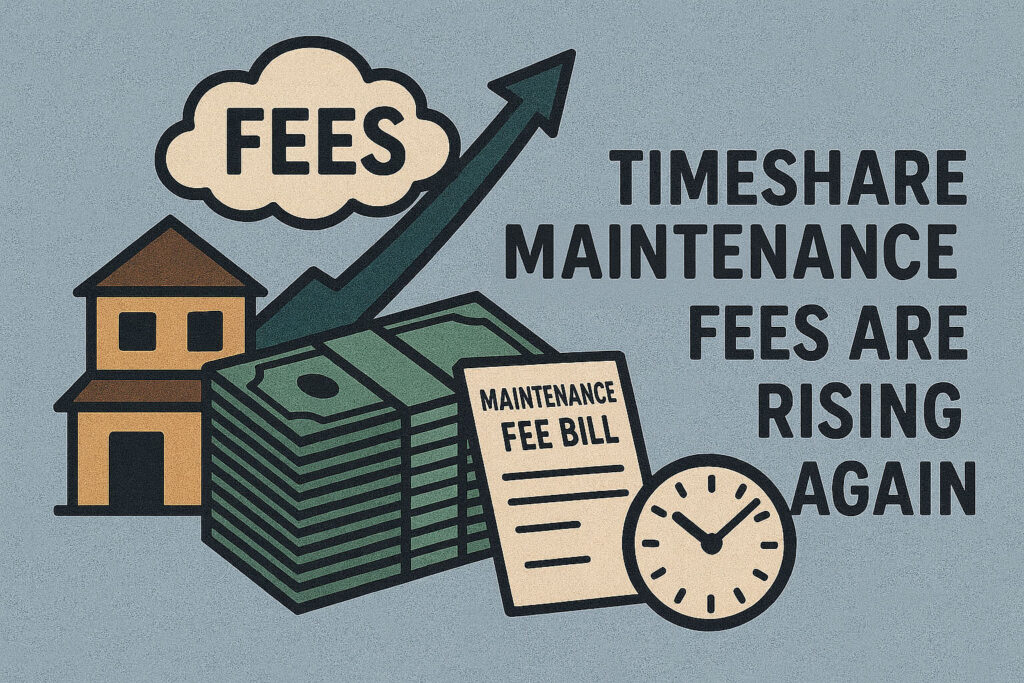
Timeshare maintenance fees are rising again, and for many owners, that reality is becoming harder to ignore. Maintenance costs have always been part of the ownership equation, but the latest numbers reveal increases that are climbing far faster than what most people anticipated. Owners who once budgeted with confidence are now left questioning whether these surging fees are reasonable, and whether the value of their timeshare still matches the cost. The conversation is no longer just about routine upkeep—it’s about affordability, fairness, and transparency.
A Sharp Jump in Maintenance Costs
 According to the most recent industry data, the average annual timeshare maintenance fee has now reached US$1,480 per week equivalent, compared to roughly US$1,260 just last year. On paper, that’s a 17.5% increase year over year, but in practice it’s something more—a significant financial jolt for owners who had grown accustomed to smaller, incremental adjustments.
For some, this sudden leap raises difficult questions: At what point does a “manageable” annual fee cross into the territory of being unmanageable? And if fees continue rising at this pace, will ownership remain an affordable alternative to traditional vacation lodging—or does it risk becoming the very burden it was designed to avoid?
What’s Driving These Increases in Fees?
 Timeshare resorts often point to rising operational costs as the reason behind steeper maintenance fees. Inflation has pushed up the price of everything from cleaning supplies to contracted services. Insurance premiums have surged, especially for properties located in coastal or disaster-prone regions. Utilities remain costly in resort-heavy destinations, where demand is high, and persistent labor shortages have forced resort employers to raise wages to attract and retain staff.
All of these explanations may be valid, but are they the full picture? Many owners are surprised to discover that most developers also apply a timeshare management fee of 10% to 15% directly on top of the resort’s budget. This added charge effectively means that owners are paying not just for the upkeep of their property, but also for the developer’s profits. Shouldn’t this additional cost be more openly acknowledged and clearly justified?
Where’s the Transparency?
 When fees rise at such a dramatic pace, transparency is not just helpful—it’s essential. Yet too often, owners receive nothing more than a bill in the mail, with little to no explanation of how their money is being spent. Without access to clear financial breakdowns, owners are left guessing whether their dollars are going toward genuine operating needs or padded administrative costs.
This naturally leads to an uncomfortable question: if annual fees continue climbing to the point where they surpass the cost of booking a comparable week at a hotel or vacation rental, does the timeshare model still make sense? And more importantly, are owners being given enough information to make an informed judgment about whether their investment remains worthwhile?
What Can Owners Do About Rising Maintenance Fees?
 While it may feel like you have little say, timeshare owners do have tools to push for clarity and accountability:
- Request your HOA’s budget: You are entitled to review this document. It should show where every dollar is going, including developer management fees.
- Compare categories: Are insurance or utility costs jumping more than expected? Does the management fee appear proportionate?
- Stay engaged: Attend owner meetings, ask questions, and use your vote where possible. Silence can be interpreted as approval.
- Consider your options: If the costs begin to outweigh the benefits, it may be time to evaluate alternatives, including resale or legal consultation.
The Bigger Picture
The climb to an average of US$1,480 in annual maintenance fees is not just another routine adjustment—it’s a shift that challenges the very premise of timeshare ownership. Once promoted as a reliable and affordable vacation model, timeshares now face scrutiny as costs rise faster than many owners anticipated. Are developers and managers doing enough to control expenses, or to explain why they continue to escalate?
For timeshare owners, the responsibility lies in asking pointed questions and demanding clarity. Without transparency, it becomes nearly impossible to determine whether the fees represent fair value—or whether the expense has simply outgrown the promise of affordable vacations.
Disclosure: This article is for informational purposes only and should not be taken as legal advice. Any images used are for illustrative purposes only and do not depict actual individuals, events, or locations.
Led by timeshare attorneys J. Andrew Meyer and Michael D. Finn, who bring more than 75 years of combined legal experience, Finn Law Group is a national consumer protection firm dedicated exclusively to Timeshare Law. If you or someone you love has been impacted by a timeshare scam or senior-targeted fraud, reach out to us at 855-FINN-LAW for experienced legal guidance.
To stay informed on consumer protection issues and ongoing timeshare-related developments, follow us on X (formerly Twitter) for updates and insights.