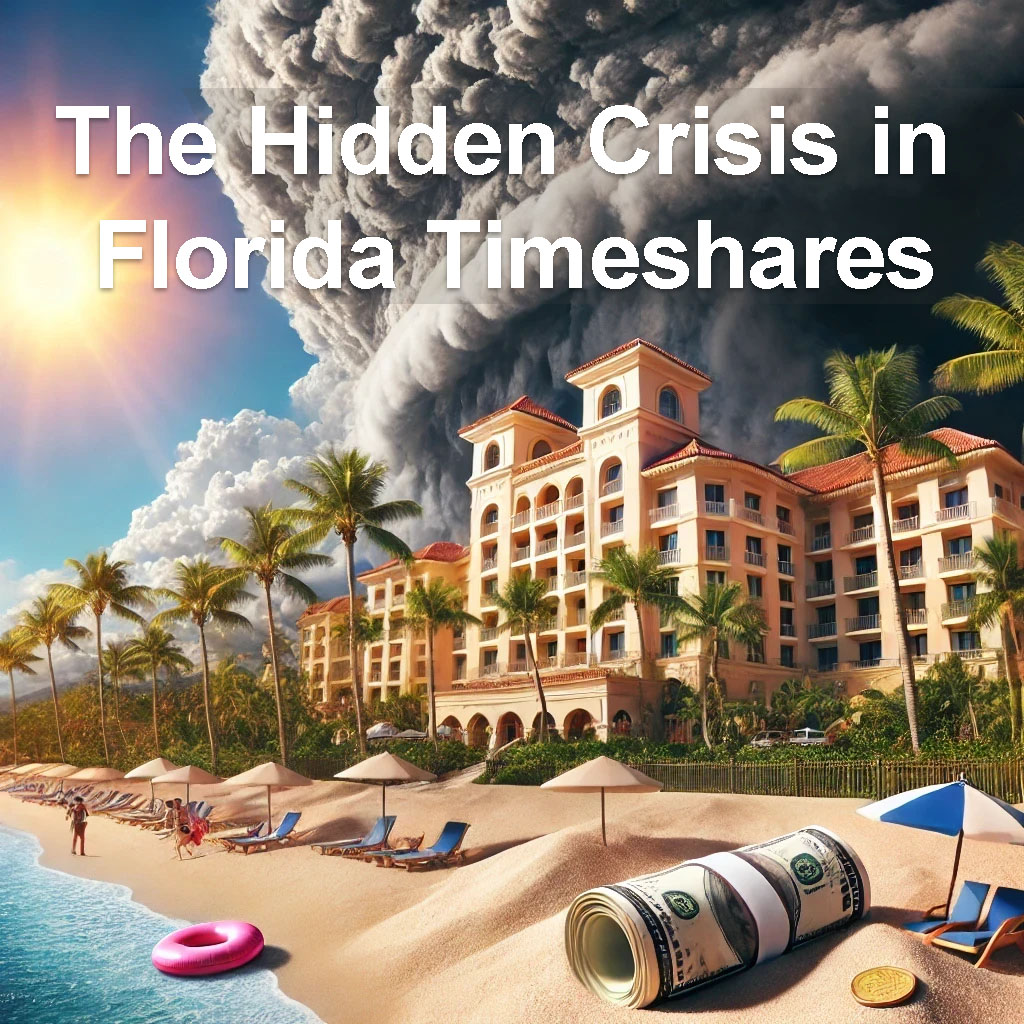
For many families, buying a Florida timeshare once seemed like a smart way to secure future vacations. Sales presentations often focused on flexibility, long-term value, and predictable annual costs. Years later, many owners are discovering that the financial outcomes of timeshare ownership look very different than what they originally expected.
Across Florida, rising maintenance fees, special assessments, insurance costs, and aging resort infrastructure are placing growing pressure on timeshare owners, especially retirees and consumers living on fixed incomes. What was once marketed as an affordable vacation product has increasingly become a source of financial stress and uncertainty.
At the center of the issue is a problem that developed quietly over decades. Many timeshare associations failed to adequately prepare for the true cost of maintaining aging properties. Now, new Florida laws, rising construction expenses, and a difficult insurance market are forcing associations to confront financial obligations that can no longer be delayed.
Florida’s Post-Surfside Reforms Changed the Industry
The 2021 collapse of Champlain Towers South in Surfside, Florida changed how lawmakers and regulators approach building safety and reserve funding. In response to the tragedy, Florida passed major reforms requiring many condominium and shared ownership properties, including some timeshare resorts, to conduct structural inspections and maintain properly funded reserves for future repairs.
For years, many associations kept maintenance fees artificially low by postponing reserve contributions and delaying expensive projects. While that helped avoid short-term increases for owners, it also created long-term financial exposure that many consumers never fully understood. Today, those financial issues are becoming unavoidable.
Timeshare reserve studies are now revealing substantial funding gaps at many older resorts. As associations attempt to comply with modern reserve requirements, owners are seeing sharp increases in timeshare maintenance fees along with special assessments that can sometimes reach thousands of dollars.
For many owners who purchased decades ago believing their annual costs would remain relatively stable, these increases have come as an unwelcome surprise.
Aging Resorts Are Becoming More Expensive to Maintain
Many Florida timeshare properties were built during the 1980s, 1990s, and early 2000s. As these resorts age, the cost of maintaining them continues to rise.
Roofing systems, elevators, balconies, plumbing infrastructure, electrical systems, and waterproofing all require major repairs and eventual replacement. In many cases, associations postponed those expenses for years while continuing to market ownership as affordable and manageable.
Deferred maintenance rarely becomes cheaper over time. Smaller issues often develop into larger structural problems that require significantly more expensive repairs later. As those repair obligations grow, the financial burden is being passed directly to owners through higher fees and special assessments. For some owners, especially those who rarely use their timeshare today, the increasing costs are becoming difficult to justify.
Florida’s Insurance Market Is Adding More Pressure
Florida’s insurance market has created another major challenge for timeshare associations and owners alike. Insurance premiums across the state have risen sharply in recent years following multiple hurricanes, increased reinsurance costs, and broader instability within the property insurance market.
Older timeshare resorts are especially vulnerable to rising premiums because insurers often view aging buildings with deferred maintenance as higher-risk properties. As insurance costs climb, associations frequently have little choice but to pass those increases directly to owners. The combination of rising insurance premiums, reserve funding requirements, and major repair projects has created serious financial pressure for many families who never expected their timeshare costs to escalate this quickly.
Major Developers Are Distancing Themselves From Older Resorts
Another important shift within the industry involves the growing number of aging resorts being removed from major branded portfolios.
In recent years, several large developers have begun distancing themselves from older legacy properties that require extensive renovations or rising reserve contributions. In some cases, branded operators have ended management relationships, converted properties, or allowed older resorts to leave their systems entirely. Industry observers have noted that more than a dozen aging resorts connected to one major developer alone have reportedly gone offline in 2025 and 2026 as financial pressures intensified.
For owners, these changes can create additional uncertainty.
Many consumers originally purchased their timeshare based partly on the reputation and perceived stability of a nationally recognized hospitality brand. When a resort loses that affiliation, owners may begin questioning the long-term value of their ownership along with the future stability of the property itself.
The broader trend also reflects a larger reality within the industry. Aging timeshare inventory has become increasingly expensive to maintain in today’s regulatory and insurance environment. As major developers continue focusing on newer properties and modern vacation membership models, older resorts may face growing financial strain, particularly if reserve funding was neglected for years.
The Resale Market Continues to Struggle
At the same time ownership costs are rising, many owners are discovering that the resale market for timeshares remains extremely weak.
Consumers attempting to sell their ownership often encounter little meaningful demand, particularly at older resorts facing large reserve obligations or rising maintenance costs. Some owners report being unable to give away their timeshare interests despite continuing annual financial obligations.
This creates a difficult situation for retirees trying to reduce expenses, families who no longer travel regularly, or heirs who may eventually inherit ongoing fee obligations attached to the ownership. For many consumers, the issue is no longer simply about vacations. It has become a broader financial concern tied to long-term liability and uncertainty.
Transparency Concerns Continue to Surface
As financial pressure within the industry grows, many owners are asking difficult questions about transparency during the original sales process.
Some consumers believe they were never fully informed about the possibility of major future assessments, reserve shortages, or the difficulty of exiting ownership later. Others question whether the long-term financial realities facing certain resorts were adequately disclosed when they made their purchase.
Why More Owners Are Reassessing Their Ownership
The financial pressures affecting Florida timeshare properties are causing many owners to reevaluate whether continued ownership still makes sense for their lives and finances.
This is especially true for retirees, owners on fixed incomes, and families dealing with repeated fee increases on properties they may use infrequently. For some, the original promise of affordable and predictable vacation ownership no longer reflects the financial reality they are experiencing today.
At the same time, uncertainty surrounding future assessments and ongoing maintenance obligations continues to create anxiety for many consumers trying to plan responsibly for retirement and long-term financial stability.
Final Thoughts
Florida’s timeshare industry is entering a period of major financial transition. Aging infrastructure, reserve funding reforms, insurance instability, and rising repair costs are reshaping the ownership experience for many consumers throughout the state.
While stronger reserve requirements may improve long-term safety and property maintenance, the financial burden associated with those reforms is increasingly falling on current owners, many of whom had little involvement in the decisions that created these funding problems in the first place.
For owners already struggling with rising maintenance fees, special assessments, or concerns about the future affordability of their ownership, the situation can feel overwhelming. Understanding the financial condition of a resort, the obligations attached to ownership, and the legal options that may exist has become more important than ever.
_____________________________________________________________________
Disclosure: This article is for general informational purposes only and does not constitute legal advice. You should consult a qualified timeshare attorney for advice specific to your situation.
Led by timeshare attorneys J. Andrew Meyer and Michael D. Finn with over 75 years of combined legal experience. The Finn Law Group is a national consumer protection firm that specializes in Timeshare Law. If you feel you need the services of a timeshare attorney, contact our law firm today at 855-FINN-LAW. Want to learn more about timeshare related issues? Follow us on X, formally Twitter.
Not Sure How to Cancel Your Timeshare Contract?
If rising fees, special assessments, or concerns about your Florida timeshare have you reassessing your ownership, a free consultation with a licensed timeshare attorney is a practical first step. Finn Law Group works with owners across the country to evaluate their legal options and pursue documented resolutions.
Call 727-214-0700 or schedule a free consultation with our team today.