
How Developers Enforce Perpetuity Clauses in Timeshare Contracts
Most consumers are accustomed to contracts that eventually end. A mortgage is paid off. A lease expires. A loan reaches its final payment. A timeshare can be very different.
Some timeshare ownership agreements are structured to continue without a defined expiration date. Depending on the contract and form of ownership, the obligation may remain in place until the interest is properly transferred, surrendered, terminated, or otherwise legally resolved.
For owners who purchased years or even decades ago, this can come as an unwelcome surprise. They may no longer travel as often, may have stopped using the resort altogether, or may be concerned about leaving the ownership to their family. Yet annual maintenance fees and other obligations continue.
A timeshare perpetuity clause is therefore more than contractual fine print. It can help determine how long the ownership lasts, what happens when an owner wants out, and what issues may need to be addressed as part of an estate. Understanding that language is an important first step before deciding what to do next.
What Does “Perpetuity” Mean in a Timeshare Contract?
In practical terms, perpetuity means there is no predetermined expiration date. This is especially important with certain deeded timeshare interests. Rather than purchasing vacation rights for ten, twenty, or thirty years, an owner may acquire a real property interest that continues until something legally changes the ownership.
The precise language is important. A timeshare contract may describe the ownership as perpetual, while other documents governing the property can establish additional rights and obligations.
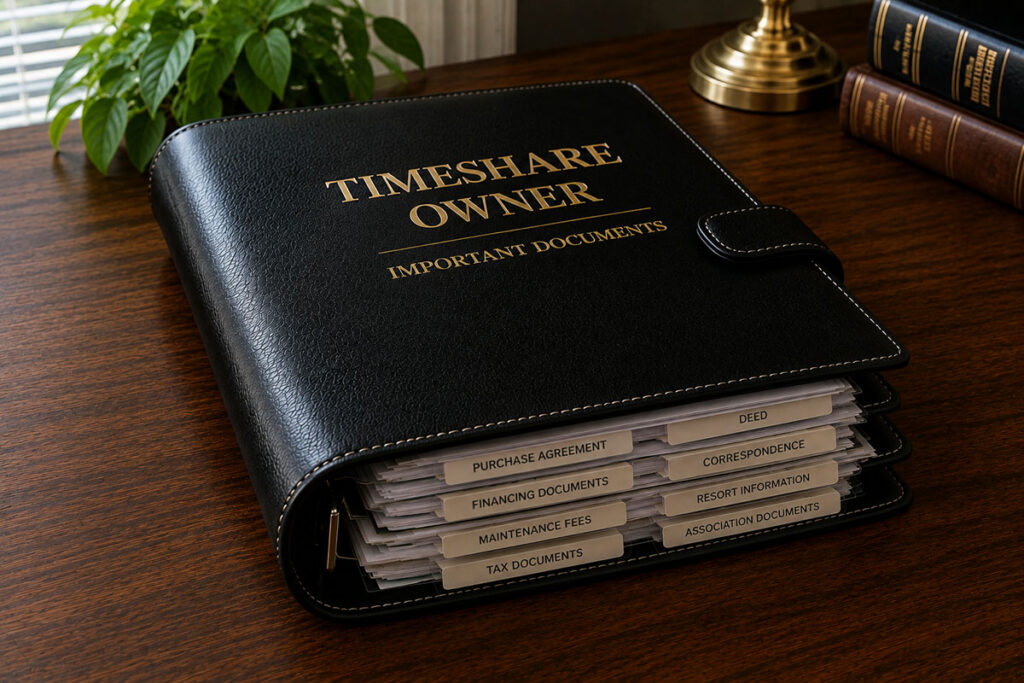
Those documents may include:
- The purchase agreement
- The recorded deed
- Resort declarations and covenants
- Association documents
- Financing agreements
- Maintenance fee provisions
- Amendments and later upgrades
Owners sometimes focus on the original sales contract without realizing that several documents may collectively define the ownership. That is why the first question should not simply be, “Does my contract contain the word perpetuity?”
The better question is: What do all of my ownership documents say about when this obligation ends?
How a Perpetual Timeshare Obligation Continues
Developers do not necessarily need to take some new enforcement action every year to keep a perpetual ownership alive. In many cases, the structure of the ownership itself does that.
There May Be No Expiration Date to Reach
A perpetual agreement may not operate like an automatically renewing subscription. There may simply be no contractual end date. That difference is important.
An owner cannot necessarily wait for the agreement to expire because there may be nothing scheduled to expire. Unless ownership is properly transferred or another resolution occurs, the legal relationship can continue.
Maintenance Fees Continue Even When Vacations Stop
Timeshare owners frequently confuse use with ownership. They are not the same. An owner might stop making reservations for five years and still remain responsible for maintenance fees because those fees generally arise from the ownership interest rather than the number of vacations taken. The same can apply to special assessments and other charges authorized under the governing documents.
This is one of the most difficult aspects of perpetual ownership for consumers to accept. The financial obligation may continue even after the practical value of the timeshare has disappeared for the owner.
The Ownership Must Be Properly Transferred or Resolved
Telling the resort that you no longer want the timeshare does not necessarily end ownership. Neither does mailing back paperwork, stopping reservations, or simply walking away.
If a developer offers a surrender or deed-back program, the owner generally must satisfy its requirements and receive appropriate documentation confirming the disposition of the ownership. Where no voluntary solution is available, other options may need to be evaluated.
Finn Law Group’s overview of timeshare cancellation law explains more about the legal issues that may arise when an owner is seeking to end a timeshare relationship.
Perpetuity Becomes Especially Important When Circumstances Change
A timeshare may have seemed manageable when it was purchased. Twenty years later, the owner’s circumstances can be completely different.
Retirement may mean living on a fixed income. Health problems can make travel difficult. A spouse may have passed away. Children may have no interest in using the resort. Maintenance fees may be substantially higher than they were when the purchase was made. None of those life changes necessarily terminates the underlying ownership.
That is where the long-term nature of a perpetuity provision becomes particularly important. The contract may continue operating according to its terms even though the reasons the consumer originally purchased the timeshare no longer exist. For owners in that position, the question becomes less about vacation planning and more about how to address an ongoing legal and financial obligation.
What Happens to a Perpetual Timeshare After an Owner Dies?
This is an area where owners should be careful about broad statements. A timeshare does not automatically become the personal financial responsibility of every child simply because a parent owned one.
However, a deeded timeshare may become part of the owner’s estate, just as other property interests can. What happens next can depend on how the property is titled, the owner’s estate plan, applicable probate law, the jurisdiction involved, and whether a beneficiary takes appropriate steps regarding an unwanted inheritance.
In some circumstances, an heir may be able to disclaim an inherited interest. Disclaimers can be subject to deadlines and specific legal requirements, so an heir who does not want a timeshare should seek appropriate legal advice before using the property, paying expenses from personal funds, signing developer documents, or otherwise acting in a way that could affect available options.
Owners concerned about what will happen to a perpetual timeshare after death should also consider discussing the issue with an estate-planning attorney before it becomes a problem for their family.
Why Perpetual Ownership Benefits the Timeshare System
Perpetual ownership provides something extremely valuable to the timeshare business model: continuity. Resorts require ongoing funding for property maintenance, staffing, insurance, repairs, management, reserves, and other operating expenses. Maintenance fees and assessments paid by owners help support those costs.
An ownership structure without a natural expiration date can help maintain that recurring financial base. That does not mean every perpetuity provision is improper or unenforceable. But it does explain why an owner’s desire to stop vacationing is fundamentally different from the resort’s interest in maintaining the ownership relationship. The resort may continue viewing the consumer as an owner because, legally, that is exactly what the documents say.
Does Your Timeshare Appear to Have No End Date?
Before assuming you are permanently trapped or paying an exit company that promises an immediate solution, have the ownership documents reviewed.
Can a Timeshare Perpetuity Clause Be Challenged?
The existence of a perpetuity clause does not, by itself, establish grounds for cancellation. That is an important point.
A properly drafted ownership interest may legally continue indefinitely. An owner generally cannot invalidate an agreement simply because the long-term obligation later becomes inconvenient or expensive. But the clause also does not exist in isolation.
When Finn Law Group evaluates a timeshare matter, the attorneys may look beyond the duration language and examine the larger transaction. Questions can include:
- What was represented during the sales presentation?
- How was the duration of ownership explained?
- Were required disclosures provided?
- Does the written agreement correspond with material representations made during the sale?
- Were later upgrades or conversions added to the ownership?
- What do the deed and association documents require?
- Are there legal or contractual grounds for challenging the transaction or seeking another resolution?
Misrepresentation, disclosure issues, contractual violations, or other facts may affect the legal analysis depending on the circumstances and applicable law.
The issue is therefore not simply whether an attorney can “remove” a perpetuity clause. The question is whether the ownership relationship as a whole provides a legal or negotiated path toward resolution.
Why Simply Stopping Payment Can Create New Problems
Owners sometimes conclude that if the timeshare never expires, they will force the issue by refusing to pay. That approach can carry consequences.
Depending on the ownership, contract, and jurisdiction, unpaid obligations may result in late charges, collection activity, possible credit reporting, liens, or foreclosure proceedings involving a deeded timeshare.
Stopping payment also does not necessarily produce the clean release an owner is seeking. An owner considering nonpayment should understand the potential consequences before acting. A timeshare attorney can review the relevant documents and explain the risks associated with the particular ownership.
Finn Law Group vs. a Timeshare Exit Company
Owners searching for how to get out of a timeshare frequently encounter exit companies promising to eliminate perpetual ownership. The problem is that a dispute involving contract enforceability, representations made during a sale, property rights, collections, or litigation is fundamentally a legal matter.
Here is how the two approaches compare:
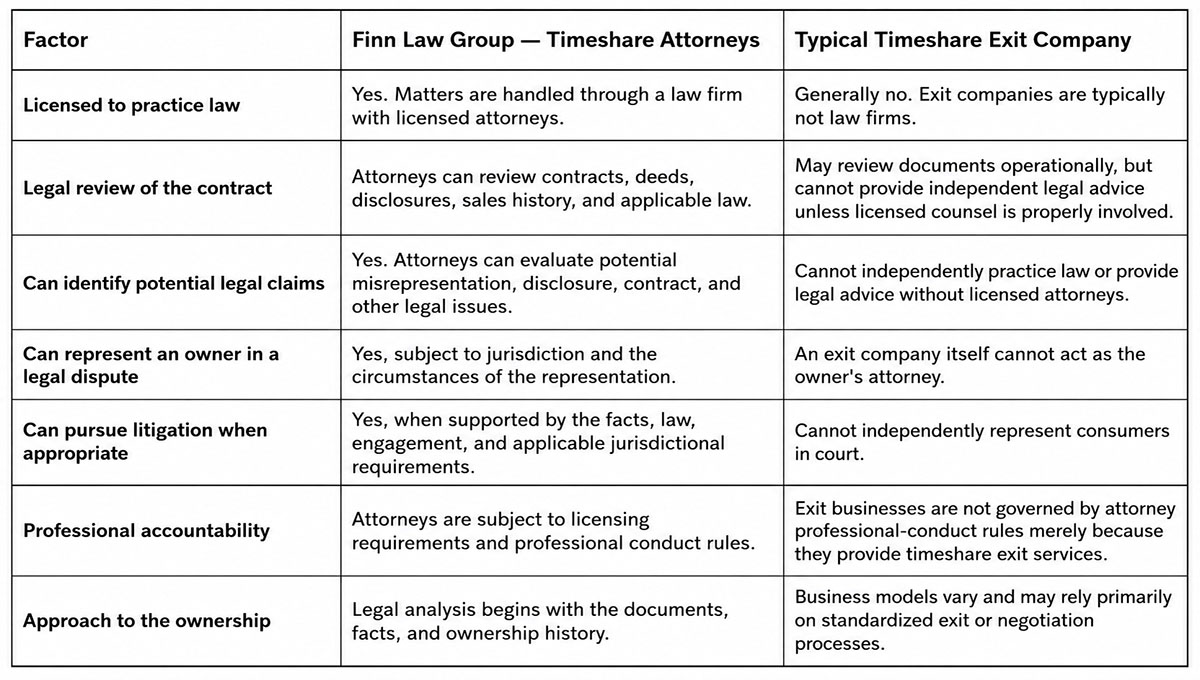
This is why Finn Law Group encourages owners facing a legal dispute to speak with an attorney rather than relying on promises from an unlicensed exit service. You can learn more about why hiring a law firm instead of an exit company before deciding who should handle your matter.
How Finn Law Group Evaluates Perpetual Timeshare Ownership
Finn Law Group is a timeshare law firm first. That means the firm’s analysis does not begin with a predetermined “exit program.” It begins with the ownership documents and the facts.
Attorneys may examine the original purchase agreement, deed, financing, subsequent upgrades, maintenance obligations, developer correspondence, disclosures, and the owner’s recollection and documentation of the sales process.
The objective is to understand how the owner became legally obligated, what keeps that obligation in place, and what lawful options may exist for addressing it.
Frequently Asked Questions About Timeshare Perpetuity Clauses
What does perpetuity mean in a timeshare contract?
It generally means the ownership or contractual interest does not have a predetermined expiration date. The precise effect depends on the contract, deed, governing documents, and applicable law.
Does a perpetual timeshare mean I have to pay maintenance fees forever?
Potentially, for as long as you remain legally responsible for the ownership and the governing documents authorize those charges. Properly ending or transferring the ownership is different from simply stopping its use.
Can my children be forced to inherit my timeshare?
Inheritance is more complicated than that. A deeded timeshare may become part of an estate, but what happens to it depends on title, estate documents, probate law, and actions taken by potential beneficiaries. Heirs who do not want a timeshare should obtain legal advice promptly before accepting or using the interest.
Can I cancel a timeshare because it contains a perpetuity clause?
Not necessarily. A perpetual term alone does not automatically make a timeshare contract invalid. An attorney can review the entire transaction to determine whether cancellation, negotiation, surrender, litigation, or another option may be available.
Can a timeshare attorney remove the perpetuity clause?
An attorney does not simply erase language from an existing agreement. Instead, the attorney evaluates the ownership, contract, sales history, and applicable law to determine whether grounds exist to terminate, challenge, negotiate, transfer, or otherwise resolve the ownership.
What happens if I stop paying a perpetual timeshare?
Depending on the circumstances, nonpayment may result in fees, collection activity, credit consequences, liens, or foreclosure. Owners should understand those risks before treating nonpayment as an exit strategy.
Additional information is available in Finn Law Group’s Timeshare Attorney FAQs.
Perpetual Does Not Mean You Should Stop Asking Questions
Seeing language that suggests your timeshare lasts “in perpetuity” can make the ownership feel impossible to resolve. But that language should be the beginning of the legal analysis, not the end of it.
The deed, contract, disclosures, sales history, association documents, financing, and applicable law can all matter. So can changes made through upgrades or conversions over the years. If you own a timeshare that appears to have no expiration date, do not assume that doing nothing or simply stopping payment is your only choice.
Have the documents reviewed and understand your position before making any decisions on your timeshare.
Disclosure
This article is provided for general informational and educational purposes only and does not constitute legal, estate-planning, tax, financial, or other professional advice. Timeshare contracts, deeds, perpetuity provisions, inheritance issues, maintenance obligations, cancellation rights, and available legal remedies vary according to the documents, jurisdiction, and individual circumstances. No outcome is guaranteed, and past results do not guarantee future outcomes. Consult with an appropriately licensed attorney regarding your specific situation.
About Finn Law Group
Finn Law Group is a timeshare law firm and consumer protection practice headquartered in St. Petersburg, Florida. The firm represents timeshare owners in matters involving cancellation, disputed sales representations, contract and financing issues, maintenance obligations, developer disputes, and problems involving timeshare exit and resale companies.
Rather than treating every ownership as the same problem, Finn Law Group evaluates each matter individually. Its attorneys examine the contracts, ownership history, supporting documents, and circumstances surrounding the transaction to determine what legal options may be available.
If you have questions about a perpetual timeshare obligation, call 727-214-0700 or schedule a free consultation with Finn Law Group.
| Not Sure How to Handle a Timeshare That Never Ends? If your contract includes a perpetuity clause, speaking with a timeshare attorney can help you understand your options and next steps. Call 727-214-0700 |