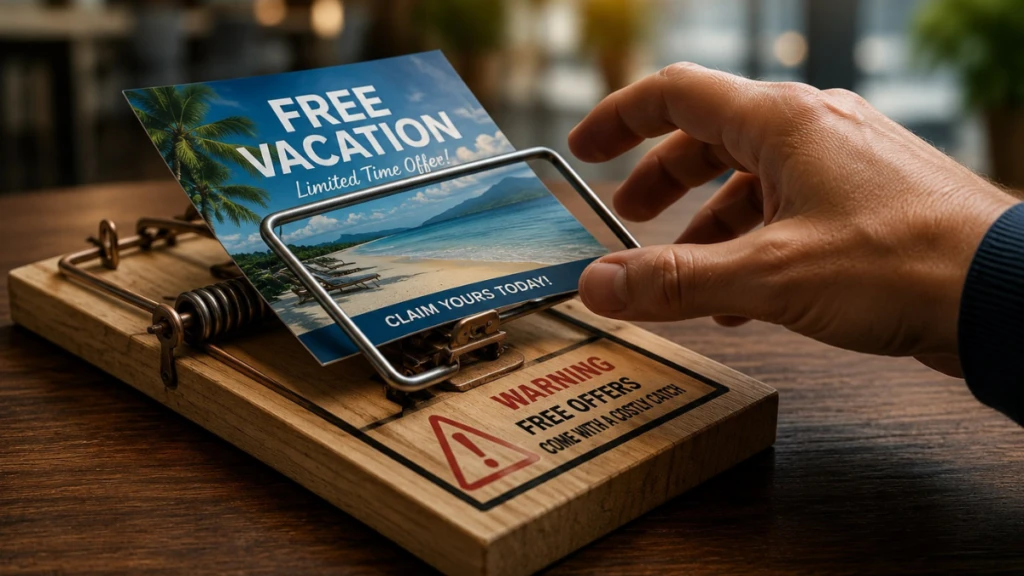
Free Vacation Offers Come with a Costly Catch
As summer travel season begins, the Better Business Bureau is warning consumers to be cautious of online vacation offers that sound too good to be true. According to a recent KRMG report, scammers are increasingly using phrases like “free vacation” or “cheap getaway” to lure travelers into costly schemes that may involve hidden fees, fake booking websites, or high-pressure sales presentations.
For many consumers, the promise of a discounted or complimentary vacation can be hard to resist. Unfortunately, these offers often come with financial risks, misleading terms, and long-term obligations that were never fully explained upfront.
Why “Free Vacation” Offers Raise Red Flags
The BBB advises consumers to avoid broad online search terms such as “free” or “cheap” when planning travel. Scammers commonly use those keywords to direct consumers to fake websites or deceptive offers that appear legitimate.
In many cases, the offer begins with an email, text message, social media advertisement, or phone call claiming that the consumer has “won” a vacation package or qualified for a deeply discounted trip. What follows is often a series of unexpected charges and conditions.
Consumers may later discover they must pay:
- Resort fees
- Taxes
- Reservation charges
- Transportation costs
- Administrative fees
Some promotions also require attendance at lengthy timeshare or vacation club presentations before travelers can receive the advertised benefits.
The Link Between Vacation Promotions and Timeshare Sales
Many “free vacation” promotions are connected to timeshare marketing programs. Consumers are invited to stay at a resort property at a reduced rate in exchange for attending a sales presentation.
While not every promotion is unlawful, problems can arise when critical information is hidden in the fine print or when aggressive sales tactics pressure consumers into signing contracts on the spot.
According to consumer protection agencies, common warning signs include:
- Pressure to act immediately
- Claims that the deal expires “today only”
- Vague descriptions of accommodations
- Requirements to attend a seminar or sales pitch
- Requests for upfront payment before receiving written details
- Difficulty verifying the company’s identity or physical location
These situations can quickly turn a low-cost vacation into a significant financial burden.
Fake Booking Websites Continue to Grow
The BBB has also reported an increase in fake travel booking websites that closely imitate legitimate companies. Some scammers create professional-looking websites, complete with fake reviews and customer service numbers, to convince travelers they are booking through a trusted business.
In other cases, scammers attempt to move consumers away from trusted platforms like Airbnb or VRBO and encourage payment through direct transfers, digital wallets, or third-party websites. Once payment is made, the scammer disappears. Consumers have reported losing thousands of dollars through fraudulent vacation rental schemes.
How Consumers Can Protect Themselves
Before booking any travel offer, consumers should take time to investigate the company and carefully review all terms and conditions.
The BBB and consumer protection agencies recommend:
Research the Company
Search for reviews, complaints, and Better Business Bureau ratings before agreeing to any travel offer. Verify the business independently and avoid relying solely on links provided in advertisements or emails.
Avoid High-Pressure Sales Tactics
Legitimate travel companies should allow consumers time to review offers. Be cautious of anyone demanding immediate payment or insisting the offer will disappear within hours.
Read the Fine Print Carefully
Many travel promotions contain restrictions regarding blackout dates, mandatory presentations, cancellation policies, and additional charges. Consumers should request all terms in writing before making payment.
Use a Credit Card
Using a credit card may provide stronger fraud protections and dispute rights if something goes wrong during the booking process.
Stay on Trusted Platforms
When booking vacation rentals, consumers should avoid taking conversations or payments outside established booking platforms. Moving off-platform can eliminate important protections and refund options.
When a Vacation Deal Becomes a Legal Problem
Consumers who feel they were misled during a travel promotion or timeshare presentation may have legal rights depending on the circumstances involved. Misrepresentation, deceptive advertising, undisclosed fees, and unfair sales tactics can create significant legal and financial issues.
Travel and timeshare agreements often contain complex contract language that can make it difficult for consumers to fully understand what they are agreeing to during a fast-paced sales environment. Understanding your rights before signing any travel or vacation membership agreement is critical.
Final Thoughts
Vacation planning should be exciting, not stressful. While legitimate travel promotions do exist, consumers should approach any “free vacation” offer with caution and conduct careful research before providing payment or personal information.
As consumer agencies continue warning travelers about online scams and deceptive vacation promotions, taking a few extra steps to verify an offer could prevent serious financial loss later.
If an offer sounds too good to be true, it often deserves a closer look.
_________________________________________________________________
Disclosure: This article is for general informational purposes only and does not constitute legal advice. You should consult a qualified timeshare attorney for advice specific to your situation.
Led by timeshare attorneys J. Andrew Meyer and Michael D. Finn with over 75 years of combined legal experience. The Finn Law Group is a national consumer protection firm that specializes in Timeshare Law. If you feel you need the services of a timeshare attorney, contact our law firm today at 855-FINN-LAW. Want to learn more about timeshare related issues? Follow us on X, formally Twitter.