Why Are Timeshare Owners Still Charged When a Resort Closes?
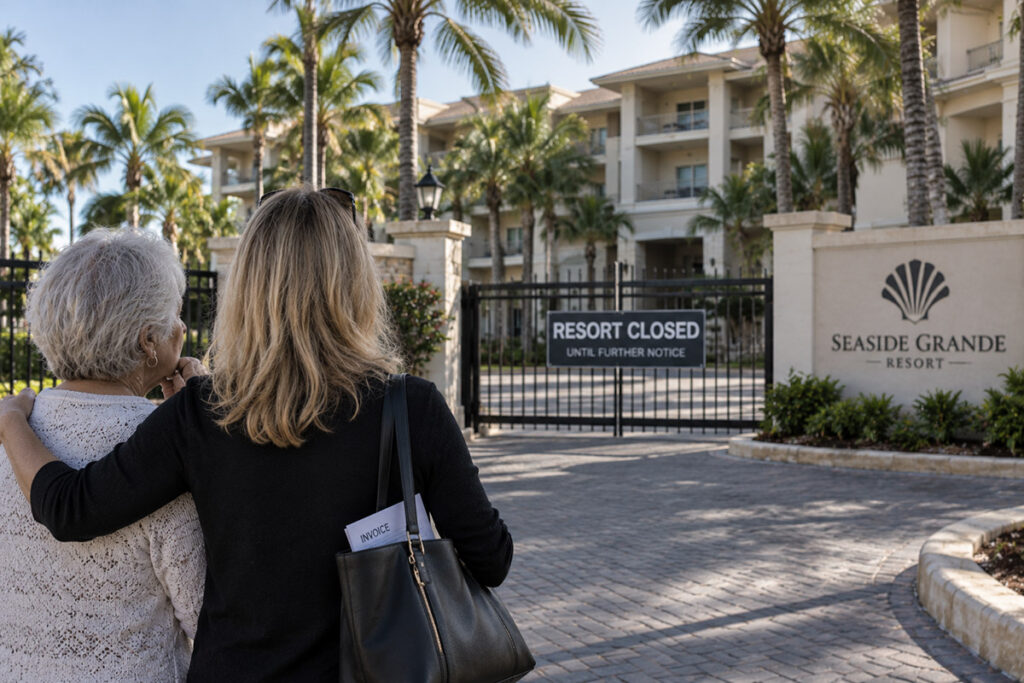
The question seems reasonable. If a timeshare resort is closed and an owner cannot use it, why should that owner continue paying maintenance fees?
For someone looking at a storm-damaged building, an empty resort, or a property that has been inaccessible for months or even years, another maintenance-fee statement can be difficult to understand. The frustration can become even greater when a special assessment arrives to help pay for repairs to a resort the owner cannot currently visit.
But timeshare ownership is generally more complicated than paying for the right to take a particular vacation. Depending on the structure, an owner may hold a deeded real estate interest, points, a trust interest, a membership, or a right-to-use interest. The financial obligations associated with that ownership may continue even during a temporary closure.
That does not mean every charge imposed during a closure is automatically proper. It means the resort’s operating status and the owner’s legal obligations are two separate questions.
When a closure becomes prolonged or permanent, or substantial additional assessments begin arriving, owners should understand exactly what their documents require and what rights they may have.
A Closed Resort Does Not Necessarily End the Timeshare
A timeshare is not the same as a hotel reservation. If a hotel closes, a traveler generally does not continue paying for future nights. A timeshare owner, however, may hold an ownership or contractual interest that remains in place even when the property cannot currently accommodate guests.
For a deeded timeshare, the governing documents may include the deed, declaration, association documents, bylaws, and other recorded instruments. Points, trust, club, and right-to-use programs can involve a different collection of agreements.
Those documents may address maintenance expenses, casualty damage, insurance, assessments, reconstruction, termination, and what happens when a property becomes unavailable.
This is why the physical closure of a resort does not necessarily terminate the owner’s obligations. The property may still exist. The association may still operate. Insurance, security, repairs, administration, taxes, and other expenses may continue while the resort is unavailable.
At the same time, “the contract continues” should not end the discussion. The governing documents may also establish responsibilities for the association, developer, or other parties. A prolonged or permanent closure can raise additional questions about what is supposed to happen to the property and the ownership.
Why Maintenance Fees May Continue
Timeshare maintenance fees generally support more than an owner’s individual vacation. Depending on the property, those fees may contribute to insurance, security, utilities, administration, repairs, reserves, landscaping, taxes, staffing, and other expenses.
Some of those costs can continue even when guests are not checking in. A storm-damaged property, for example, may require security, insurance, engineering work, cleanup, administration, and reconstruction. In some circumstances, maintaining a closed property can itself become expensive.
That can leave owners in an uncomfortable position. They may be paying expenses associated with preserving or repairing a vacation property they cannot currently use.
Whether those charges are authorized is another question. Owners should review the governing documents, budgets, association notices, and other information explaining how fees are calculated and what authority exists to continue collecting them.
The fact that a resort is closed does not automatically make a maintenance fee improper. But owners should also understand why the charge is being imposed and what the governing documents require.
Temporary and Permanent Closures Can Present Different Issues
How long a resort is expected to remain closed can significantly change the situation. A temporary closure following a hurricane, fire, major repair, or renovation may be relatively straightforward. The property is unavailable while repairs are completed, with the expectation that owners will eventually return.
A closure lasting years can raise different questions. Owners may want to know whether reconstruction is progressing, how insurance proceeds are being used, whether reserves are adequate, and whether reopening remains practical.
A permanent closure can become more complicated still. What happens to the real estate? Will the property be sold? Does the association continue? How are insurance proceeds handled? Do the governing documents contain termination provisions? What happens to existing deeds, points, or membership interests?
There is no single answer that applies to every timeshare.
“The resort is closed” describes what has happened to the property. It does not necessarily explain what has happened legally to the ownership.
That answer generally requires reviewing the documents and circumstances surrounding the closure.
Special Assessments Can Add Another Financial Burden
For many owners, the most difficult part of a resort closure is receiving an additional bill while the property is already unavailable.
Special assessments may be imposed for expenses that exceed ordinary operating budgets or available reserves. Depending on the governing documents, those expenses could involve storm damage, structural repairs, insurance deductibles, reconstruction, or emergency work.
The authority to impose an assessment, how it must be approved, how expenses are allocated, and what notice owners must receive depend on the governing documents and applicable law.
Owners therefore should not assume that a special assessment is valid simply because it appears on an invoice. At the same time, refusing to pay without understanding the potential consequences can create a separate problem.
If an assessment is substantial, obtain the notice explaining the charge and review the association documents addressing assessments. This is particularly important when the charge involves a property that has been closed for an extended period.
The legal question is not simply whether the assessment seems fair. It is whether the charge was properly authorized under the governing documents and applicable law.
Insurance and Reconstruction May Become Part of the Question
Insurance can play an important role when a resort suffers major casualty damage. Owners may assume insurance will simply pay to rebuild the property. In practice, coverage limits, deductibles, exclusions, reserves, construction costs, and the extent of the damage can all affect whether available funds are sufficient.
The governing documents may also address what happens to insurance proceeds following substantial damage and whether reconstruction is required or practical.
Owners should preserve communications concerning insurance claims, reconstruction plans, engineering findings, special assessments, and expected reopening dates. If the timeline repeatedly changes or the future of the resort becomes uncertain, those records can become increasingly important.
They help answer a basic question: What have owners been told will happen to the property, and is that still happening?
Do Not Assume You Can Simply Stop Paying
A closed resort can understandably lead an owner to think, “If I cannot use it, I should not have to pay for it.”
But stopping payment does not necessarily terminate the timeshare.
If maintenance fees, assessments, or financing remain legally due, nonpayment can potentially result in late charges, collection activity, credit consequences, foreclosure, or other action depending on the ownership and applicable law.
That does not mean an owner should continue paying indefinitely without asking questions. It means challenging an obligation and simply ignoring it are different approaches.
Before intentionally stopping payment, determine what obligation exists, who is imposing it, what the governing documents say, and what consequences may follow. This becomes particularly important when the resort is closed permanently, or there is serious uncertainty about whether it will ever reopen.
A Resort Closure Does Not Automatically Create a Right to Cancel
Owners should also be careful with broad statements suggesting that a closed resort automatically creates grounds for timeshare cancellation. A temporary closure following a hurricane, renovation, or other event does not necessarily invalidate the original ownership agreement. A permanent closure may raise more complicated contractual and property questions, but the answer still depends on the documents and applicable law.
A timeshare cancellation law review may consider the ownership structure, governing documents, duration and reason for the closure, insurance provisions, association authority, assessments, representations to owners, and what is ultimately happening to the property.
The legal issue may also extend beyond the closure itself. An owner may already have concerns involving the original sale, financing, disclosures, subsequent upgrades, or other aspects of the ownership.
The closure may be what causes the owner to seek help. It may not be the only issue that deserves review.
When a Closed Resort Becomes a Legal Problem
Not every resort closure requires an attorney. If a property closes temporarily, communicates regularly with owners, completes necessary repairs, and reopens, there may be little reason for legal involvement.
The situation can look very different when the closure becomes prolonged, substantial assessments continue, information becomes difficult to obtain, or there is disagreement over what the governing documents permit.
At that point, the question is no longer simply why the resort is closed. The owner may need to understand what legal relationship still exists and what obligations each party has under that relationship.
A timeshare attorney can review the purchase agreement, deed or membership documents, association provisions, billing history, assessments, closure notices, and applicable law. Depending on the circumstances, questions may involve contract performance, insurance, association authority, disclosures, or other consumer and property-law issues.
Not every concern creates a legal claim. But owners paying significant amounts toward a property they cannot use should understand what the documents say is supposed to happen next.
Why Legal Review Is Different From an Exit Process
When owners become frustrated with a closed resort, they may search online for someone promising to make the timeshare disappear. That can lead to exit companies, transfer businesses, resale services, consultants, and law firms. They do not necessarily provide the same service.
A non-law-firm exit company cannot independently practice law, provide legal advice, interpret an owner’s rights as legal counsel, or represent an owner in court. Some businesses may provide administrative, transfer, or negotiation services, and those services vary.
A licensed attorney has a different role. An attorney can examine the contracts, governing documents, assessments, closure history, and applicable law to determine whether the owner has a legal issue and what options that issue may support.
That becomes particularly important when the question has moved beyond simply wanting to leave a timeshare. If an owner is questioning whether assessments were authorized, what happens after permanent closure, whether contractual obligations have been performed, or whether other legal rights are involved, the owner may need legal analysis rather than a standardized exit process.
Finn Law Group discusses this further in its guide explaining why hiring a law firm differs from working with an exit company.
When the problem involves legal rights, the owner should understand the difference between purchasing an exit service and retaining legal representation.
How Finn Law Group Evaluates a Resort Closure
Finn Law Group begins by understanding the ownership and what has happened to the property.
Attorneys may review the purchase agreement, deed, association documents, maintenance-fee history, special assessments, financing, insurance-related communications, closure notices, reconstruction updates, and other documents relevant to the situation.
The objective is not to assume that a closed resort automatically gives an owner the right to cancel. It is to determine what the documents require, what obligations remain, what rights the owner may have, and whether the circumstances support further legal action.
Frequently Asked Questions
Do I still have to pay maintenance fees if my timeshare resort is closed?
Possibly. A resort closure does not automatically terminate an owner’s financial obligations. Whether maintenance fees remain due depends on the ownership, governing documents, reason for the closure, and applicable law.
What happens if the resort closes permanently?
Permanent closure can raise questions about the underlying property, association, insurance proceeds, termination provisions, and the owner’s legal interest. The outcome depends heavily on the ownership structure and governing documents.
Can I be charged a special assessment while the resort is closed?
Potentially. Governing documents may authorize assessments for major repairs, insurance deductibles, reconstruction, or other expenses. Whether a particular assessment was properly imposed depends on the documents and applicable law.
What if my timeshare was damaged by a hurricane?
Preserve notices concerning the damage, insurance, repairs, assessments, and expected reopening. Storm damage does not automatically cancel a timeshare, but an extended closure can raise additional contractual, association, and property issues.
Should I stop paying if I cannot use the resort?
Do not assume nonuse eliminates the obligation. Nonpayment can potentially result in late fees, collection activity, credit consequences, foreclosure, or other action. Understand the possible consequences before making that decision.
Can an attorney help if the resort may never reopen?
An attorney can review the ownership documents, closure circumstances, association communications, assessments, and applicable law to determine what rights and potential options may exist. No particular outcome can be guaranteed simply because the resort is closed.
Additional information is available in Finn Law Group’s timeshare attorney FAQs.
If the Resort Is Closed, Understand What Remains Open
A locked resort does not necessarily mean a closed timeshare account.
That is what makes these situations confusing. The vacation may have stopped while the ownership, association, financing, maintenance fees, and other obligations continue.
Owners should begin by separating the physical problem from the legal one. Find out why the resort is closed and whether the closure is temporary or permanent. Review the governing documents. Preserve information concerning insurance, reconstruction, maintenance fees, and assessments. Determine what the association or developer says will happen to the property.
If the situation remains unclear, the closure becomes prolonged, or significant fees continue for a property that may not reopen, legal review may help determine what options exist.
The question is not simply why a closed resort is still sending bills. The more important question is what legal and financial obligations remain after the doors close.
About Finn Law Group
Finn Law Group is a timeshare law firm focused on representing consumers in timeshare-related matters. From its Florida headquarters, the firm works with owners confronting complex contracts, disputed sales representations, cancellation concerns, developer disputes, and other legal issues arising from timeshare ownership.
The firm’s practice begins with legal analysis rather than a standardized exit process. Attorneys review the ownership documents, sales history, applicable law, and individual circumstances before advising a client about potential options. Where supported by the facts and law, representation may include negotiation, dispute resolution, or litigation.
If you would like an experienced timeshare attorney to review a resort closure, continuing maintenance fees, or special assessments, call 727-214-0700 or schedule a free consultation.
Disclosure
This article is provided for informational purposes only and should not be considered legal advice. Every timeshare dispute and consumer protection matter is unique and depends on the specific facts, governing documents, ownership structure, and applicable law. A temporary or permanent resort closure does not independently establish a right to cancel a timeshare or stop paying maintenance fees or assessments. Association authority, insurance provisions, termination rights, collection remedies, and other obligations vary by ownership and jurisdiction. Consult with a licensed attorney regarding your individual circumstances.