Know Your Rights Under the Fair Debt Collection Practices Act
Debt collection can be stressful, especially when repeated phone calls, threatening letters, or demands for immediate payment leave you feeling overwhelmed. While legitimate creditors have the right to collect debts that are legally owed, they must do so within the limits of the law.
The Fair Debt Collection Practices Act (FDCPA) was enacted to protect consumers from abusive, deceptive, and unfair debt collection practices. It also gives consumers important rights when they question whether a debt is valid or whether a collector has the legal authority to collect it. Understanding those consumer rights can help you respond with confidence rather than reacting out of fear or pressure.
What Is the Fair Debt Collection Practices Act?
The FDCPA is a federal law that regulates how third-party debt collectors communicate with consumers.
The law prohibits many forms of abusive conduct, including harassment, false or misleading statements, repeated calls intended to annoy, and unfair collection practices. It also establishes procedures that debt collectors must follow when attempting to collect a debt.
While the FDCPA generally applies to third-party debt collectors rather than the original creditor, it remains one of the most important consumer protection laws available to individuals facing collection efforts.
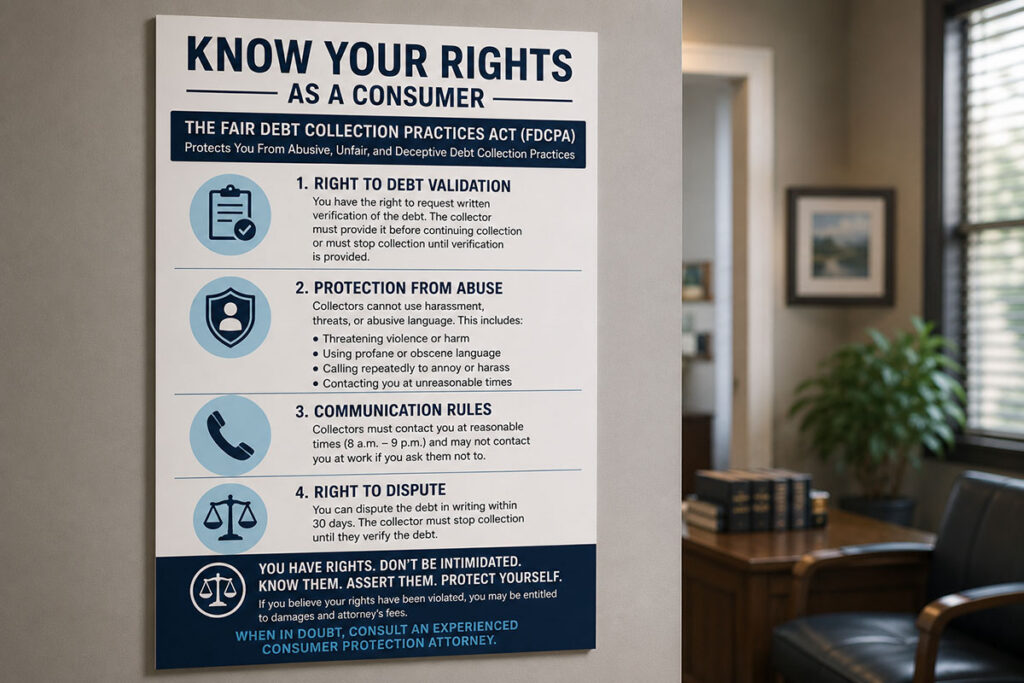
You Have the Right to Request Debt Validation
One of the strongest protections available under the FDCPA is the right to request validation of a debt. When a debt collector first contacts you, federal law generally requires them to provide information about the debt, including the amount allegedly owed, the name of the original creditor, and your right to dispute the debt. If you dispute the debt in writing within the required time period, collection activity generally must pause until the collector provides verification.
This protection exists for a reason. Consumer debts are frequently bought and sold between collection agencies. During those transfers, records can become incomplete, account balances may change, or information may be associated with the wrong consumer. Requesting validation helps ensure the collector is attempting to collect the correct debt from the correct person before payment is made.
When a Debt Collector Refuses to Validate the Debt
If a debt collector refuses to provide validation after a timely written dispute, that should raise important questions. According to a recent CBS News report, consumers should not simply assume the debt collector’s claims are accurate.
The article notes that debts are often sold multiple times, increasing the possibility of incomplete records or documentation problems. In some cases, a collector may be unable to produce sufficient documentation showing the debt is legitimate or that it has the legal right to collect it.
That does not automatically mean the debt is invalid. However, it does mean consumers should proceed carefully before making payments or acknowledging responsibility without understanding their legal position.
Aggressive Collection Tactics May Cross the Line
Most collection activity is lawful. However, the FDCPA places clear limits on how debt collectors may communicate with consumers.
Examples of conduct that may violate the law include:
- Repeated calls intended primarily to harass or intimidate.
- Threats of legal action that the collector cannot or does not intend to pursue.
- False statements about the amount owed.
- Misrepresenting who they are or whom they represent.
- Using abusive, profane, or threatening language.
- Continuing collection efforts after certain consumer rights have been properly exercised.
Consumers should remember that feeling pressured to pay immediately is not the same as being legally required to do so.
What Consumers Should Do
If you are contacted by a debt collector, avoid making immediate decisions based solely on the initial phone call. Instead, consider taking several practical steps:
Keep detailed records. Save letters, emails, text messages, voicemail recordings, and notes documenting every conversation.
Request debt validation promptly. If you question whether the debt is yours or whether the amount is accurate, request validation in writing within the applicable timeframe established under federal law.
Review your credit reports. Compare the information being reported with your own financial records to identify any inconsistencies.
Do not ignore legitimate collection notices. Even if you dispute the debt, responding appropriately is generally preferable to ignoring communications altogether.
Consult an experienced consumer protection attorney. If collection efforts become aggressive, you believe your rights have been violated, or the debt collector refuses to comply with the requirements of the FDCPA, legal guidance may help you better understand your rights and the options available based on your specific circumstances.
Why Legal Review Can Be Important
Debt collection cases are rarely as simple as they first appear. Some involve identity theft. Others involve debts that have been sold several times, inaccurate reporting, disputed balances, or questions regarding the collector’s legal authority.
An experienced consumer protection attorney can review the communications, collection history, account documentation, and applicable federal and state law to determine whether the debt collection practices complied with the FDCPA and whether additional legal remedies may be available.
Every situation is unique, which is why legal advice should always be based on the individual facts of your case.
Frequently Asked Questions
Can a debt collector refuse to validate my debt?
Federal law generally requires debt collectors to provide validation information and to respond appropriately when a timely written dispute is submitted. If they fail to do so, additional legal issues may arise depending on the circumstances.
Should I pay before requesting validation?
If you question whether the debt is accurate or even belongs to you, understanding your rights before making payment is often advisable.
Does requesting validation eliminate the debt?
No. A validation request does not erase a legitimate debt. It simply requires the collector to provide information supporting its claim before collection continues under the procedures established by law.
What if the collector becomes aggressive?
Consumers have legal protections against harassment, abusive language, misleading statements, and other prohibited collection practices. If you believe those protections have been violated, consult an experienced consumer protection attorney.
Can an attorney help with FDCPA violations?
Yes. An attorney can review the facts, determine whether the collector complied with applicable law, and explain what legal remedies may be available if your rights were violated.
Final Thoughts
Most debt collectors operate within the law. Unfortunately, some do not. The Fair Debt Collection Practices Act was created to ensure consumers are treated fairly throughout the collection process. Understanding your right to request debt validation, recognize improper collection tactics, and seek legal guidance when appropriate can make a significant difference in protecting your financial interests.
If you believe a debt collector has treated you unfairly or refused to follow the law, speaking with an experienced consumer protection attorney can help you better understand your rights and determine the most appropriate next steps.
Disclosure
This article is provided for general informational purposes only and should not be construed as legal advice. Every debt collection matter involves unique facts and applicable federal and state laws. If you believe your rights under the Fair Debt Collection Practices Act or other consumer protection laws have been violated, consult with a licensed attorney regarding your specific circumstances.
About Finn Law Group
Led by consumer protection attorneys J. Andrew Meyer and Michael D. Finn, whose combined legal experience exceeds 75 years, Finn Law Group is a national consumer protection law firm headquartered in St. Petersburg, Florida. The firm represents consumers in matters involving unfair debt collection practices, credit reporting disputes, consumer fraud, timeshare disputes, deceptive sales practices, and other violations of state and federal consumer protection laws.
If you would like an experienced consumer protection attorney to review your situation, contact Finn Law Group for a free consultation by calling 727-214-0700 or emailing info@finnlawgroup.com.
Follow Finn Law Group on X for the latest consumer protection news, legal insights, and educational resources designed to help consumers better understand their rights.