How Timeshare Tours Vary, According to a Former OPC
Most people assume every timeshare presentation follows the same script. They picture a salesperson walking every prospective buyer through the same tour, the same resort, and the same sales presentation.
According to former Off-Property Contacts (OPCs), that is often not the case. Long before a prospective buyer sits down with a sales representative, information gathered during the initial invitation may already be shaping how the presentation unfolds.
From the salesperson assigned to the length of the tour and even the products discussed, former OPCs have described a process designed to tailor the experience to the individual sitting across the table. Understanding how that process works may help owners better understand what happened during their own sales presentation.
The Sales Presentation Often Begins Before You Reach the Resort
An OPC is typically the first person a prospective buyer meets. They may be working at a kiosk in a tourist area, offering discounted attraction tickets, promoting vacation packages, or inviting travelers to attend a resort presentation in exchange for gifts or incentives. While the conversation often feels casual, former OPCs have described it as an important part of the overall sales process.
During those first few minutes, they may ask questions about employment, income, family, travel habits, previous timeshare ownership, retirement plans, or how much time someone has available that day. To many consumers, these questions seem like friendly conversation. According to former OPCs, they may also help the sales team prepare for the presentation that follows.
Not Every Buyer Receives the Same Presentation
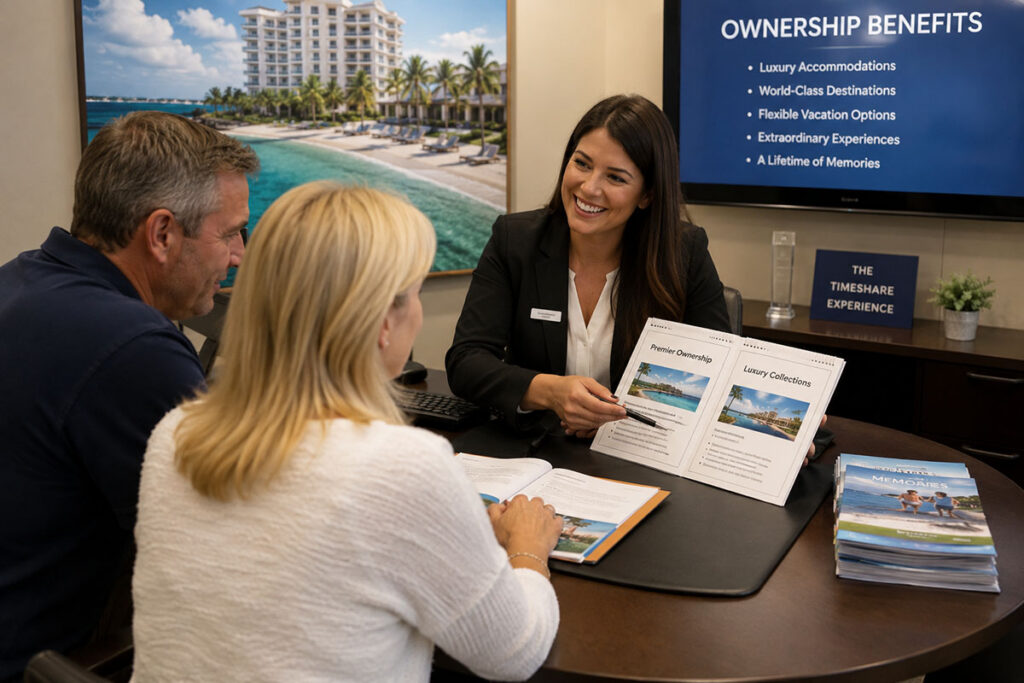
Former OPCs have explained that the information collected before the tour may influence how the sales experience is organized. For example, an owner who has previously purchased a timeshare may be introduced to someone experienced in selling upgrades or points-based programs. A retired couple may be paired with a representative who frequently works with retirees, while a younger family may receive a different presentation focused on future vacations and flexibility.
Even the products shown during the presentation may differ based on what the sales team already knows about the prospective buyer. As a result, two families attending presentations at the same resort on the same day may leave with entirely different experiences.
Time Can Become Part of the Sales Strategy
Many owners remember being told the presentation would last only 90 minutes. Some later found themselves at the resort for several hours. Former OPCs have also described situations where the amount of time a guest says they have available becomes part of the sales strategy.
If someone mentions dinner reservations, an afternoon flight, or another scheduled activity, the presentation may be adjusted to create a sense of urgency before that deadline arrives. Time pressure can make it more difficult for consumers to carefully evaluate a significant financial decision.
Why This Matters Years Later
Many owners look back on their purchase and remember promises that influenced their decision. Some recall discussions about resale opportunities. Others remember conversations about rental income, exchanging destinations, maintenance fees, future upgrades, or how easy it would be to use their ownership.
When those conversations were influenced by information gathered before the presentation, they may become an important part of understanding how the overall sales process unfolded. While every presentation is different, understanding the sequence of events—from the initial invitation through the final contract—can help owners reconstruct what occurred during the purchase.
Looking at the Entire Sales Process
When consumers review a timeshare purchase years later, they often focus only on what happened in the sales room. An experienced timeshare attorney may look much more broadly.
That review may include the initial invitation, conversations with the OPC, marketing materials, the sales presentation itself, the written contract, financing documents, and the owner’s recollection of what influenced the decision to purchase. Looking at the complete sequence of events often provides a more complete understanding of how the transaction occurred.
Final Thoughts
No two timeshare presentations are exactly alike. Former OPCs have described a process in which information gathered before the presentation may influence how the tour is conducted, who conducts it, and which products or benefits receive the greatest emphasis.
Understanding that process does not automatically mean anything improper occurred. However, it may help owners better understand why their experience differed from someone else’s and why reviewing the entire sales process can be important when evaluating a timeshare purchase.
If you believe important statements made during your presentation differed from the written agreement you ultimately signed, reviewing your ownership documents and discussing the circumstances of your purchase with an experienced timeshare attorney may help you better understand your legal options.
Disclosure: This page is for informational purposes only and does not constitute legal advice. Every timeshare situation is different, and outcomes vary based on individual facts and circumstances. Always seek legal advice from legal counsel.
Finn Law Group helps timeshare owners understand what happened during their sales presentation and what options exist afterward. Call 727-214-0700 or schedule a free consultation to speak with a timeshare attorney about your situation. For more general questions, visit our Timeshare Attorney FAQs page.